

Thousands of social housing landlords fail Decent Homes Standard as Awaab’s law looms
1 year ago | 2 comments


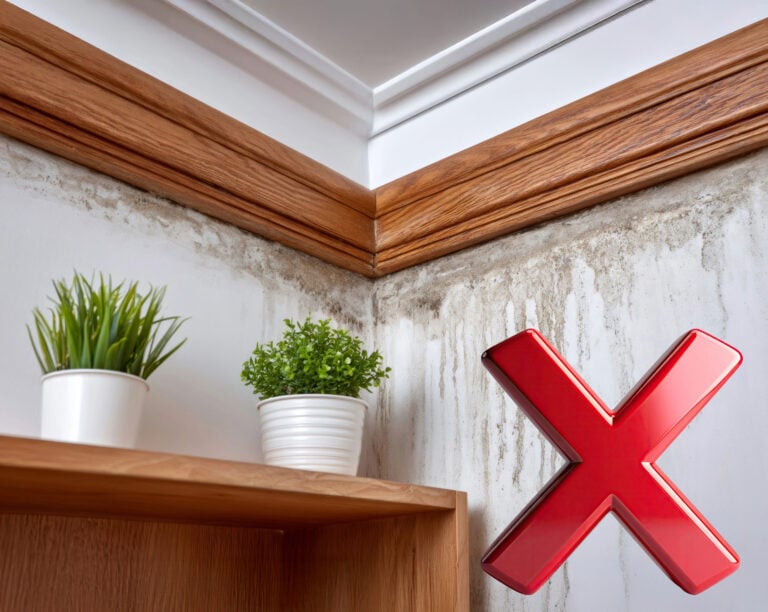
Social housing landlords must not blame tenants’ lifestyles for damp and mould problems, and private rented homes could be used as alternative accommodation if they fail to fix hazards under Awaab’s law.
The government has published guidance for social housing landlords ahead of the law coming into effect on Monday, 27 October, where social housing landlords will have to fix all emergency hazards and damp and mould within strict timeframes.
The government says it is unacceptable for social housing landlords to blame tenants for these issues and has also published scenarios to help social housing landlords identify emergency hazards.
Under Awaab’s Law, social housing landlords will need to investigate any potential significant hazards within 10 working days of becoming aware of them.
All emergency hazards, including serious damp and mould, must be investigated and the work carried out within 24 hours of the landlord becoming aware of the hazard. Relevant safety work must be undertaken as soon as reasonably practicable.
The government guidance says: “If the social landlord is unable to complete the relevant safety work within the initial remediation period (five working days from the completion of the investigation for a significant hazard, or 24 hours for an emergency hazard), they must provide suitable alternative accommodation at their expense until the work has been completed.”
The government lists that provision of alternative accommodation could include vacant social housing stock, private rented homes, short-term lets, or, where more suitable accommodation is not available, hotel and B&B-type accommodation.
Social housing landlords are also told not to blame tenants for damp and mould problems.
The government guidance says: “It is unacceptable for social landlords to assume that the cause of a hazard, such as damp and mould, is due to the tenant’s ‘lifestyle’. Social landlords should not make assumptions and fail to take action or to investigate a damp and mould hazard on the basis of, for example, condensation they attribute to the tenant’s ‘lifestyle’.
“It is unavoidable that everyday tasks, such as cooking, bathing, washing and drying laundry will contribute to the production of indoor moisture. These activities are unlikely to constitute a breach of contract on the part of the tenant and, therefore, should not be a reason not to take action through Awaab’s Law.”
In an example, of an emergency hazard, the government guidance says social housing landlords must treat widespread damp and mould as an emergency hazard, particularly when it affects vulnerable tenants, such as pregnant tenants or children with asthma.
The guidance says social housing landlords should arrange for contractors to investigate the property in 24 hours, as mould in bedrooms or living spaces poses an immediate health risk.
The government guidance also lists examples of how social housing landlords can make a property safe if damp and mould is present and follow up with preventative work.
In another scenario, the guidance says a tenant reported damp and mould in a top-floor, one-bedroom flat, worsened after winter rainfall and displaced roof tiles. The social housing landlord identified this as a potential significant hazard and scheduled an investigation within 10 working days, which found the roof damage was exacerbating the issue and required scaffolding to fix.
The social housing landlord must address the immediate hazard, such as undertaking a mould wash, within five working days and begin work to repair the roof to prevent recurrence.
If scaffolders are not immediately available, the landlord should take steps to secure contractors as soon as reasonably practicable, completing the repair within 12 weeks of the investigation.
The guidance also says that if a contractor is unable to gain entry due to the tenant being at work or having childcare responsibilities, the social housing landlord must arrange a follow-up appointment at a convenient time for the tenant.
The guidance says this could involve contacting the tenant by phone, text, or email to confirm the appointment and offering a selection of time slots, including evenings or weekends where possible.
If the contractor cannot gain access, they could leave a clear note at the property with contact details and instructions to reschedule. For vulnerable tenants, the guidance says it could also be appropriate to liaise with a support worker or, family member to help coordinate access.
Awaab’s Law is set to be extended to the private rented sector, although the government has not yet confirmed when this will take effect.
From next year, the regulations for social housing landlords will cover hazards that present a significant risk of harm, including excess cold and heat, falls associated with baths, level surfaces, stairs and between levels, structural collapse, explosions, and fire and electrical hazards.
In 2027, the government plans to extend the regulations to cover all remaining Housing Health and Safety Rating System (HHSRS) hazards, apart from overcrowding, where they pose a significant risk of harm.
The full government guidance for social housing landlords can be viewed by clicking here.
30 comments on this article
A different perspective could help you spot an issue, avoid a mistake or find a better way forward. Read the comments and add your own views if you wish.
Previous Article
Section 21 possession claim form confusion?
1 year ago | 2 comments

12 months ago | 1 comments
Member Since October 2024 - Comments: 22
8:12 PM, 22nd October 2025, About 12 months ago
What absolute nonsense. Human habitation without adequate ventilation will ALWAYS cause condensation, and hence mould. Its a behavioural issue as tenants won’t open windows to get rid of the condensation.
Member Since October 2013 - Comments: 1751 - Articles: 3
11:57 PM, 22nd October 2025, About 12 months ago
Reply to the comment left by Judith Wordsworth at 16:23
I started to sell when I realised the damage S24 would cause me. The equity has done more for me than another 9 years of rent.
I never had a bad tenant in 17 years in London, plus great rents, and no mould and damp. In Yorkshire I’ve only had 3 decent ones since 2008, and the rents are poor. When I inspected one flat after eviction, it was full of mould, but at least he didn’t complain to the council. I sold that one.
Member Since August 2025 - Comments: 55
7:38 AM, 23rd October 2025, About 12 months ago
Dont agree with all the comments. We last year experienced the mouldcand damp appearing on the whole area of first floor and were blamed for not rectifying it .it concerned us where the damp was coming from as in the history of ownership of 15years prior there was no sign of it and issued section 21 to investigate and correct before reletting. When the flat got emptied it was discovered the tenant had no money to foot the heating bills and all he did was to use the hot shower to wash him,his wife and childeren thus creating lot of steam and opened no windows. He further had all radiators shut except ground floor this created the
steam to stick to the cold walls and eventually turned into mould. We were accused by tenant to remburse the cost of moving out we held out our ground and proved with evidence the case was false. This cost us and the so called adjudicator whose decision cannot be challenged come out in favour of tenant. We redecor the flat and re let fornearly 18months now with no sign of dampnor mould. We were glad to get rid of difficult tenant full of lies and with help of section21 were able to regain possession quickly. Imagine facing the same dilemma with labour’s reform bill and goverment not taking any notice of investers. Someone has to take notice of this urgently.
Joe
Member Since September 2018 - Comments: 3744 - Articles: 5
1:46 PM, 23rd October 2025, About 12 months ago
if there are no building issues that can be attributed/reason for damp and mould, then what else can it be exactly other than the occupants lack of action/negligence in not looking after the property ‘in a tenant like manner’?
Would the government like to produce a list of examples please so we can all be enlightened?
Member Since May 2024 - Comments: 223
8:54 PM, 23rd October 2025, About 12 months ago
I think I’ve seen this from both sides, a tenants perspective and a landlords.
I’ve had a tenant that had mould problems for a while and the final solution was a new roof. Ive also had several tenants that they were the cause of the damp and mould.
Tenant moves into a house that has had no problems over many years and after several months they have damp and mould… the only solution was aPIV fan, it fixed the problem.
After a few years, they move into a nother of my properties and, guess what, it now has damp and mould. Another PIV fan has masked the problem for now.
Once tenant momed out of first house, next tenant has no problems, but according to the government, its my problem and not the tenant and I need to fix it.
My solution is to sell up UK property and move my money to the Middle East.
Tenants in the UK now have no obligations and can do whatever the hell they want with no repercussions. Wuth the RRB, paying rent is an option. why the hell would anyone want to be a landlord anymore? Best just to sell up and make tenants homeless.
Yhe government dont care about them, why should I?
Member Since September 2018 - Comments: 3744 - Articles: 5
11:18 AM, 24th October 2025, About 12 months ago
hahah – alternative accommodation being…tents?
More use of B&B’s on the horizon as council tenants get wind of more ‘rights’ and dodgy solicitors start turbo charging the ‘you can make a claim, no win no fee’ mantra.
Councils are going to also be stung themselves by the RRB.
Whereas once they could offer 2 or three months rent in advance to secure a property from a private LL – no more!
It will also be illegal for a LL to accept any money even a (reduced) 1 months RIA BEFORE the contract is even signed.
Hands up any LL willing to let a T sign a contract before any payment is made? Different if you are dealing with a private tenant who can do a direct bank transfer etc as soon as the contract is signed but before the key handed over. This is not possible with councils.
Member Since September 2018 - Comments: 3744 - Articles: 5
11:21 AM, 24th October 2025, About 12 months ago
Reply to the comment left by Desert Rat at 20:54
a PIV fan, it fixed the problem.
…meaning the problem was actually caused by the tenant lifestyle/inaction. So not something a LL is liable for.
Member Since October 2013 - Comments: 1751 - Articles: 3
12:18 PM, 24th October 2025, About 12 months ago
Reply to the comment left by Reluctant Landlord at 24/10/2025 – 11:21
I can see how a PIV could help in a house with a loft space, but you still need to run the ducting throughout, which is a significant cost. But how would a PIV help in a flat, especially if the lease prohibits work of this nature? How do you explain to the tenant that they need to pay for the running costs… or would you just suck it up?
Member Since October 2025 - Comments: 1
1:57 AM, 25th October 2025, About 12 months ago
I could either live with mould in my home or i could choose not to, its my life choice, mould grows if you allow it, spray some mould and mildew spray and bleach the area every winter i get mould around the window area i use these two and i won’t need to use it for another six month. Will it come back yes offcourse its the UK house what do you expect. I choose not to live with mould, i disinfect the area especially around the windows. Im not sure why lucky person in the UK lives without mould, it appears you treat as quick as possible or you could live with it, some people dont want to touch it? Would rather not clean, i mean wouldn’t even clean their bedroom so you expect them to clean mould? Then blame the landlords? Its your house you live in it, clean it as soon as you see them appears, few sprays from mould spray from astonish, bleach, treat it, get Dehumidifier do something. Or you could sit and let mould take over your house slowly but gradually destroy every part of your house and complain. choice is yours
Member Since April 2017 - Comments: 177 - Articles: 1
12:41 PM, 25th October 2025, About 12 months ago
I have a property slightly susceptible to mould. One tenant twice in a year complained of black mould, both times I thoroughly cleaned the room and repainted. She left for reasons unconnected with this. I did as I always do talk about ventilation and how to stop this happening to the next tenant and he was there two years. When he left, there was still no mould. Entirely down to lifestyle.