
Thousands of social housing landlords fail Decent Homes Standard as Awaab’s law looms
1 year ago | 2 comments


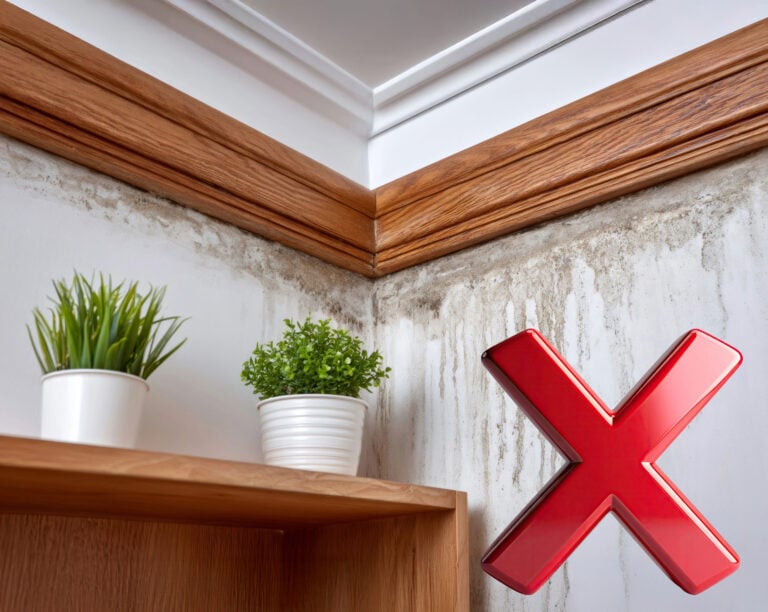
Social housing landlords must not blame tenants’ lifestyles for damp and mould problems, and private rented homes could be used as alternative accommodation if they fail to fix hazards under Awaab’s law.
The government has published guidance for social housing landlords ahead of the law coming into effect on Monday, 27 October, where social housing landlords will have to fix all emergency hazards and damp and mould within strict timeframes.
The government says it is unacceptable for social housing landlords to blame tenants for these issues and has also published scenarios to help social housing landlords identify emergency hazards.
Under Awaab’s Law, social housing landlords will need to investigate any potential significant hazards within 10 working days of becoming aware of them.
All emergency hazards, including serious damp and mould, must be investigated and the work carried out within 24 hours of the landlord becoming aware of the hazard. Relevant safety work must be undertaken as soon as reasonably practicable.
The government guidance says: “If the social landlord is unable to complete the relevant safety work within the initial remediation period (five working days from the completion of the investigation for a significant hazard, or 24 hours for an emergency hazard), they must provide suitable alternative accommodation at their expense until the work has been completed.”
The government lists that provision of alternative accommodation could include vacant social housing stock, private rented homes, short-term lets, or, where more suitable accommodation is not available, hotel and B&B-type accommodation.
Social housing landlords are also told not to blame tenants for damp and mould problems.
The government guidance says: “It is unacceptable for social landlords to assume that the cause of a hazard, such as damp and mould, is due to the tenant’s ‘lifestyle’. Social landlords should not make assumptions and fail to take action or to investigate a damp and mould hazard on the basis of, for example, condensation they attribute to the tenant’s ‘lifestyle’.
“It is unavoidable that everyday tasks, such as cooking, bathing, washing and drying laundry will contribute to the production of indoor moisture. These activities are unlikely to constitute a breach of contract on the part of the tenant and, therefore, should not be a reason not to take action through Awaab’s Law.”
In an example, of an emergency hazard, the government guidance says social housing landlords must treat widespread damp and mould as an emergency hazard, particularly when it affects vulnerable tenants, such as pregnant tenants or children with asthma.
The guidance says social housing landlords should arrange for contractors to investigate the property in 24 hours, as mould in bedrooms or living spaces poses an immediate health risk.
The government guidance also lists examples of how social housing landlords can make a property safe if damp and mould is present and follow up with preventative work.
In another scenario, the guidance says a tenant reported damp and mould in a top-floor, one-bedroom flat, worsened after winter rainfall and displaced roof tiles. The social housing landlord identified this as a potential significant hazard and scheduled an investigation within 10 working days, which found the roof damage was exacerbating the issue and required scaffolding to fix.
The social housing landlord must address the immediate hazard, such as undertaking a mould wash, within five working days and begin work to repair the roof to prevent recurrence.
If scaffolders are not immediately available, the landlord should take steps to secure contractors as soon as reasonably practicable, completing the repair within 12 weeks of the investigation.
The guidance also says that if a contractor is unable to gain entry due to the tenant being at work or having childcare responsibilities, the social housing landlord must arrange a follow-up appointment at a convenient time for the tenant.
The guidance says this could involve contacting the tenant by phone, text, or email to confirm the appointment and offering a selection of time slots, including evenings or weekends where possible.
If the contractor cannot gain access, they could leave a clear note at the property with contact details and instructions to reschedule. For vulnerable tenants, the guidance says it could also be appropriate to liaise with a support worker or, family member to help coordinate access.
Awaab’s Law is set to be extended to the private rented sector, although the government has not yet confirmed when this will take effect.
From next year, the regulations for social housing landlords will cover hazards that present a significant risk of harm, including excess cold and heat, falls associated with baths, level surfaces, stairs and between levels, structural collapse, explosions, and fire and electrical hazards.
In 2027, the government plans to extend the regulations to cover all remaining Housing Health and Safety Rating System (HHSRS) hazards, apart from overcrowding, where they pose a significant risk of harm.
The full government guidance for social housing landlords can be viewed by clicking here.
30 comments on this article
A different perspective could help you spot an issue, avoid a mistake or find a better way forward. Read the comments and add your own views if you wish.
Previous Article
Section 21 possession claim form confusion?
1 year ago | 2 comments
12 months ago | 1 comments
Member Since August 2014 - Comments: 336
1:29 PM, 25th October 2025, About 12 months ago
If a prospective tenant came to me, explaining that they needed a home whilst the council sorted out damp in theirs, I would be an idiot to rent my house to them, unless it was absolutely clear and unequivocal that it was not the tenants fault.
Member Since September 2018 - Comments: 3744 - Articles: 5
4:54 PM, 25th October 2025, About 12 months ago
Reply to the comment left by NewYorkie at 24/10/2025 – 12:18
to be honest PIV’s are not needed in properties.
If there is evidence (via previous tenancy LL checks for example) that showed there was no structural building failure to account for higher moisture levels (no ingress of water etc), and nothing structural since, then the source points to the only one thing that has changed – that of the occupancy.
I would be very loathed to put in PIV units in any property. They seek to assist the OCCUPANTS to ventilate a property by drawing fresh, filtered air from outside and gently pushing it into the property, which creates a positive pressure that forces stale, moist air out. While they may help to eliminate condensation, reduce dampness and mould, and improve indoor air quality by replacing pollutants with drier air this is only mechanising an action that the tenant is ultimately STILL responsible for.
Ask yourself this – If the tenants were removed from the equation would the issue be there at all/persist?
Proper ventilation, heating and adequately removing condensation from inside a property IS the action of behaving appropriately and in a ‘tenant like manner’. There is no need for the use of additional tools to do the job.
The action remains with the tenant to get the balance right precisely because their own use is causing the imbalance.
Member Since September 2018 - Comments: 3744 - Articles: 5
5:02 PM, 25th October 2025, About 12 months ago
Reply to the comment left by Frank William Milligan URQUHART at 22/10/2025 – 20:12
I agree.
The issue is becoming more obvious/more common simply because people on all incomes are struggling with finances/costs and looking at saving money.
At a base level this means putting the heating on less (people forget its not just the occupants who need to be warm but also the property too), less use of a home clothes dryer (if one is in the property), less use of drying in a launderette (if no dryer at home) so washing is being left hung inside the property.
All compiled by, to retain heat, windows are opened less in the winter and as we are all aware people are choosing to perhaps rent smaller properties and share spaces to also cut down on rental costs and bills/council tax etc.
Member Since September 2018 - Comments: 3744 - Articles: 5
5:06 PM, 25th October 2025, About 12 months ago
“It is unavoidable that everyday tasks, such as cooking, bathing, washing and drying laundry will contribute to the production of indoor moisture. These activities are unlikely to constitute a breach of contract on the part of the tenant and, therefore, should not be a reason not to take action through Awaab’s Law.”
But it IS within reason for the tenant to ‘behave in a tent like manner’ – and acknowledge that even if these actions are unavoidable, THEY are contractually obligated to take action to mitigate against the issues that can result if they choose not to act. That means adequately ventilating, and heating the property etc….
Member Since October 2013 - Comments: 1751 - Articles: 3
9:42 AM, 26th October 2025, About 12 months ago
Reply to the comment left by Reluctant Landlord at 25/10/2025 – 17:06
Back to the original point. The law will not permit landlords and agents to make that point, but must simply accept the ‘untenantly’ behaviour and spend money rectifying it.
Member Since May 2024 - Comments: 223
2:27 AM, 30th October 2025, About 12 months ago
Reply to the comment left by Person Of The People at 22/10/2025 – 17:29
I’ve done option 2 and left the UK, My money is now going to follow me. There is just too much tax in the UK, There are a lot better tax free countries to live in than the UK or the US.
Member Since May 2024 - Comments: 223
2:44 AM, 30th October 2025, About 12 months ago
Reply to the comment left by Person Of The People at 22/10/2025 – 10:33
The timescales are unrealistic, who on earth can get a good contractor to come within 24 hours to assess? and fix something like this within a few days??
I don’t know what planet this government are living on, but it’s not planet earth.
I’ve had 1 tenant that moved into a house and then within a few months he had mould in a house that used to be mould free for years, was finally fixed by installing a PIV fan and a few extractor fans, He then moved into another 1 of my houses and the mould followed him, again fixed by a PIV and cladding the bathroom walls.
He did admit that he and his wife took 30 min showers which could probably explain all the water leaks and mould. I’m not sure if its me being dirty, but I’m in and out of a shower in a matter of minuets.
The new tenant that moved into house #1 for the last couple of years has had no problems, even with the PIV no longer working.
So I guess according to the government the damp and mould is my problem and nothing to do with the tenant?
With the way this is going, I really can not wait to no longer being a landlord.
Member Since October 2013 - Comments: 1751 - Articles: 3
9:26 AM, 30th October 2025, About 12 months ago
Reply to the comment left by Desert Rat at 30/10/2025 – 02:27
Where have you gone? If things get much worse we are likely to follow.
Member Since July 2023 - Comments: 93
10:20 AM, 31st October 2025, About 12 months ago
Whilst the government have agreed with the ombudsman that mould isn’t lifestyle, the investigations into the ACTUAL cause of the mould at Awaab’s home were.never properly determined.
In essence the government don’t know what caused the mould in Awaab’s home. Quite astonishing?
Member Since October 2013 - Comments: 1751 - Articles: 3
5:58 PM, 31st October 2025, About 12 months ago
Reply to the comment left by Paul Smith at 31/10/2025 – 10:20
There will have been an autopsy.