
Thousands of social housing landlords fail Decent Homes Standard as Awaab’s law looms
1 year ago | 2 comments


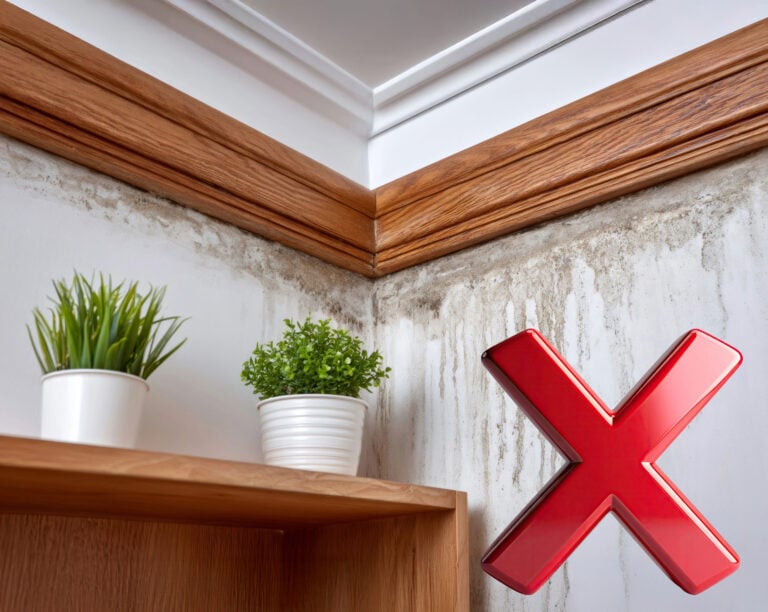
Social housing landlords must not blame tenants’ lifestyles for damp and mould problems, and private rented homes could be used as alternative accommodation if they fail to fix hazards under Awaab’s law.
The government has published guidance for social housing landlords ahead of the law coming into effect on Monday, 27 October, where social housing landlords will have to fix all emergency hazards and damp and mould within strict timeframes.
The government says it is unacceptable for social housing landlords to blame tenants for these issues and has also published scenarios to help social housing landlords identify emergency hazards.
Under Awaab’s Law, social housing landlords will need to investigate any potential significant hazards within 10 working days of becoming aware of them.
All emergency hazards, including serious damp and mould, must be investigated and the work carried out within 24 hours of the landlord becoming aware of the hazard. Relevant safety work must be undertaken as soon as reasonably practicable.
The government guidance says: “If the social landlord is unable to complete the relevant safety work within the initial remediation period (five working days from the completion of the investigation for a significant hazard, or 24 hours for an emergency hazard), they must provide suitable alternative accommodation at their expense until the work has been completed.”
The government lists that provision of alternative accommodation could include vacant social housing stock, private rented homes, short-term lets, or, where more suitable accommodation is not available, hotel and B&B-type accommodation.
Social housing landlords are also told not to blame tenants for damp and mould problems.
The government guidance says: “It is unacceptable for social landlords to assume that the cause of a hazard, such as damp and mould, is due to the tenant’s ‘lifestyle’. Social landlords should not make assumptions and fail to take action or to investigate a damp and mould hazard on the basis of, for example, condensation they attribute to the tenant’s ‘lifestyle’.
“It is unavoidable that everyday tasks, such as cooking, bathing, washing and drying laundry will contribute to the production of indoor moisture. These activities are unlikely to constitute a breach of contract on the part of the tenant and, therefore, should not be a reason not to take action through Awaab’s Law.”
In an example, of an emergency hazard, the government guidance says social housing landlords must treat widespread damp and mould as an emergency hazard, particularly when it affects vulnerable tenants, such as pregnant tenants or children with asthma.
The guidance says social housing landlords should arrange for contractors to investigate the property in 24 hours, as mould in bedrooms or living spaces poses an immediate health risk.
The government guidance also lists examples of how social housing landlords can make a property safe if damp and mould is present and follow up with preventative work.
In another scenario, the guidance says a tenant reported damp and mould in a top-floor, one-bedroom flat, worsened after winter rainfall and displaced roof tiles. The social housing landlord identified this as a potential significant hazard and scheduled an investigation within 10 working days, which found the roof damage was exacerbating the issue and required scaffolding to fix.
The social housing landlord must address the immediate hazard, such as undertaking a mould wash, within five working days and begin work to repair the roof to prevent recurrence.
If scaffolders are not immediately available, the landlord should take steps to secure contractors as soon as reasonably practicable, completing the repair within 12 weeks of the investigation.
The guidance also says that if a contractor is unable to gain entry due to the tenant being at work or having childcare responsibilities, the social housing landlord must arrange a follow-up appointment at a convenient time for the tenant.
The guidance says this could involve contacting the tenant by phone, text, or email to confirm the appointment and offering a selection of time slots, including evenings or weekends where possible.
If the contractor cannot gain access, they could leave a clear note at the property with contact details and instructions to reschedule. For vulnerable tenants, the guidance says it could also be appropriate to liaise with a support worker or, family member to help coordinate access.
Awaab’s Law is set to be extended to the private rented sector, although the government has not yet confirmed when this will take effect.
From next year, the regulations for social housing landlords will cover hazards that present a significant risk of harm, including excess cold and heat, falls associated with baths, level surfaces, stairs and between levels, structural collapse, explosions, and fire and electrical hazards.
In 2027, the government plans to extend the regulations to cover all remaining Housing Health and Safety Rating System (HHSRS) hazards, apart from overcrowding, where they pose a significant risk of harm.
The full government guidance for social housing landlords can be viewed by clicking here.
30 comments on this article
A different perspective could help you spot an issue, avoid a mistake or find a better way forward. Read the comments and add your own views if you wish.
Previous Article
Section 21 possession claim form confusion?
1 year ago | 2 comments
1 year ago | 1 comments
Member Since January 2025 - Comments: 132
10:33 AM, 22nd October 2025, About 12 months ago
This is the government’s so-called “nudge unit,” officially known as the Behavioural Insights Team (BIT), established in 2010 to subtly coerce the population into compliance.
It will keep nudging us through increasingly hostile regulations until every property is forced to meet the highest EPC rating. Gradually, homes will become first un-rentable, then un-mortgageable, and finally unsellable.
They are even defying basic science. Everyone knows that drying laundry in an unventilated bathroom creates condensation, which inevitably leads to mould. Yet tenants often avoid proper ventilation because it increases their heating costs.
And just to remind us what George Orwell foresaw in 1984, written in 1948-49:
“We are not content with negative obedience, nor even with the most abject submission. When finally you surrender to us, it must be of your own free will.”
Is this really free will?
Free will is a dissatisfied tenant taking their money and moving to a better landlord, allowing the market to find its own balance between price and quality of provision.
But successive governments have failed to create an economy in which everyone can both survive and thrive. Now, it has become a question of where the assets are and how they can be redistributed to those who don’t have them. Having failed to manage a council housebuilding programme, the government’s new solution seems to be: “We’ll use regulation to get at the private rented sector’s assets—and, along the way, we’ll turn landlords into unpaid housing officers.”
How long before some vote-seeking parliamentarian or party decides to apply the same approach to the entire private rented sector?
Member Since July 2013 - Comments: 2081 - Articles: 21
11:01 AM, 22nd October 2025, About 12 months ago
I hold no brief for social housing landlords I will call them RSLs – Registered Social Landlords. RSLs provide much needed housing for poor people. If they were penalised in the same way as private landlords, many would be insolvent in short order. However, this latest piece is absurd.
Let us consider some of the statements.
Social housing landlords are also told not to blame tenants for damp and mould problems.
The government guidance says: “It is unacceptable for social landlords to assume that the cause of a hazard, such as damp and mould, is due to the tenant’s ‘lifestyle’.
One should not automatically assume it but it may be the case.
Social landlords should not make assumptions and fail to take action or to investigate a damp and mould hazard on the basis of, for example, condensation they attribute to the tenant’s ‘lifestyle’.
Yes, investigate but the appropriate action may be to tell the tenant to ventilate rooms properly, not to dry clothes indoors with the windows closed, to deal with mould quickly when it appears and to turn the heating on for longer.
“It is unavoidable that everyday tasks, such as cooking, bathing, washing and drying laundry will contribute to the production of indoor moisture. These activities are unlikely to constitute a breach of contract on the part of the tenant and, therefore, should not be a reason not to take action through Awaab’s Law.”
How can you say it is not a breach of contract without knowing all the facts? There is implied into leases a duty to use the property in a “tenant-like” manner. This involves doing all the little things that a conscientious owner of property would do. This could include the things mentioned above.
The Government guidance also requires landlords to give advice to tenants. Well, if nothing in the tenant’s lifestyle causes damp or mould, advice is pointless.
I always remember the housing officer who inspected my first HMO volunteering that in over 90% of cases where tenants complained of damp and mould, he found it was tenants’ lifestyle that was the principal cause.
Awaab’s case was tragic and not the parents’ fault. However, I would argue that in most cases – perhaps as high as 90% – the actions or inactions of tenants are the main cause.
If an owner occupier experiences damp or mould, whose fault is that?
I also remember the tenant who turned off the extractor fan in the bathroom because the noise disturbed the video gaming in the adjacent room. Why on earth should landlords be expected to re-house at their own expense tenants like that?
Member Since February 2020 - Comments: 20
11:11 AM, 22nd October 2025, About 12 months ago
As a letting agent experiencing the full fall out of the pending RRB – where exactly do they think these ‘private landlords’ are going to magically appear from?
Member Since January 2025 - Comments: 132
11:22 AM, 22nd October 2025, About 12 months ago
In response to your last point:
“I also remember the tenant who turned off the extractor fan in the bathroom because the noise disturbed the video gaming in the adjacent room. Why on earth should I or anyone be expected to rehouse at my expense tenants like that?”
We now live in a world where a landlord can be fined because their tenant failed to recycle properly.
Soon landlords will be held responsible for their tenants’ substance abuse, obesity, unemployment—and, for good measure, ensuring they have Sky Sports and three overseas holidays a year.
This government’s agenda is clear: asset redistribution, while ignoring that those assets were built over many years of hard work and funded from already taxed income.
But the real culprits are the Conservative Party, who have presided over the most ruinous and self-serving fourteen years in parliamentary history. An 80-seat majority squandered—the buffoon Boris should hang his head in shame, along with his negligent rag-bag of hangers-on.
Had it not been for their own incompetence and self-interest, they would still be in government—and the country would not now be facing a wave of retaliatory socialism on steroids.
Member Since October 2020 - Comments: 1390
12:12 PM, 22nd October 2025, About 12 months ago
Given that Awaabs Law will also apply to the PRS, it seems likely that landlords whose tenants ruin their house by not opening windows and drying clothes indoors will face the same requirement to put them up in a hotel whilst they clean and repair all the damage.
Member Since July 2013 - Comments: 2081 - Articles: 21
12:37 PM, 22nd October 2025, About 12 months ago
Reply to the comment left by DPT at 12:12
Yes. The old adage “Hard cases make bad law”, applied to court cases, means that an extreme case is a poor basis for a general law that would cover a wider range of less extreme cases.
The sad case of Awaab has led to an extreme law that is wholly inappropriate for many cases. There is a world of difference between a landlord assuming that the tenant is at fault and investigating the damp and mould and finding out that the tenant is, in fact, at fault.
Sadly, there is nothing in the law to say: “If after proper investigation it is agreed or determined that the act or neglect of the tenants is the cause or the primary cause of the damp or mould hazard, the tenant and not the landlord shall be required to remedy it. The tenant must indemnify the landlord against any and all loss or damage caused by the tenant’s failure to carry out necessary works in a timely fashion.”
Member Since October 2013 - Comments: 1757 - Articles: 3
2:54 PM, 22nd October 2025, About 12 months ago
If a landlord must temporarily re-house a tenant while mould & damp ‘work’ is done, and they can’t blame the tenant if it’s caused by their lifestyle choices, what then happens when the tenant returns and causes the exact same problems a few weeks later, through the same lifestyle choices? And the same again after that, and again, and again!
The risk posed by extending AWAAB’s Law to the PRS will be covered through higher rents.
I’m wondering if it wouldn’t be cheaper and less inconvenient if social housing providers paid their tenants’ gas & electric bills!
Member Since January 2015 - Comments: 1623 - Articles: 1
4:23 PM, 22nd October 2025, About 12 months ago
Reply to the comment left by NewYorkie at 22/10/2025 – 14:54
More to the point if these tenants have caused the mould by their lifestyle – and those are ill-informed or plain ignorant if they don’t understand that lifestyle is 90% of the mould problems – and cause mould in the private rented accommodation they have been moved into toby their lifestyle – the council will fine the PRS landlord to pay for the damage they did in the council property.
So glad I saw the light in 2018 and began the off loading.
Member Since June 2015 - Comments: 366
4:35 PM, 22nd October 2025, About 12 months ago
What happens in the case of privately owned ex Council leasehold flats?
I have been reporting structural defects for several years which cause damp and mould inside 2 ex Council flats. Repairs may be carried out eventually or never. It took well over a year for a gutter hopper to be replaced, during which time a carrier bag was used as a substitute. Another blocked hopper caused severe damp problems in our ground floor flat. Missing pointing has caused cavity wall insulation to become sopping wet, which has caused damp problems in another flat. I’ve been reporting that one for nearly 13 years, with nothing more than a few visits from surveyors in all those years.
As a leaseholder I’m not allowed to carry out work to the structure of the building without breaching the lease. How are we supposed to adhere to Awaabs law if the freeholder (Local Council) refuses to carry out the basic maintenance they are responsible for in a timely fashion? Why are our tenants treated in such an appalling way by the Local Authority?
Member Since January 2025 - Comments: 132
5:29 PM, 22nd October 2025, About 12 months ago
Reply to the comment left by Jo Westlake at 22/10/2025 – 16:35
Option 1: Put your head in your hands and howl in despair.
Option 2: Leave the country. The UK is an old economy with decaying infrastructure and medieval systems. Burdened by its legacy costs and an “International Health and Housing Service,” it will never again be able to compete with modern, first-world economies.
Even if the UK were to grow at its average ten-year rate while the US economy stood still, the average UK citizen would still be poorer than their American counterpart twenty years from now. Britain couldn’t catch up within anyone’s lifetime—even those born today.
We’re driving around in a 1963 Jaguar Mark 3 while the rest of the world speeds by in Audis, Mercedes, and Teslas.
Option 3: Removing our current government might at least be a start—and, if nothing else, it would make us feel a little better.