
Industry body urges landlords and letting agents to prepare for Awaab’s law
12 months ago | 10 comments


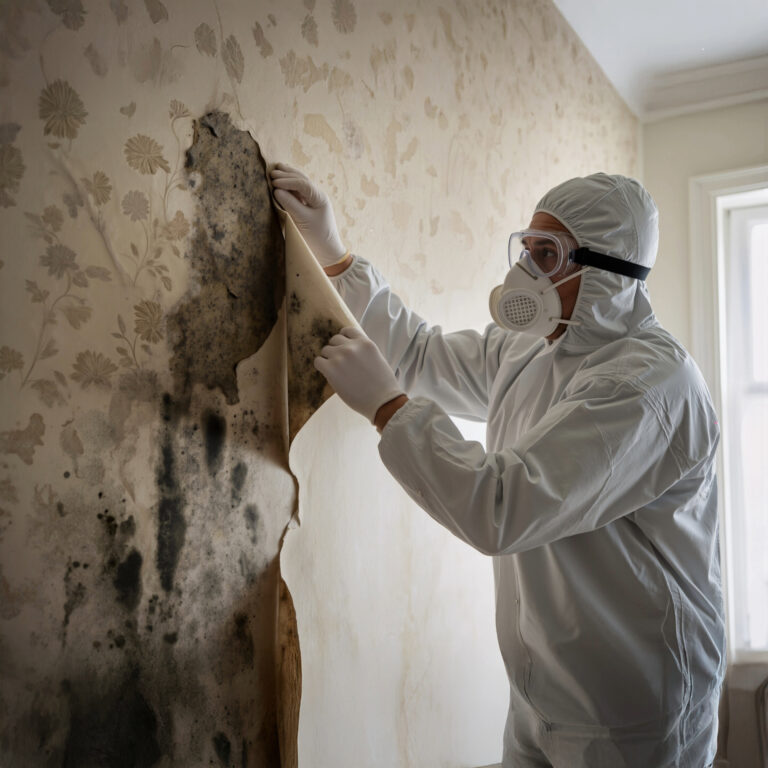
The government says it is committed to making rented homes safe and free from damp and mould.
In answer to a written question, Housing Minister Matthew Pennycook says extending Awaab’s law to the private rented sector and a Decent Homes Standard will improve the safety of rental properties.
Awaab’s law is set to come into effect during phase three of the Renters’ Rights Act in 2027 whilst the Decent Homes Standard is expected in 2035 or 2037.
Labour MP Danny Beales asked Mr Pennycook: “What steps he is taking to ensure landlords let accommodation is fit for human habitation as set out in the Homes (Fitness for Human Habitation) Act 2018.”
Mr Pennycook says the government is legislation to improve the safety of rental properties.
He said: “If rented houses or flats are not fit for human habitation, tenants can take their landlords to court under the Homes (Fitness for Human Habitation) Act 2018.
“The court can make the landlord carry out repairs and put right health and safety problems. The court can also make the landlord pay compensation to the tenant.
“The government is committed to ensuring that rented homes are safe, decent, warm, and free from damp and mould.
“The Renters’ Rights Act 2025 will extend Awaab’s Law to the private rented sector and introduce a Decent Homes Standard for privately rented homes for the first time.
“The Decent Homes Standard already applies to social housing. Enforcement in the social sector is being strengthened through the Social Housing Regulation Act, including through the implementation of Awaab’s Law, the first phase of which has already come into force.”
18 comments on this article
A different perspective could help you spot an issue, avoid a mistake or find a better way forward. Read the comments and add your own views if you wish.
12 months ago | 10 comments

12 months ago | 13 comments
1 year ago | 1 comments
Member Since May 2015 - Comments: 2326 - Articles: 2
9:57 AM, 31st December 2025, About 10 months ago
And if the damp and mould is caused by the tenant’s lifestyle, will the tenant have to compensate the landlord?
Member Since September 2022 - Comments: 41
10:10 AM, 31st December 2025, About 10 months ago
If the government want to stamp out mould they should make it a tenancy rule that the tenant has to heat and ventilate the property correctly. 90% of the problem solved.
Member Since July 2017 - Comments: 465
10:18 AM, 31st December 2025, About 10 months ago
Reply to the comment left by John Bentley at 31/12/2025 – 10:10
Surely we can’t make tenants take on responsibility for their own actions? There must be some rules or regulations we have overlooked!
Member Since January 2015 - Comments: 1619 - Articles: 1
10:39 AM, 31st December 2025, About 10 months ago
The only real way is for rents to include the cost of adequately heating PRS properties from October to May, as many mansion flats with a communal boiler included this in their block service charge (central heating and constant hot water).
For the rent to include a weekly cleaner who also ventilates the property whilst cleaning. The cleaning to include spraying anti mould products on grrout,, silicon including window gaskets etc etc.
But then renters will be screaming they can’t afford the rent and will stop paying.
And for rental properties to have passive air vents in every room which if found to be taped over or covered on inspection is a s8 Ground for eviction as likely to cause damage to the fabric of the property.
There should be a national survey of ALL owner-occupied properties and PRS and social rentals to discover if condensation and mould are more prevalent in rental or owner-occupied properties. If the former then, as landlords are already well aware, this is actually 90% if not 99%, down to occupants lifestyle and not a lot can be done to eradicate the problem.
Member Since April 2018 - Comments: 648
10:46 AM, 31st December 2025, About 10 months ago
It really is time for landlords to respond to this unjust action .
I now ensure my inventory states no evidence of mould and I ask the tenant to inform me if any appears so I may further educate them. Other than block Parliament with tractors I am not sure what else can be done.
Interestingly I have been told that my council takes no action when a tenant reports a private landlord because a toilet is not working or mould appears, which proves how much they really care for tenants.
Member Since August 2018 - Comments: 170
11:39 AM, 31st December 2025, About 10 months ago
As I read the government guidance, the landlord is responsible for eradicating mould, however it got there. This is desperately unjust and needs to be challenged in court by the NRLA. The idea that a tenant can live how they like and cause mould, then the landlord has to deal with it goes against natural justice.
NRLA – where are you on this??
Member Since June 2019 - Comments: 977
11:56 AM, 31st December 2025, About 10 months ago
On every inspection report I confirm the lack of mould – every inspection report is then signed and dated by the tenant so there is no risk of claiming a long lasting mould problem.
Member Since May 2019 - Comments: 5
1:58 PM, 31st December 2025, About 10 months ago
Interesting that they want to tackle damp and mould in the PRS when councils and social housing providers are the worst culprits. How about they deal with their own health and safety issues first.
Member Since May 2017 - Comments: 842
2:17 PM, 31st December 2025, About 10 months ago
I will be implementing a suggestion I read, possibly on p118, to take meter readings at every inspection to help assess how much heating has been on
Member Since May 2014 - Comments: 654
8:23 PM, 31st December 2025, About 10 months ago
Reply to the comment left by JB at 31/12/2025 – 14:17
I am interested in this meter reading idea because last year tenants in one HMO told me that they only put the heating on for one hour / day during the middle of winter.
I would be grateful for more info.
Thanks