

Landlords urged to carry out inspections as damp and mould risks rise
1 year ago | 1 comments


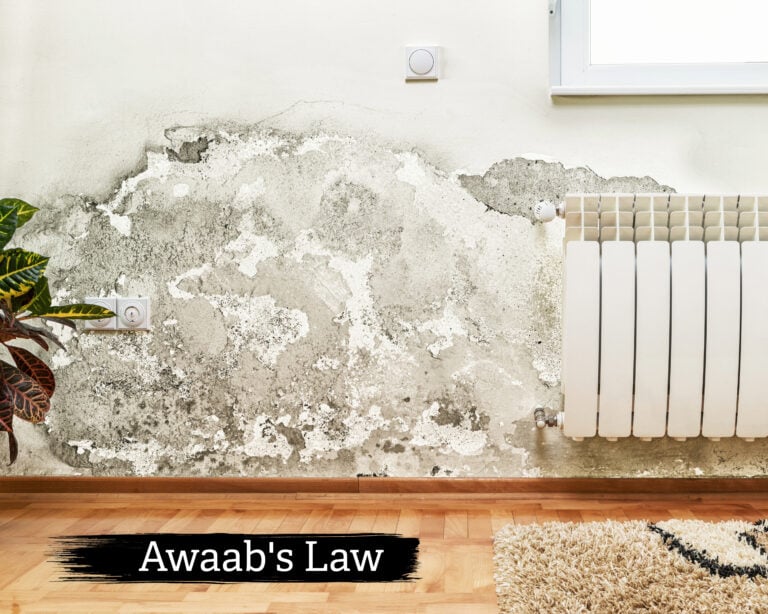
With Awaab’s Law coming into effect today for social housing landlords, private landlords are being urged to prepare ahead of it being introduced to the private rented sector.
Under Awaab’s Law, social housing landlords must provide alternative accommodation if they fail to fix emergency hazards within strict timeframes.
Serious issues such as damp and mould must be investigated and addressed within 24 hours, with safety repairs carried out as soon as reasonably practicable.
The government have not given an exact date for when Awaab’s law will be extended to the private rented sector.
The government have previously said they understand the social and private rented sectors are different and will apply Awaab’s law to private landlords in a fair way.
It said: “We recognise that there are differences between the private and social rented sectors. We will carefully consider how best to apply Awaab’s Law to the private rented sector in a way that is fair, proportionate and effective for both tenants and landlords, and will consult on this.
“We will set out further detail on our plans in due course.”
With the Renters’ Rights Bill now heading for Royal Assent, Awaab’s Law is included within the legislation but will not take effect immediately for private landlords, forming part of the secondary legislation instead.
Industry body Propertymark says the rollout of Awaab’s Law and the Decent Homes Standard to the private rented sector could begin in 2035.
Timothy Douglas, head of policy and campaigns at Propertymark, says landlords and letting agents should start preparing now by conducting regular inspections.
He told Property118: “The expected extension of Awaab’s Law to the private rented sector through the Renters’ Rights legislation will mark a major shift in how landlords and letting agents are required to identify and address health hazards such as damp and mould.
“To prepare, letting agents and landlords should act now and take a forward-thinking, structured approach by putting in place regular property inspections, keeping thorough records, ensuring responsive maintenance systems, and working proactively with tenants to report and resolve issues early.
“Reviewing contractor arrangements and prioritising high-risk properties, such as older buildings or those with a history of damp, will help future-proof portfolios and ensure landlords and agents meet future legal obligations.”
10 comments on this article
A different perspective could help you spot an issue, avoid a mistake or find a better way forward. Read the comments and add your own views if you wish.
1 year ago | 1 comments

1 year ago | 2 comments

Member Since May 2016 - Comments: 1587 - Articles: 16
11:39 AM, 27th October 2025, About 12 months ago
Interestingly, some time after the Awaab story became infamous I searched the internet for the cause of Mould in Awaab’s property.
NOTHING to be found, strangely.
Searching again with benefit of AI, I find the following ;
” The damp and mould in Awaab’s social housing was caused by inadequate ventilation, a result of normal household activities combined with a lack of proper air flow. The landlord’s failure to fix the underlying issues after repeated complaints exacerbated the problem.
Cause of the mould: The mould resulted from normal household activities, such as cooking and drying clothes, in an environment with poor ventilation. ”
aka Drying clothes inside without opening the window ! ( also known as the Michael Gove banned description of ‘Lifestyle’ )
Politicians can try to edit out of housing terminology Tenant lifestyle, but the facts can’t be changed.
The political vote-expediency was put into play here by throwing the Housing Association under the bus, as there’s far more Tenant voters than there are employees of Housing Associations.
Member Since July 2025 - Comments: 7
12:52 PM, 1st December 2025, About 11 months ago
Chris makes a very important point that the main cause of the mould in the Awaab case was poor airflow in the house. The problem with the main article is that it only tells landlords to check their properties, but not how to actually fix the underlying issue. Awaab’s Law requires landlords to get ahead of the problem, not just react when mould appears.
The biggest difficulty for private landlords is fitting new ventilation into older houses that weren’t built with good airflow in mind. We need to move past simple extractor fans or basic air vents. The real solution is to install modern, always-on ventilation systems that actively manage the moisture in the air throughout the home.
For most older rental properties, the best choice is a system called Decentralised Mechanical Ventilation with Heat Recovery (dMVHR). This system is perfect for renovations because you can install a small unit in each room without needing to run big air ducts everywhere. The best part is that it constantly removes the damp, stale air but, at the same time, it captures most of the heat from that outgoing air and uses it to warm the fresh air coming in. This means the house stays healthier and mould-free, and the tenant doesn’t lose a lot of heat, which makes them much less likely to try and turn the system off to save money. By installing this kind of smart solution, landlords are not only following the new law but also making their property better for the long run.
Member Since May 2014 - Comments: 654
9:32 AM, 2nd December 2025, About 11 months ago
Reply to the comment left by Bradley Pallister at 01/12/2025 – 12:52
This sounds like a good idea.
Do you know if this system would have any effect on the EPC rating because under the new rules extractor fans and vents can have a negative effect on the rating.
Member Since July 2025 - Comments: 7
9:39 AM, 2nd December 2025, About 11 months ago
Reply to the comment left by Stella at 02/12/2025 – 09:32
You are correct that the ‘new rules’ (SAP) penalize simple intermittent extractor fans and trickle vents. This happens because these systems result in substantial, uncontrolled heat loss: they simply dump warm, conditioned air outside, and the SAP assessment views this heat loss as a major contributor to the building’s overall space heating demand.
Decentralised Mechanical Ventilation with Heat Recovery (dMVHR), however, has the opposite effect and is designed to address this exact gap. Instead of just extracting air and losing heat, dMVHR systems continuously recover a significant amount of the heat from the outgoing stale air and use it to pre-warm the fresh, incoming air. This heat recovery process dramatically reduces the heat loss associated with air changes and, consequently, reduces the energy needed to heat the home. When properly specified and installed, a dMVHR system is recognized as an energy-saving measure. It will generally improve your EPC rating because it lowers the calculated Space Heating Demand and improves the overall Emissions Energy Rate of the dwelling. To ensure you receive the full benefit on your EPC, you must confirm that the assessor inputs the specific performance data for the dMVHR unit (its heat recovery efficiency and Specific Fan Power) rather than relying on generic default values, as these defaults can sometimes be pessimistic and underrepresent the unit’s actual benefit.
Member Since May 2014 - Comments: 654
9:51 AM, 2nd December 2025, About 11 months ago
Thank you!
Definitely worth considering.
Member Since September 2018 - Comments: 3766 - Articles: 5
10:32 AM, 2nd December 2025, About 11 months ago
Reply to the comment left by Bradley Pallister at 01/12/2025 – 12:52
Decentralised Mechanical Ventilation with Heat Recovery systems seem to allow T’s to turn them off and on though…
Also not a solution with Listed properties/conservations areas though as its something that needs putting through a wall…
Member Since July 2025 - Comments: 7
10:44 AM, 2nd December 2025, About 11 months ago
The first issue is that people living in the house, like tenants, might switch the system off. You are totally right; this is the number one problem for all home ventilation systems. People will always turn off anything that seems noisy or feels like a draft, because comfort matters more than invisible air quality. Manufacturers are trying to solve this by making the systems super quiet and draft-free. However, the quickest fix for a landlord or property manager is often just to hide the main controls. If you put the controller in a locked cupboard or even the loft, the system can be kept running continuously, which is what’s needed for the home to breathe properly. Another good point about these smaller, room-by-room ventilation units is that if one unit does get switched off, it only affects that one room, not the whole house, if it’s wired up correctly.
On the listed / conservation areas – watch this space…!
Member Since May 2014 - Comments: 654
11:02 AM, 2nd December 2025, About 11 months ago
Reply to the comment left by Reluctant Landlord at 02/12/2025 – 10:32
Some of my tenants were putting the heating on for one hour in a 24 hour period in the middle of winter.
It will be difficult to prepare for Awaab’s law when we cannot control what the tenants do.
Member Since July 2025 - Comments: 7
11:20 AM, 2nd December 2025, About 11 months ago
Yes, it’s a huge challenge when tenants are trying to save money by only putting the heat on for a short time, but this short burst of heat can actually make the mould problem much worse. The core issue is that when a cold wall meets warm, moist air – the air from cooking, showering, and even just breathing – it causes water to form on the wall, just like a cold can of soda sweats on a summer day. It’s the perfect trigger for mould. Under Awaab’s Law, the responsibility for this mould is going to fall back on the property owner, even if it’s caused by a tenant’s choice to save on their heating bill.
The trick is to stop worrying about how much the tenant uses the heating and instead focus on a reliable system that manages the moisture for you, all the time.
Member Since September 2018 - Comments: 3766 - Articles: 5
11:16 PM, 2nd December 2025, About 11 months ago
Reply to the comment left by Bradley Pallister @ VENTI (Residential Ventilation Solutions for Refurb Projects) at 02/12/2025 – 11:20
The trick is to stop worrying about how much the tenant uses the heating and instead focus on a reliable system that manages the moisture for you, all the time.
I beg to differ on this. Any ‘reliable system’ still needs occupier (Tenant) compliance. ‘Adequate ventilation’ alone does not keep damp and mould from condensation at bay. Daily action is required – the landlord does not live there.
You can lead a horse to water….