

MPs warn housing associations not ready for Awaab’s Law amid Decent Homes Standard for PRS
1 year ago | 10 comments


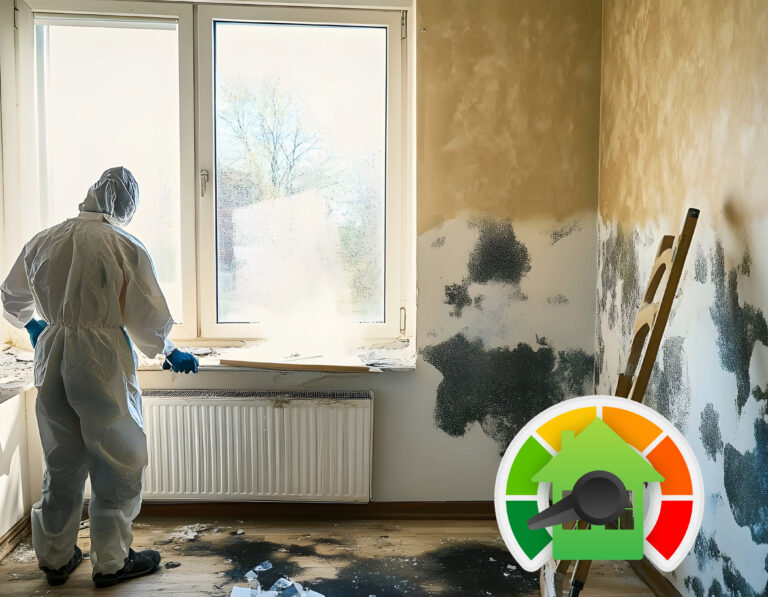
The Decent Homes Standard and Awaab’s law will cause increased costs for landlords and major disruption for tenants, warns industry body.
In response to the government inquiry into housing conditions in England, Propertymark warn landlords will face additional costs in trying to meet strict housing standards.
The Decent Homes Standard (DHS), which is part of the Renters’ Rights Bill, aims to apply these standards to private rented homes, with compliance deadlines set for 2035 or 2037.
Awaab’s law, which will come into effect for social housing landlords in October this year, will be extended to the private rented sector in the future and will force private landlords to fix damp and mould within strict timeframes.
The Housing, Communities and Local Government (HCLG) Committee launched an inquiry into housing conditions in England with a focus on the proposed extension of the Decent Homes Standard and Awaab’s law in the private rented sector.
The findings will be published along with recommendations for Ministers.
Propertymark told the inquiry that Awaab’s Law and the Decent Homes Standard will cause landlords to face more financial pressures, and landlords may need to rehouse tenants whilst improvement works take place.
The industry body said: “We think landlords will incur additional costs in three ways. Firstly, to increase landlords’ knowledge of Awaab’s Law and the Decent Homes Standard, as well as the other changes contained in the Renters’ Rights Bill, they will likely incur a cost for additional training if self-managing the property or for using the services of a letting agent if not already doing so.
“Secondly, complying with proposals to raise the minimum energy efficiency standards for rented homes to help reduce some of the conditions that make damp and mould worse. Thirdly, costs for rehousing tenants should this be required.”
The industry body added that new EPC C standards, set for 2030 for all private rented properties and 2028 for new tenancies, will increase costs for both tenants and landlords.
One letting agent warned that it would be impossible to meet the new standards without causing major disruption for tenants.
Propertymark said: “While we support efforts to improve the energy efficiency of homes, it must be done in a way that effectively improves energy efficiency while ensuring minimum disruption for those involved in the PRS, targets must be realistic and achievable.
As it stands, we are concerned that the proposals will cause significant disruption to tenants if landlords are unable to afford the improvements needed or are forced to remove tenants from the property while considerable alterations are made.
“In May 2025, one of our members, a large independent property agency based in Yorkshire and Humberside representing around 950 properties, where roughly 42% of their stock is an EPC D, said, “most of our housing stock are terraced houses. To try and successfully make these all a C rating or above, without huge disruption to tenants and significant cost to the client, is almost impossible.”
Propertymark warns the Decent Homes Standard must not be a one-size-fits-all solution and reflect different property types and have clear and practical guidance for landlords.
The industry body said: “Our evidence clearly demonstrates that the standard must be flexible enough to reflect different property types and ages. Requirements such as compulsory carpets in every room or mandatory window restrictors may not be needed, wanted, or even suitable in all properties. Instead, the rules should focus on functionality, ensuring homes are safe and fit for purpose without reducing choice or supply.
“Our members raised concerns about grey areas, such as how to judge appropriate action in cases of minor damp and mould, or whether excessive heat might trigger requirements like air conditioning. To address this, the government must provide clear guidance on acceptable levels of disrepair, best practice examples, and explain how enforcement will work.”
As previously reported on Property118, Leaders Roman Group (LRG) warns landlords that there will be greater enforcement when the Decent Homes Standard becomes law, with civil penalties of £7,000 and possible prosecution.
1 comment on this article
A different perspective could help you spot an issue, avoid a mistake or find a better way forward. Read the comments and add your own views if you wish.
Previous Article
Rents hit record high as landlords grow increasingly worried
1 year ago | 10 comments


1 year ago | 19 comments
Member Since September 2018 - Comments: 3759 - Articles: 5
10:24 AM, 9th September 2025, About 1 year ago
this is obvious. Meeting higher legislative standards costs – irrespective if there are no tangible benefits to be seen or enjoyed by the tenant if the property is already in A1 condition. There will no doubt be a cost to ‘prove’ compliance – use of SL is a prime example.
I’m not worrying about any of this until it happens. Lets face it, most of us will probably have left the market at his rate by this date anyway the way its going…