

The guarantor gap that left a landlord exposed
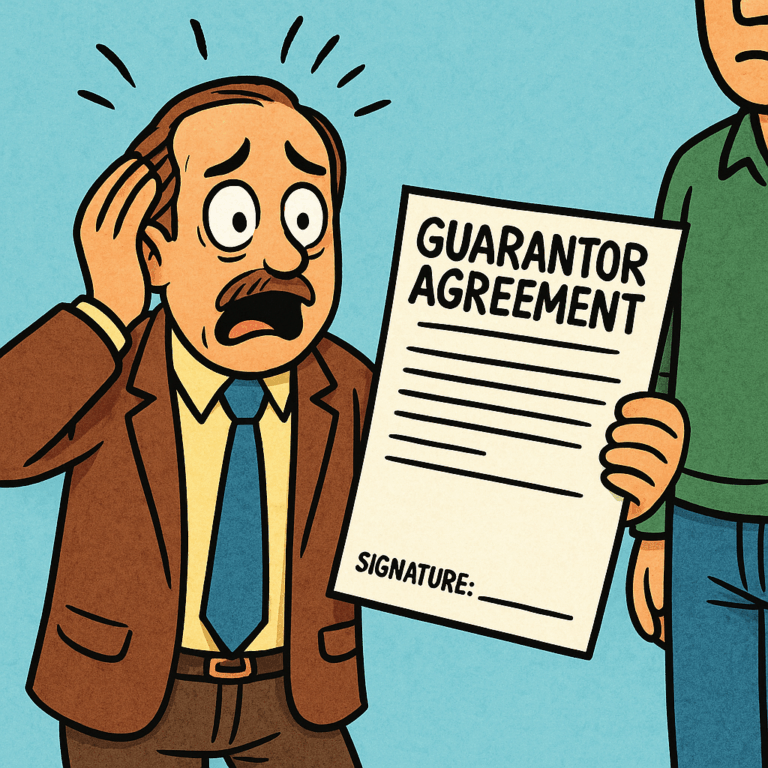

The tenancy looked secure because a guarantor was in place. Confident, the landlord agreed to let the property despite some concerns over the tenant’s income. Months later, arrears built up and the guarantor was approached. But there was a problem — the guarantee form had not been properly executed as a deed, and one page was missing a signature. When challenged, the guarantor’s liability collapsed. The landlord was left with no safety net and several months of rent lost.
Guarantor agreements must meet strict requirements to be enforceable. They must usually be signed as a deed, witnessed, and clearly outline the obligations being guaranteed. Courts have thrown out cases where agreements were ambiguous, not properly witnessed, or signed before tenancy agreements were finalised. In this landlord’s case, the guarantee failed on technicalities, leaving them with no recourse against the guarantor.
The lesson is simple: guarantors can provide strong protection, but only if the paperwork is watertight. Landlords should use properly drafted deed formats, ensure all signatures are correctly witnessed, and keep originals safely filed. A guarantee that fails in court is no guarantee at all.
What do you think?
Have you ever relied on a guarantor agreement — and did it stand up when you needed it? What safeguards do you use to make sure they are enforceable?
Source: Gov.uk guidance on guarantors
Previous articles in this series
Landlord Lessons: The AST date mistake
Landlord Lessons: The missing inventory
Landlord Lessons: The verbal agreement trap
Landlord Lessons: The gas safety lapse
Landlord Lessons: The unprotected deposit
Landlord Lessons: The unlicensed HMO
Landlord Lessons: The electrical safety lapse
Landlord Lessons: The Right to Rent slip
Landlord Lessons: The ignored repair
Landlord Lessons: The insurance blindspot
Landlord Lessons: The rent-to-rent risk
Landlord Lessons: The Section 21 error
Landlord Lessons: The Section 8 misstep
Landlord Lessons: The selective licensing oversight
Landlord Lessons: The EPC blindspot
Landlord Lessons: The rent increase mistake
Comments
Have Your Say
Every day, landlords who want to influence policy and share real-world experience add their voice here. Your perspective helps keep the debate balanced.
Not a member yet? Join In Seconds
Login with
Member Since August 2016 - Comments: 508
10:12 AM, 24th November 2025, About 5 months ago
May I ask that Property118 publish a template Guarantors Agreement for the benefit of all of us?
Member Since January 2011 - Comments: 12193 - Articles: 1395
12:13 PM, 24th November 2025, About 5 months ago
Reply to the comment left by Blodwyn at 24/11/2025 – 10:12
That’s not what we do. I recommend you join a Landlord Association that offers services of this nature to its Members, e.g. the NRLA
Member Since September 2018 - Comments: 3508 - Articles: 5
3:00 PM, 24th November 2025, About 5 months ago
are there any issues now entering an unlimited guarantor agreement bearing in mind the impeding RRA and the immediate change to a monthly periodic tenancy?
I’m potentially about to use a guarantor for an AST that will be an initial 6 month AST then immediately rolling into contractual periodic.
The guarantor liability will be unlimited. The AST will not include any break clauses, and it will be expressly made clear that the guarantor liability will not NOT end when it moves into contractual periodic.
The guarantee will allow for specific variations (such as the rolling liability after the initial term) ends PLUS rent increases.
Is there anything I need to consider?
Member Since January 2011 - Comments: 12193 - Articles: 1395
3:32 PM, 24th November 2025, About 5 months ago
Reply to the comment left by Reluctant Landlord at 24/11/2025 – 15:00
Given the direction of the Renters Rights Act, having a robust guarantor deed is becoming more important, not less. If landlords want something dependable, there are two sensible places to start:
• The NRLA’s legally reviewed guarantor deed templates
• A short, fixed-fee deed prepared by a solicitor who specialises in landlord and tenant work
Both options ensure the guarantee is drafted and executed in the way the courts require. That is usually the point of failure, not the idea of a guarantor itself. With the new Act increasing tenant protections and tightening procedural requirements, relying on generic templates from the internet is far riskier than it used to be.
Member Since August 2016 - Comments: 508
6:39 PM, 24th November 2025, About 5 months ago
This excellent advice is what I wanted before but got the words scrambled. Thank you!
Member Since May 2014 - Comments: 145
1:32 PM, 29th November 2025, About 4 months ago
I am really interested to know how guarantor forms work when they are signed digitaly as this seems to be the way that a lot of landlords and letting agencies do it. Does it then need to be witnessed as a deed because the guarantor is self witnessing its them that is signing as its a digital signature. If you did include on the digital guarantor form for a witness to sign then what would be the point as no one would be able tell if the witness was stood beside the guarantor when they digitally signed the guarantor form.
Would love to get comments on this.
Member Since August 2013 - Comments: 124
11:49 PM, 29th November 2025, About 4 months ago
Not fully sure this is correct. I thought that a deed is only required if there is no consideration. The technicality as I understood it is if the guarantor signs the guarantee after the agreement has been signed then it would need to be a deed.
However, if the guarantee is signed first, obviously(?) it is only valid if the agreement is signed. When the agreement is then signed afterwards consideration passes (the landlord agrees to grant the tenancy in return for the guarantee).
There is no valid tenancy until all parties have signed. So it could follow that if the landlord / agent waits until all guarantees are signed and all tenants have signed, only then does he add his/her/their signature then that is when the agreement become valid, only then does consideration pass and so a deed in not needed.
Just a thought, for an alternative point of view. This deed point crops up every now and then. Could help explain why agents always add their signature last. This is hinted at in the article, but not fully explained. Here the time stamp of electronic signatures really helps.
Member Since May 2014 - Comments: 145
9:55 AM, 30th November 2025, About 4 months ago
Reply to the comment left by Jim at 29/11/2025 – 13:32
This is the wording on the NRLA website members log in area.
Can the Deed be electronically signed and witnessed?
The Law Society’s recent report on electronic signatures has indicated that it may not be possible to validly witness a deed being signed electronically. For example, via video link.
As a result, you are strongly recommended to ensure the guarantor and witnesses are providing a ‘wet’ signature (with a pen) with both parties present to witness the deed.
If this is the case then why do so many letting agencies use digital signatures for the guarantor form?
Member Since August 2013 - Comments: 124
4:02 PM, 30th November 2025, About 4 months ago
Reply to the comment left by Jim at 30/11/2025 – 09:55
“Wwhy do so many letting agencies use digital signatures for the guarantor form?”
Because they sign afterwards?
Member Since July 2013 - Comments: 1996 - Articles: 21
5:43 PM, 4th December 2025, About 4 months ago
Mark you rightly point out that “the guarantee form had not been properly executed as a deed”.
A problem I have seen with documents executed electronically, e.g. with DocuSign or Signable is that the “witness” is not present when the guarantor affixes his or her signature. I have even seen a case where an agent (who shall remain nameless) had “witnessed” every tenant and guarantor even though it was obvious he had not been present.
We must await some court cases but it can do no harm to add the statement: “I confirm the witness was present when I affixed my signature” above where the guarantor signs and for the witness to make the statement: “I confirm I was present when the guarantor affixed his/her signature” above where the witness signs.
If a guarantor seeks to avoid liability later on the grounds that the witness was not in fact present, he may face a claim for false statement which could even be criminal. The landlord can also argue that the guarantor is estopped from denying that the witness was present.