

The EPC blindspot that stopped a landlord letting
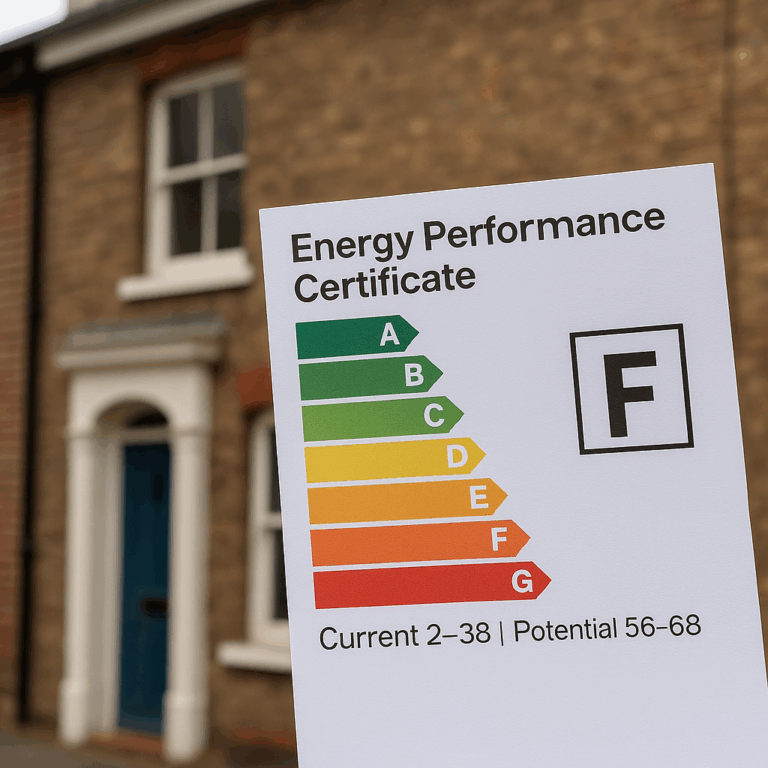

The flat had always been easy to let. But when the last tenant moved out, the landlord hit an unexpected roadblock. The EPC showed an F rating, below the minimum standard of E required for private rental properties in England and Wales. Until costly upgrades were completed, the property could not be legally let. The void dragged on, and the landlord paid thousands for insulation and heating improvements before the flat could return to the market.
Since April 2020, landlords must ensure their rental properties meet the Minimum Energy Efficiency Standards (MEES), with an EPC rating of at least E. F and G rated properties cannot be legally let unless a valid exemption has been registered. Failure to comply can lead to fines of up to £5,000 per property. In this landlord’s case, the oversight meant months of lost rent and unplanned upgrade costs, all of which could have been anticipated had the EPC been checked earlier.
The lesson is clear: landlords should review EPC ratings well before a tenancy ends and plan for improvements in advance. Regulations are expected to tighten further, with talk of higher minimum ratings in future. Keeping on top of EPC requirements not only avoids legal issues but can also make properties more attractive to tenants concerned about energy bills.
What do you think?
Have you ever had to delay a tenancy because of EPC rules? How are you preparing for possible tighter efficiency standards in the coming years?
Source: Gov.uk guidance on EPC rules
Previous articles in this series
Landlord Lessons: The AST date mistake
Landlord Lessons: The missing inventory
Landlord Lessons: The verbal agreement trap
Landlord Lessons: The gas safety lapse
Landlord Lessons: The unprotected deposit
Landlord Lessons: The unlicensed HMO
Landlord Lessons: The electrical safety lapse
Landlord Lessons: The Right to Rent slip
Landlord Lessons: The ignored repair
Landlord Lessons: The insurance blindspot
Landlord Lessons: The rent-to-rent risk
Landlord Lessons: The Section 21 error
3 comments on this article
Learn from your peers’ experience
A different perspective could help you spot an issue, avoid a mistake or find a better way forward. Read the comments and add your own views if you wish.
Member Since December 2023 - Comments: 1665
10:00 AM, 18th November 2025, About 11 months ago
I have continuity plan. It covers everything someone would need to know about the properties, following my death.
I had 4 x Rated D properties.
The EPCs only had a few years left to run so I had them renewed. I made a point of correcting inaccurate assumptions before paying the assessor and two achieved a C rating with no additional work.
One required loft insulation which I installed myself. It achieved a C Rating and I sold the property when the tenant died.
The other is still rated D. My plan is to sell it to the tenant next year. However, if I decide to keep the property, I’d install Solar PV and add more loft insulation. The current tenant uses the loft for storage so adding loft insulation would be awkward and they are happy with their energy costs.
I’d consider fitting Solar PV to all of my properties, if there was some government assistance.
Member Since February 2025 - Comments: 8
5:21 PM, 18th November 2025, About 11 months ago
I am confused by the sugestion here that the roadblock appeared after the previous tenant vacated. Would not the landlrod have already been in breach during the previous ongoing tenancy from 01/04/2023?
‘From 1 April 2023, the requirement for non-domestic landlords to obtain at least an EPC E rating, unless they have registered a valid exemption, applies to all privately rented non-domestic properties (even where there has been no change in tenancy).’
https://www.gov.uk/guidance/non-domestic-private-rented-property-minimum-energy-efficiency-standard-landlord-guidance
Member Since January 2022 - Comments: 17
9:28 AM, 19th November 2025, About 11 months ago
Reply to the comment left by John Jones at 17:21
The Regulations currently only apply when an EPC has been legally required. If there had been no new tenancy or a sale since the EPC regulations were introduced or if any issued EPC had expired, the MEES Regulations would not apply until a new EPC was legally required.
This is one of the challenges with enforcement as it is not clear on a certificate why the EPC has been produced. Many are technically voluntary assessments, including those required by councils for selective licensing schemes, as they are not legally required under the EPC Regulations.
https://www.legislation.gov.uk/ukdsi/2015/9780111128350/regulation/19