

Mortgage delay caused by a tree
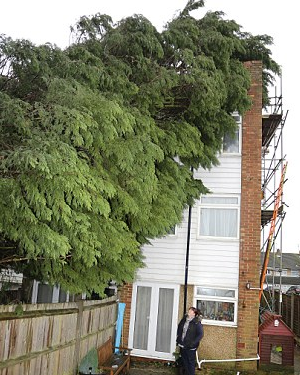

We are re-mortgaging an ex-council flat which has a very large conifer tree standing within 10 metres of the property.
The lenders’ valuer has asked for a report on the possible damage by root action and/or falling, but I cannot find a tree specialist to prepare a report for me. They are either too busy, don’t carry enough insurance or are not interested in visiting Newport, South Wales.
Can anyone help please?
Thanks
Chris Grundy
EDITORS NOTE – the picture posted on the forum page is not the actual tree referred to in this article. It is for illustrative purposes only.
5 comments on this article
Learn from your peers’ experience
A different perspective could help you spot an issue, avoid a mistake or find a better way forward. Read the comments and add your own views if you wish.
Previous Article
Leasehold advice please!!!!Next Article
Flying freehold - advice requested
Member Since January 2011 - Comments: 12256 - Articles: 1481
11:39 AM, 13th December 2014, About 12 years ago
Hi Chris
The RICS surveyor who made the comment should be able to refer you to a specialist capable of providing such a report. Have you asked him?
.
Member Since June 2013 - Comments: 726 - Articles: 1
6:19 PM, 15th December 2014, About 12 years ago
you need an arboriculturist report. im sure they exist in wales! there is no risk of ground heave if the tree post dates the building.
are you the same chris grundy from stratford?
Member Since July 2013 - Comments: 303
9:19 PM, 15th December 2014, About 12 years ago
If the tree surgeon findings requires action. I am sure you cannot touch the tree as it probably belongs to the Council or may even have a preservation order.
The tree will affect the block & not only your flat. Hence the Council should be paying for it as part of garden maintenance cost.
In any case if you have to ask the Council to take action on the above issues. I wish you luck & by the time & if they act on it. You mortgage period would have expired and and instead of receiving a mortgage offer you will be receiving your pension.
Member Since August 2013 - Comments: 179
10:39 AM, 20th December 2014, About 12 years ago
Joe, I hesitate to disagree but ” there is no risk of ground heave if the tree post dates the building” is not correct. As trees grow the root also spread out further and the likelihood of damage increases, particularly to drains which, if broken will allow water to saturate the ground and result in subsidence or heave..
Conifers which have roots close to the surface and tap roots for stability are less of a risk but they are more likely to be blown over causing impact damage. Their need for water is also limited.
Deciduous trees (oak, willow, elm, poplar etc.) have deeper roots which will easily grow under foundations. In addition their need for water is high – perhaps 100 gallons per day for a mature oak – which can cause shrinkage in clay soils.
Member Since June 2013 - Comments: 726 - Articles: 1
10:06 AM, 21st December 2014, About 12 years ago
hi nick,
you were right to hesitate.
heave can only damage a structure if the foundations were laid in desiccated sub soil (which must be cohesive, i.e. clay).
like many other people (including some building professionals) i dont think you understand the mechanism of heave at all. for heave to occur the clay must be abnormally dry and thus shrunk. a leaking drain cannot cause heave unless the clay was already desiccated (and thus the structure was doomed anyway). the excess water will drain away…clay cannot expand ad infinitum. if that were the case clay lined canals would expand into hills!!!!!!!!
and then you refer to water saturating the ground causing heave or subsidence. in cohesive soils subsidence is caused by desiccation, NOT an excess of moisture.
you are right that conifers dont have large root systems but in all other respects you are completely wrong. when i dealt with subsidence claims the main species involved were conifers! this is because they extract moisture all year long, their dense constant foliage shields rainfall thus preventing the ground from rehydrating and because of myths propagated by ignorance, people plant them too close to buildings.
your final para is correct, although that has nothing to do with my statement ”there is no risk of ground heave if the tree post dates the building” .