

London council widens its landlord licensing as inspections uncover safety issues
10 months ago | 12 comments


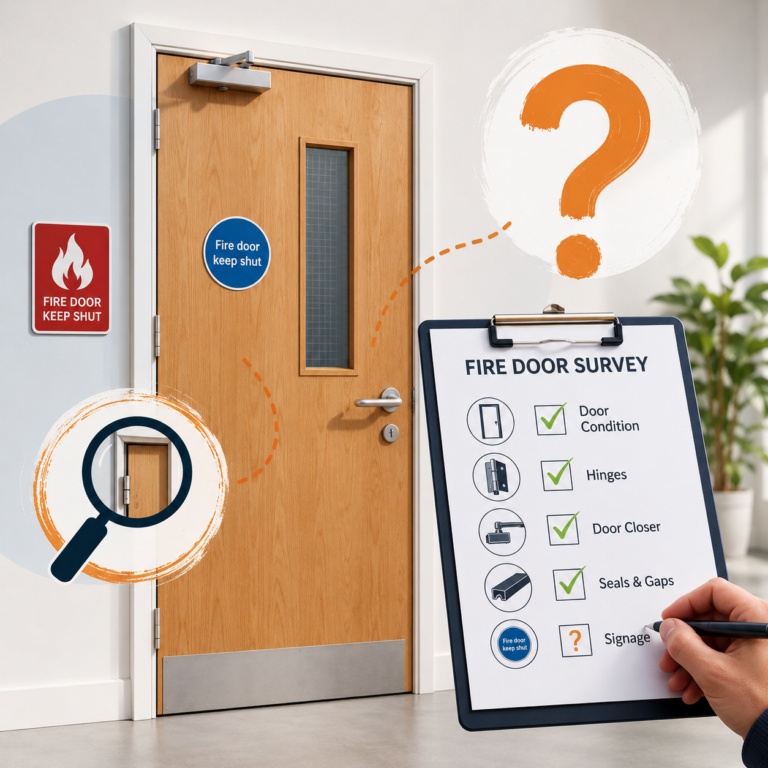
Hello, I am looking for advice on how to proceed regarding my flat’s main fire door. Our managing agent recently arranged for fire door surveys to be completed by an agency for all flats in our building.
The report requested that I complete the following repairs: replace the hinges and letterbox, ensure the gaps around the door are between 2–4mm (some of my current gaps are only 1mm), and install a door closer. The managing agent has instructed me to ensure an FD30 compliance certificate is issued for the door once the work is completed.
However, they have not provided a timeline for this work, nor have they explained the consequences if it is not done.
I invited two local carpenters to quote for the job. Both were happy to carry out the repairs specified in the report for £400–£500 (including parts), but both stated they are unable to issue an FD30 certificate. They mentioned they perform this type of remedial work almost daily due to recent legislative changes.
A third professional inspected the door and quoted £800. He pointed out additional issues not mentioned in the report, claiming that both the locks and the spyhole also need to be replaced.
A fourth professional stated he could complete the work and secure an FD30 certificate via BM TRADA. However, he noted that the spyhole and locks require a fire-resistant intumescent wrap to be compliant. Furthermore, he pointed out that the bottom of the door has a 15mm L-shaped cut to fit the raised threshold, which is non-compliant.
He proposed grinding down the raised threshold with an angle grinder, shaving the bottom of the door flat, and installing intumescent strips on all sides for £400. He warned that leaving the L-shaped cut as-is would result in an automatic inspection failure.
I was close to hiring him, but he insisted on cash payment, which made me uncomfortable, so I declined.
I then sought two more quotes from highly-rated, established carpentry businesses. The first provided an online quote for a brand-new door, stating they cannot repair the existing one because the L-shaped cut makes it an automatic failure. The second carpenter offered to complete the agency-specified repairs for £400, claiming the L-shaped cut is standard (noting that all flats in the building have it) and that intumescent strips are never applied to the bottom of a door anyway. Neither of these companies can issue an FD30 certificate.
I contacted the agency for clarification, but they refused to comment on items not in the original report (such as the locks or the L-shaped cut) without a reinspection and an additional fee.
I am in a difficult position. The agency will likely return next January on the managing agent’s instructions.
How likely is it that they will flag these additional issues (the locks and the L-shaped cut) during their next inspection?
Thank you,
Rita
40 comments on this article
A different perspective could help you spot an issue, avoid a mistake or find a better way forward. Read the comments and add your own views if you wish.
Previous Article
Housing crisis deepens as new build developments drop
10 months ago | 12 comments

6 months ago | 5 comments

2 years ago | 10 comments
Member Since October 2023 - Comments: 1
1:45 PM, 18th July 2026, About 3 months ago
Good day. Whilst we all as landlords have our tenant’s safety as our priority I believe it’s just like the wild west with many of these fire professionals seeking to fleece landlords. I have reported on what I considered unprofessional and borderline dishonesty by a fire professional. Just get several quotes and don’t rush. I can recommend the company I eventually used for my 2 flat property if you’re able to reach out to me directly. Good luck.
Member Since March 2015 - Comments: 36
1:08 PM, 19th July 2026, About 3 months ago
Reply to the comment left by rita chawla at 16:45
Further to this, checked lease and it is not stated whose responsibility the door are.. It states my responsibility includes internal faces of external walls, windows ceilings, floors etc. the management company ‘s responsibility is main structural parts of the building, roof, external parts. A few leaseholders enquiried with the managing agent and they refused to do the works saying it’s not their responsibility.
Where does that leave me? Can I do anything to enforce the managing agent to do this or should I get it done myself?
Member Since September 2013 - Comments: 242
6:44 PM, 19th July 2026, About 3 months ago
Hi Rita, i had an email notification that you had posted I could just see in the email a snippet of your post and I gather it is not in your lease that your entrance door is demised to you. Unfortunately I cannot see the rest of your post here. If you lease does not specifically state it is your responsibility I am pretty sure it isn’t and the person in charge of your block should be arranging everything and charging through your service charge, but I am not a lawyer. If you need help with your lease the Govt. leasehold advisory service are brilliant they will answer questions free of charge. They are quick with written replies and will even phone you and talk it through. One thing is for sure it has to be done and quickly.Good luck. https://www.gov.uk/government/organisations/leasehold-advisory-service
Member Since October 2023 - Comments: 98
7:20 PM, 19th July 2026, About 3 months ago
Reply to the comment left by LS at 19/07/2026 – 18:44
I may have missed it, but I don’t think the OP has said the height (number of floors) in the building. That could be critical too.
If the lease is silent about the door, it may be indicated elsewhere eg on the plan. It may actually be a red herring because whether the landlord fixes it, or the management company fix it and add it to the service charge, it is still the landlord who will pay and it may be more cost effective not to use the managing agents choice of contractors.
Ultimately it is the PAP who is responsible, so they should be giving you guidance
Member Since September 2013 - Comments: 242
7:42 PM, 19th July 2026, About 3 months ago
Reply to the comment left by Tim Peters at 19/07/2026 – 19:20
It doesn’t matter how many floors there are the law stands for all flats. The difference is if the building is more than 11 metres high the inspection periods are much shorter and more rigid, every 3 months instead of regularly. “ The payment responsibility is generally split as follows:Communal Area Fire Doors: Fire doors in hallways and stairwells are the landlord’s responsibility and are almost always funded by all leaseholders via the building’s Service Charges.Flat Front Doors: If the door is the main entrance to your individual flat, the responsibility often falls on the leaseholder to pay for it if the lease states the door belongs to your property.Building Safety Act Protections: Under the Building Safety Act 2022, qualifying leaseholders in buildings over 11 meters (or 5 storeys) are legally protected. If the repairs or replacements relate to historical safety defects, landlords are legally barred from passing these costs onto you.”
Member Since September 2013 - Comments: 242
7:42 PM, 19th July 2026, About 3 months ago
Reply to the comment left by Tim Peters at 19/07/2026 – 19:20
It doesn’t matter how many floors there are the law stands for all flats. The difference is if the building is more than 11 metres high the inspection periods are much shorter and more rigid, every 3 months instead of regularly. “ The payment responsibility is generally split as follows:Communal Area Fire Doors: Fire doors in hallways and stairwells are the landlord’s responsibility and are almost always funded by all leaseholders via the building’s Service Charges.Flat Front Doors: If the door is the main entrance to your individual flat, the responsibility often falls on the leaseholder to pay for it if the lease states the door belongs to your property.Building Safety Act Protections: Under the Building Safety Act 2022, qualifying leaseholders in buildings over 11 meters (or 5 storeys) are legally protected. If the repairs or replacements relate to historical safety defects, landlords are legally barred from passing these costs onto you.”
Member Since October 2023 - Comments: 98
7:47 PM, 19th July 2026, About 3 months ago
So can you explain this…
“It doesn’t matter how many floors there are”
And
“Qualifying leaseholders in buildings over 11m are legally protected ”
That is why the height of the building DOES matter.
As you said, you are not a lawyer
Member Since April 2018 - Comments: 637
7:51 PM, 19th July 2026, About 3 months ago
Reply to the comment left by LS at 19:42
I have just queried why my property management are surveying flat doors annually when it seems quite clear from UK Gov this only needs to be if the top floor is over 11 metres from ground level, usually 4 storeys and above.This is a 3 storey building. Am i correct in my understanding?
Member Since March 2015 - Comments: 36
8:30 PM, 19th July 2026, About 3 months ago
Reply to the comment left by LS at 18:44
Hi Lucy, yes lease is not clear. my responsibility includes internal faces of external walls, windows ceilings, floors etc. The management company responsibility is main structural parts of the building, roof, external walls. Door not mentioned. Mgt company is refusing to progress this, saying it’s not their responsibility. The building has 4 floors Inc ground floor
Member Since October 2023 - Comments: 98
8:36 PM, 19th July 2026, About 3 months ago
Reply to the comment left by David at 19/07/2026 – 19:51
Well…yes….and no.
The 2022 regs do not require formal quarterly checks of communal doors and annual checks of entrance doors at that height,
But
The fire safety order 2005 guidance suggests 6 monthly checks and an annual inspection of flat doors.
Whilst that is only guidance, if anything happened it would not be good if they couldn’t show documented records of inspections as this could be a general failure under the 2005 regs.
The checks required can be done by “a competent person” but most agents are basically trying to pass the risk which is why they bring in a specialist firm (especially since they aren’t paying for it).
So on balance, although it isn’t a strict legal requirement, if you tried to challenge it as being a waste of money at the first tier Tribunal, the court would probably disagree and say that the managers were just ensuring that their duties were competently discharged