

Council leaders call for longer eviction notice periods to prevent homelessness
2 years ago | 83 comments


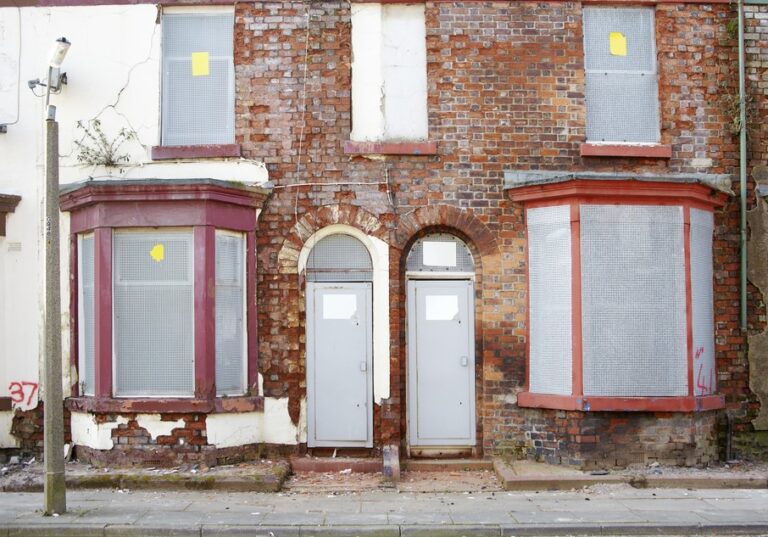
Council tax on a property that has been left vacant for a year will double from April 1, the government has announced.
The initiative is aimed at helping boost housing supply for local people by bringing empty homes back into use.
The property must be occupied within a year to avoid the tax hike, a big reduction from the previous two-year threshold.
Local councils will also gain the authority to levy extra taxes on second homes from next year – which could help boost council coffers – and help keep council tax bills down for all residents.
Simon Hoare, the minister for Local Government, said: “Long term empty properties are shutting local families and young people out of the housing market as they are being denied the opportunity to rent or buy in their own community.
“So, we are taking action as part of our long-term plan for housing.
“That means delivering more of the right homes in the right places and giving councils more powers to help give local people the homes they need.”
The Department for Levelling Up has also published details of exempted properties including those that are uninhabitable because renovation costs are too high.
Second homes that can’t be used all year round because of planning restrictions and grieving families who inherit an empty property are also exempt.
The move offers clarity to property owners who can now plan for the change and councils will get more money for local services.
This announcement follows the recent move to give councils more control over short-term lets by making them subject to the planning process.
That will stop people from being ‘pushed out’ of their local area and help prevent the ‘hollowing out’ of local communities, the government says.
The latest news is part of the government’s longer-term plan for housing and helping to unlock more homes for people.
Every day, landlords who want to influence policy and share real-world experience add their voice here. Your perspective helps keep the debate balanced.
Not a member yet? Join In Seconds
Login with
Previous Article
Call for more PRS enforcement funding in EnglandNext Article
Landlords help to boost local economies
2 years ago | 83 comments

2 years ago | 11 comments
2 years ago | 7 comments
Sorry. You must be logged in to view this form.
Member Since February 2020 - Comments: 360
10:22 AM, 12th March 2024, About 2 years ago
Empty homes are not shutting people out, just as unused cars are not stopping people from travelling.
The problem is letting too many people in and not building enough and not let people be financially rewarded for building houses.
The implications that a property owner is responsible for someone else’s problems and that we do not hold absolute property rights.
We are here to do our masters bidding the easy way or the hard way.
Member Since July 2013 - Comments: 1996 - Articles: 21
12:09 PM, 12th March 2024, About 2 years ago
Remember folks, this is an allegedly Tory Government imposing this. I doubt there is enough evidence to convict the Tories of being conservative. One wonders how Labour will be worse.
This pernicious tax hike shows the disconnect between local taxes and local services: “If you use zero services you will pay double.”
Member Since October 2020 - Comments: 1144
2:20 PM, 12th March 2024, About 2 years ago
Has anyone got a link to the specific legislation that allows this?
Member Since June 2014 - Comments: 1562
2:59 PM, 12th March 2024, About 2 years ago
Reply to the comment left by David at 12/03/2024 – 14:20
Levelling-up and Regeneration Act 2023
https://www.legislation.gov.uk/ukpga/2023/55/section/80#:~:text=%E2%80%9C11CHigher%20amount%20for%20dwellings%20occupied%20periodically%3A%20England&text=(b)the%20amount%20of%20council,may%20specify%20in%20the%20determination.
Member Since September 2018 - Comments: 3511 - Articles: 5
3:06 PM, 12th March 2024, About 2 years ago
Reply to the comment left by Monty Bodkin at 12/03/2024 – 14:59
interesting the legislation states
two conditions have to be met..
(2)The conditions are—
(a)there is no resident of the dwelling, and
(b)the dwelling is substantially furnished.
What is deemed as ‘substantially furnished’ is the obvious next question…
Member Since September 2018 - Comments: 3511 - Articles: 5
3:08 PM, 12th March 2024, About 2 years ago
https://assets.publishing.service.gov.uk/media/5a7ecfac40f0b6230268bb10/140923-CTIL_on_EHP.pdf
Member Since October 2019 - Comments: 394
5:26 PM, 12th March 2024, About 2 years ago
Our council have been doing that for years + licensing and fines they’re simply after money. I sold up and went elsewhere, now there’s no escape. To charge double says it all – money!
Member Since August 2013 - Comments: 788
8:10 PM, 12th March 2024, About 2 years ago
One way to overcome this rule would be to register someone from your family as living and occupying it, as a single entity and get 25% discount on CT. But of course you got be able to show that someone actually lives there, so furnish, it, and spend sometime living in it, then go on long holidays!
Member Since May 2019 - Comments: 42
9:24 PM, 13th March 2024, About 2 years ago
Is empty homes really a major problem.. Take out properties that are empty for lack of funding for repairs, awaiting probate /legal dispute, missing owners, isolated/remote .. How many are there compared with Council Housing waiting lists? Someone tell the useless government they need to build more houses or stop population growth..