

Government claims possession reforms will ease court pressure
6 months ago | 19 comments


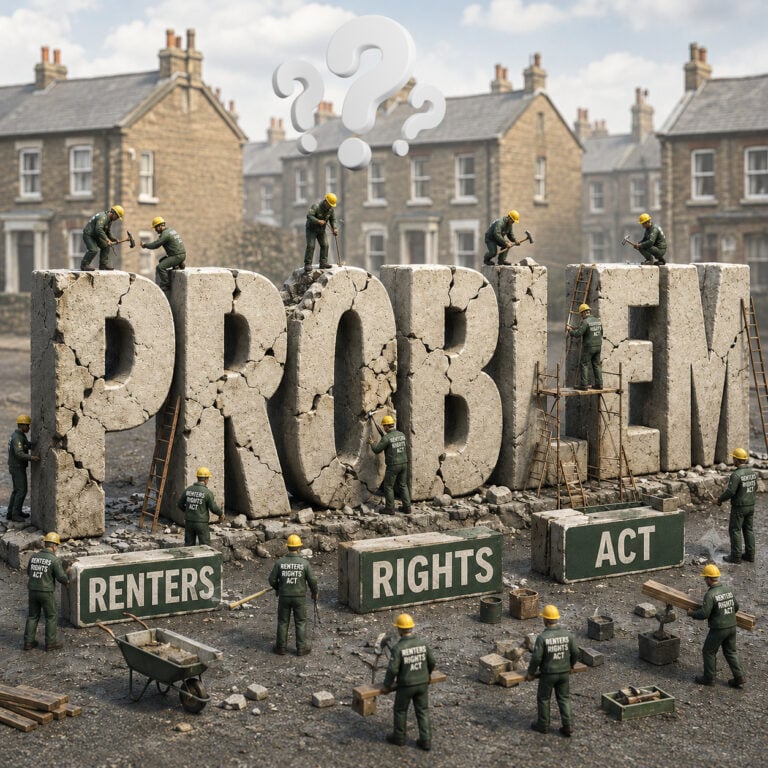
The vitriol directed at landlords has resulted in laws that protect rogue tenants to a quite remarkable degree, delaying their inevitable removal, often at the expense of the landlord’s health and well-being.
The truth is rogue tenants, people who disrespect the contract, then use the law to support their errant behaviour, are better served now than prior to the act. Landlords now more than ever need to protect themselves from rogue tenants by increasing the level of vigilance in very, very careful vetting. Once the rogue tenants are in, it is too late.
The problems the act purported to fix were much less prevalent than the politicians led us to believe, 0.5% (1 in 200), tenancies ended in bailiff eviction, but the media and MPs focused on single cases and hyped this as the norm, till it became the conventional wisdom.
A story was told that landlords were repeatedly raising rents to prey on vulnerable tenants, but this narrative was simply blowing smoke.
The government claimed to need a huge new act to address wrongs committed by lazy, greedy landlords. Namely, landlords raising rents unfairly and the tenants having no legal redress. The government chose to ignore that long before the Renters’ Rights Act came into effect, tenants could have a rent rise checked and reduced by the first-tier tribunal.
Also, for periodic tenancies, it was unlawful to raise rents more than once a year, despite banks being able to increase landlord costs or mortgages multiple times a year; landlords were already restricted.
The laws before the act were largely governed by the Housing Act 1988.
Under the Housing Act 1988, which previously governed most tenancies, rent increases for Assured Shorthold Tenancies (ASTs) in England already followed strict legal procedures.
For fixed-term ASTs, rent could only be increased if:
For periodic (“rolling”) tenancies, landlords generally had to use a Section 13 notice (Form 4) to raise the rent.
There were also existing safeguards:
Importantly, tenants could apply to the First-tier Tribunal before the new rent took effect. The Tribunal would assess local market evidence and determine an appropriate market rent.
Crucially, prior to the new reforms, the Tribunal was also able to set the rent higher than the landlord’s proposed increase if it concluded the requested figure was still below market value. Any revised rent could also be backdated to the date specified in the landlord’s notice.
Given that landlords could already only increase rents within legal limits, and tenants already had access to independent legal redress, the question remains: What actual problem did the Renters Rights Act fix?
Crucially, in 2019, the Tribunal had the power to set a rent higher than what the landlord initially proposed if they felt the proposal was still below market value. The outcome the new rent usually applies from the date of the landlord’s notice, meaning it could be backdated.
Given a landlord can set the rent at market levels even now, what problem did the RRA fix? What does the Property118 community think?
Regards,
Paul
15 comments on this article
A different perspective could help you spot an issue, avoid a mistake or find a better way forward. Read the comments and add your own views if you wish.
Previous Article
House price growth slows in Scotland
6 months ago | 19 comments

5 months ago | 3 comments

5 months ago | 41 comments
Member Since June 2018 - Comments: 38
10:35 AM, 13th May 2026, About 5 months ago
Excellent points Paul. The government carefully crafted an alleged ‘rogue landlord’ majority to cynically score political points, damaging tenant/ landlord trust in the process. I won’t be surprised if they tweak the EPC algorithm for 2030 so that unimproved ‘D’ properties magically comply with the new ‘C’ minimum. This will doubtlessly be hailed as a major housing standards improvement achieved by Labour.
Member Since January 2015 - Comments: 1623 - Articles: 1
11:47 AM, 13th May 2026, About 5 months ago
Wasn’t to fix anything. Nothing but a vote catching exercise.
Tenants who voted Labour with the purpose of getting this legislation have been sold down the river.
No longer will tenants be able to say “It wasn’t my fault I was evicted”. Every future landlord, and maybe others eg mortgage providers, will know the reason(s) why.
Tenant security of tenure? That’s a laugh tbh. Fixed terms were security of tenure.
Member Since January 2025 - Comments: 76
2:25 PM, 13th May 2026, About 5 months ago
Reply to the comment left by Richard Dean at 13/05/2026 – 10:35
Isn’t the EPC C requirement deadline 2028, and 2030 is the deadline for any tenancies that started before the 2028 deadline?
Member Since June 2018 - Comments: 38
2:38 PM, 13th May 2026, About 5 months ago
Reply to the comment left by Billy Gunn at 13/05/2026 – 14:25
You may be right Billy, I’ve only heard of the 2030 date but may have missed something. It will be interesting to see if the announced deadlines are adhered to.
Member Since January 2025 - Comments: 76
7:27 PM, 13th May 2026, About 5 months ago
Reply to the comment left by Richard Dean at 13/05/2026 – 14:38
I’ve done some research
2028 has been scrapped! Time to open the bottle of Rum!
October 1st 2030 is the deadline, £10,000 cap. Any money spent on EPC upgrades since 2025 count towards the 10K cap
But the next general election is in 2029 so anything could happen!
Member Since July 2013 - Comments: 363
8:11 PM, 13th May 2026, About 5 months ago
It achieved a massive win for councils.
We all know many landlords had little or no option but to use sec21 to try and evict bad non paying antisocial tenants.
Now landlords will have to use Sec 8 rent arrears or anti social behaviour..
Councils are no longer obliged to house them as they made themselves intentionally homeless.
Wait to see how many councils start to use this to reduced council housing waiting lists.
Member Since October 2022 - Comments: 278
12:31 AM, 14th May 2026, About 5 months ago
What problem did the RRA fix? It wasn’t meant to fix anything, apart from the prevalence of private landlords compared to corporate, and the property rights that direct landlord ownership implies.
Corporations failed to take over as intended after the massive 2016 tax changes, and some landlords declined to continue providing accommodation, leaving a shortfall. Government then had to do something to stop the carnage whilst winning the votes of disgruntled tenants who were the ultimate losers in this power struggle. They did this by blaming private landlords for exercising their rights by choosing not to continue housing people and for raising rents to cover higher costs, thereby justifying them making life ever more unpleasant for landlord “parasites”.
The process of demonising an entire category of people just for having something that is in demand is disturbingly similar to the ways that the Nazis demonized the Jews with constant selective negative publicity in order to galvanise public opinion against them (although thankfully not resulting in mass murder in this case).
I for one could manage quite happily and have a much easier life if I stopped letting out property and just retired and spent my time and money on myself instead of on others. But somehow I would be the bad guy either way.
As the saying goes: “Heads I win, tails you lose” .
Member Since October 2023 - Comments: 50
5:30 PM, 14th May 2026, About 5 months ago
Politicians they all the same playing politics with our lives to get votes. And media stirring the public as ever. Nothing is transparent.
Member Since May 2024 - Comments: 174
5:40 PM, 14th May 2026, About 5 months ago
The RRA was only ever supposed to fix the renter vote for an increasingly unpopular party. Of course Labour have messed this up and are even less popular now.
Member Since May 2026 - Comments: 1
6:01 PM, 14th May 2026, About 5 months ago
Reply to the comment left by Richard Dean at 13/05/2026 – 10:35
Your comments ignore the fact the Form 13 procedure and so called safeguards were illusory . If the tenant didn’t agree the increased rent , the landlord just served a s21 Notice .