

Minimum Energy Efficiency Standards – EPC rating E by April 2018
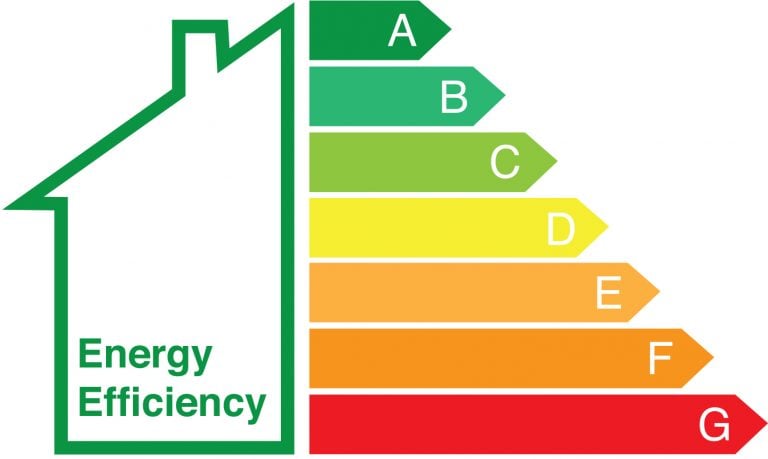

From April 2018 under the Minimum Energy Efficiency Standards (MEES) it will be unlawful in England and Wales to grant a new tennacy on a property with an Energy Performance Certificate (EPC) of less than E.
The Department for Business, Energy and Industrial Strategy have issued guidance for landlords and local authorities, because it is believed up to 1 in 20 properties would not achieve and EPC rating of E.
Click Here to see the full guidance.
The Energy Efficiency Regulations 2015 are designed to tackle the least energy efficient properties in
England and Wales – those rated F or G on their EPC. The Regulations establish a minimum standard for both domestic and non-domestic privately rented property, effecting new tenancies from 1 April 2018.
- From the 1st April 2018, landlords of relevant domestic private rented properties may not grant a tenancy to new or existing tenants if their property has an EPC rating of band F or G.
- From the 1st April 2020, landlords must not continue letting a relevant domestic property which is already let if that property has an EPC rating of band F or G
It will be local authorities that are tasked with enforcing the new minimum energy efficiency ratings.
An EPC lodged with the EPC register will be valid for 10 years so there will be no need for a new EPC for each new tenancy.
The current domestic regulations are based on a principle of ‘no cost to the landlord’, this means that landlords of F or G rated homes will only be required to make improvements to these properties where they can do so entirely using third party finance from one or more sources.
The Green Deal, is one of the ‘financial arrangements’ that landlords of domestic properties can use to fund improvements under the Regulations. Where available, Green Deal finance will enable landlords to cover some or all of the costs of compliance through the Pay As You Save mechanism.
Where funding is not available to fully cover the cost of making a recommended improvement then the landlord will not be required to make that improvement to the property. However, where a property cannot be improved to EPC E because recommended measures cannot be installed without cost, the landlord will still need to take steps to register an exemption on the national PRS Exemptions Register.
21 comments on this article
Learn from your peers’ experience
A different perspective could help you spot an issue, avoid a mistake or find a better way forward. Read the comments and add your own views if you wish.
Previous Article
CPI inflation hits 3% but Carney says it has not peakedNext Article
Eviction by Bank for landlord mortgage arrears?
Member Since February 2016 - Comments: 1057
12:12 PM, 23rd October 2017, About 9 years ago
Reply to the comment left by David Price at 21/10/2017 – 19:18
Don’t do that David, you talk a lot of sense on other subjects too.
Member Since May 2015 - Comments: 2326 - Articles: 2
1:19 PM, 23rd October 2017, About 9 years ago
Reply to the comment left by Old Mrs Landlord at 23/10/2017 – 12:12
Thank you for your kind words.
Member Since August 2016 - Comments: 1198
9:20 AM, 26th October 2017, About 9 years ago
One of my properties has an EPC which is ten years old in January and hence will expire. Tenant been in situ for three years and appears long term. Do I have to obtain a new EPC in January or can I simply wait until tenant eventually moves on and just obtain a new one when I advertise for a new tenant ?
Member Since March 2016 - Comments: 254
10:13 AM, 26th October 2017, About 9 years ago
I’m intrigued by the social housing exclusion
Section 1.1.3 Relevant tenancies (Regulation 19) …
‘The minimum standards do not apply to the social housing sector, …’
page 15 of the Domestic Private Rented Property Minimum Standard; October 2017
Social housing as defined by the Energy Act 2011 42(2)
Can this be right? Have I missed something?
Hamish
Member Since February 2011 - Comments: 3462 - Articles: 286
10:57 AM, 26th October 2017, About 9 years ago
Hi Dylan,
Under the Deregulation act you need an EPC (presumably up to date) before you can issue a section 21.
Member Since February 2011 - Comments: 3462 - Articles: 286
10:58 AM, 26th October 2017, About 9 years ago
I think the double standard is correct !
Member Since March 2016 - Comments: 254
11:50 AM, 26th October 2017, About 9 years ago
Reply to the comment left by Neil Patterson at 26/10/2017 – 10:58
Are there separate mechanisms for social housing elsewhere?
Member Since June 2014 - Comments: 1574
11:56 AM, 26th October 2017, About 9 years ago
Reply to the comment left by Neil Patterson at 26/10/2017 – 10:57
Section 21 and Deregulation Act only applicable to tenancies starting after 1st October 2015.
“Tenant been in situ for 3 years”
Not sure your presumption EPC has to be up to date is correct but for the sake of a tax deductible £34, probably best to get it renewed.
Member Since August 2016 - Comments: 1198
2:02 PM, 26th October 2017, About 9 years ago
Reply to the comment left by Monty Bodkin at 26/10/2017 – 11:56
Thanks Monty I agree might as well get it renewed.
Comments: 1
12:33 AM, 3rd November 2017, About 9 years ago
I read about this on the news. we created a guide on section 63 – http://www.scottishenergyservices.co.uk/wp-content/uploads/SES-Commercial-EPC-Guide.pdf