

Landlords face a £23.4 billion bill to upgrade PRS homes to meet EPC standards
2 years ago | 3 comments


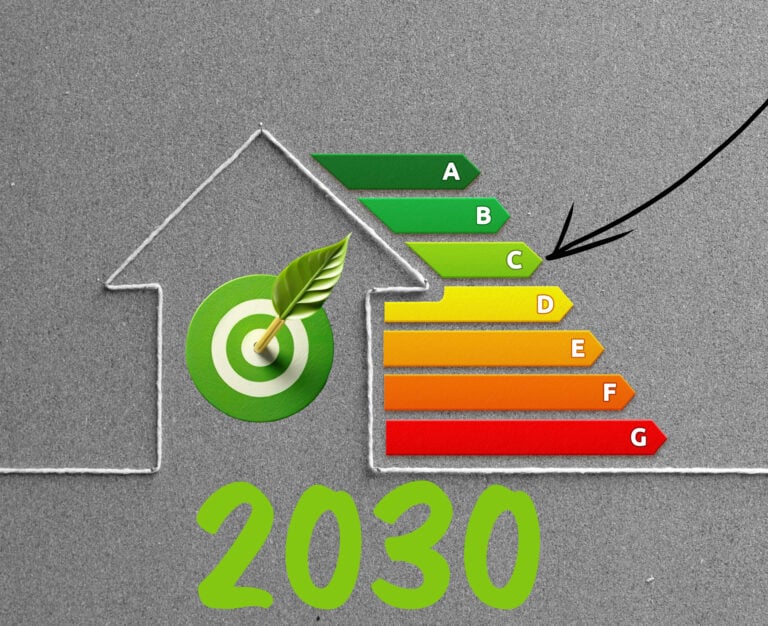
It could take landlords in the private rented sector (PRS) more than two decades to recoup the costs of upgrading their properties to meet the government’s minimum EPC C rating deadline by 2030.
The research from lettings and estate agents, Benham and Reeves, found that the average cost of upgrading a sub-C rated property to a C or above in England is £7,396.
While this improvement is expected to create an annual energy bill saving of £280, it would take the average landlord an astonishing 26.4 years to meet the expected annual cash savings.
However, landlords in the capital face a daunting 31.7 years to recoup their investment.
Marc von Grundherr, a director of Benham and Reeves, said: “Since taking power, our new government has launched a range of initiatives designed to win the vote of the average tenant without much thought for the wider rental market and plans to make EPC requirements of a C mandatory are yet another example of this.
“Insisting that landlords make such a sizable investment into the energy efficiency of their property for what is, let’s face it, a very marginal improvement, is only likely to act as another deterrent to investors.
“Especially when you consider that it would take almost 27 years to recoup this investment on the money saved on energy bills and the average landlord only remains in the sector for a decade.”
He added: “What’s more, current plans provide no guarantee that carrying out any work will actually improve an EPC score and when you also consider the lack of tradespeople and the high prices they’re commanding as a result.
“It’s no wonder many landlords may think twice about their future within the sector.
“Those who do remain will inevitably have to pass any cost incurred in meeting an EPC C rating onto the tenant in the form of higher rent, further exacerbating the current issue of rental market affordability.”
Landlords in London face an average upgrade cost of £7,807 and an expected annual energy bill saving of £247 – and an average payback period of 31.7 years.
Benham and Reeves say this figure is much higher than elsewhere because there are higher average upgrade costs in the capital
Also, the prevalence of Grade II listed buildings, means they tend to have limited potential for energy efficiency improvements.
Other regions with longer-than-average payback periods included the East Midlands (30.8 years), North East (29.8 years) and East of England (27.0 years).
While the South West region offered the highest potential energy bill savings, its relatively high upgrade costs meant that landlords there would still need to wait an average of 22.5 years to recoup their investment.
12 comments on this article
A different perspective could help you spot an issue, avoid a mistake or find a better way forward. Read the comments and add your own views if you wish.
Previous Article
No common access to roof space?
2 years ago | 3 comments

2 years ago | 9 comments

2 years ago | 19 comments
Member Since December 2023 - Comments: 1665
9:25 AM, 10th October 2024, About 2 years ago
You need to add in the cost of the as yet undefined Decent Homes Standard.
I’m sure most PRS homes are already at a good standard. However, Labour’s DHS could include nonsense such as a new kitchen or bathroom every 20 years, regardless of how well the current kitchen or bathroom has been maintained by the landlord and how well it has been cared for by the tenants. Regardless of whether the tenant actually wants a new kitchen of bathroom.
Every word that Labour spout means more cost for landlords, more taxes for workers and lower standards for everyone other than those in benefits and those that have gamed the asylum system.
Again, the asylum seekers have certainly found it.
Member Since February 2018 - Comments: 628
10:40 AM, 10th October 2024, About 2 years ago
You are not intended to meet the standards, you are meant to imooverish yourself in the attempt or to, eventually, be penalised for failing to do so, this is zero to with housing but EVERYTHING to do with the insanity of Technocry driven fake ‘sustsinsble development’ goals, in other words, politics and control.
Member Since July 2019 - Comments: 14
10:43 AM, 10th October 2024, About 2 years ago
The landlord would never recoup the £7396 (unless it adds that to the sale price of the property or is a bills inclusive AST) as the benefit goes to the tenant. A more accurate way a business will look at this is £7396 would need to be borrowed (at say 6% interest rate on a BTL mortgage) so would cost £444 /year which will be added to the rent in return for provision of a higher quality home. The Landlord is in a cost neutral position and the tenant will save £280 on their energy bill so will be £164/year worse off.
Member Since June 2019 - Comments: 977
10:43 AM, 10th October 2024, About 2 years ago
Perhaps they should read what they wrote! Landlords do not get a penny back from the investment without raising the rent…..
This is why homeowners do not consider huge costs to be worth the small energy savings. Landlords are not going to wait decades to get their investment back, I would be surprised if they were happy to wait five years as the investment has lost interest as well.
Member Since November 2022 - Comments: 6
11:05 AM, 10th October 2024, About 2 years ago
How can we even do the necessary in conservation areas? We are coming up against problems with the local council refusing planning permission for new windows. Its a joke when you look at what is already in this so called conservation area which has plastic and aluminium windows already
Member Since August 2013 - Comments: 33
11:39 AM, 10th October 2024, About 2 years ago
The worst landlords are the councils and social housing. They should put their own houses in order first!!! Then they would realise how expensive EPC upgrades are.
Member Since May 2020 - Comments: 17
11:41 AM, 10th October 2024, About 2 years ago
I’m sure whatever costs are incurred to improve the E P C rating by the landlord will be recovered by larger rent increase
Member Since March 2022 - Comments: 388
11:46 AM, 10th October 2024, About 2 years ago
The landlord does not get the savings from EPC upgrades the tenant does. If a landlord ups the rent by the cost of the meagre energy savings the tenant is making it will not advantage the tenant and it will take the landlord decades to recover the upgrade cost.
Landlords are being urged to be more professional and business- like. A business would not make an investment that will take decades just to break even. They would seek to recover costs plus interest in a much shorter period. If landlords took this approach, tenants especially at the lower end of the market (whose properties cost more to upgrade) will be faced with large percentage rent rises that will by far out-weigh their energy savings.
If a landlord cannot recover the money this way, selling up without upgrading may be a sensible business decision.
Member Since December 2023 - Comments: 1665
1:09 PM, 10th October 2024, About 2 years ago
As with anything, the devil is in the detail. We need to understand how data is interpreted in order to understand if the recommendations make any sense,
I found that replacing a old gas-fired boiler with a new one made significant improvements to my property’s EPC. Does this count as a cost to improve the EPC or simply a cost of repairing the heating system. Likewise, replacing worn out doors and windows can improve the EPC Rating.
I recently spent just £218 on loft insulation. The new EPC was Rated C (71) whilst the old one was Rated D (55) in 2010. Since the earlier EPC, I’d replaced the gas boiler twice and had a new door fitted.
As I see it, the cost of gaining a C Rating was £218 (I installed it myself so could add a few quid for a disposable coverall, masks, eye protection and gloves). Others might think it cost two boilers and a new door as well as the loft insulation which would lift the cost to around £5,000.
Member Since December 2023 - Comments: 1665
3:10 PM, 10th October 2024, About 2 years ago
Reply to the comment left by AdrianB at 10/10/2024 – 10:43
Nice idea but so-called EPC improvements often make homes less valuable. The improvemnets rarely make house prices rise by as much as the spend.
I’d be looking to recover the cost over 10 years (capital and interest). My rents are lower than LHA so I would have room to do this. As it is, all but one are EPC Rated C already. The final one (Rayed D) should be sold within two years.