

Government vows to tackle damp and mould in PRS
10 months ago | 18 comments


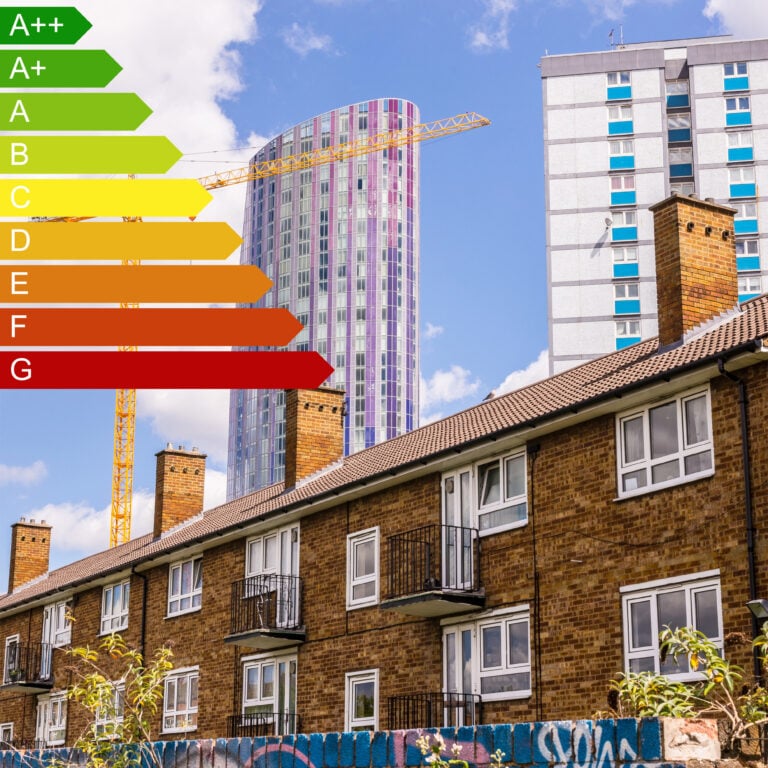
The government has confirmed all private and social landlords will need to meet the Decent Homes Standard (DHS) by 2035.
Generation Rent has accused the government of “dragging their feet” after opting for a 2035 target .
The news comes after the government confirmed all private landlords will need to meet EPC C targets by 2030.
Under the new standard, landlords will need to meet certain criteria, including that homes must be in a reasonable state of repair and provide core facilities and services, including a kitchen with adequate space and layout, an appropriately located bathroom and WC, and adequate protection from external noise.
A government document says homes must also be equipped with child-resistant window restrictors and provide a reasonable degree of thermal comfort. This includes ensuring homes meet Minimum Energy Efficiency Standards.
Homes will be classed as non-decent if a landlord has not remediated damp and mould. More information on the criteria can be found by clicking here.
Housing Minister Matthew Pennycook says too many tenants are living in poor quality housing, with 21% of homes in the Private Rented Sector (PRS) and 10% of homes in the social rented sector failed to meet the DHS.
He said: “Our new, modernised DHS is designed to meet modern expectations of housing quality. By setting out in plain terms a series of ambitious yet proportionate standards for landlords to adhere to, it will help ensure we continue to drive down rates of non-decency across the country.
“Importantly, our new DHS will apply to both the social rented sector and private rented sector, meaning that all tenants in rented housing will benefit, regardless of who their landlord is.
“This important reform is one of a series of changes this government has made to drive a transformational and lasting change in the safety and quality of our housing stock. Our expectations are clear: no tenant should have to live in unsafe conditions for any amount of time, and social and private landlords should act as quickly as possible to ensure their properties are decent.
“However, we recognise the significant challenges that landlords are facing as a result of the bold and comprehensive regulatory changes we are enacting. We are also acutely aware that we are asking social landlords to balance the competing demands of improving their existing stock and building more desperately needed social and affordable homes. As such, we have decided that all rented properties will be required to meet the new DHS by 2035 at the latest, an implementation timeline that gives social landlords in particular the time and the certainty they need to boost housing supply as well as drive up the quality of the homes they manage.”
Ben Twomey, chief executive of Generation Rent, said: “Homes are the foundations of our lives, but millions of renters are living in homes that are falling apart and dangerous to our health.
This is terrible value for money as the rents we pay every month continue to soar. It is absurd to let landlords drag their feet for an entire decade, denying renters the most basic standards in our homes. It will mean millions of renters, including children, trapped living in poor quality homes with nowhere to turn.”
Sarah Elliott, chief executive of Shelter, told The Big Issue: “It’s outrageous that millions of renters are stuck paying hand over fist for often shoddy homes that pose a real danger to their health. Now, to add insult to injury, renters are being asked to wait almost an entire decade for the basic protection of a decent home.
“More than one million private rented homes across the country are in poor condition, including 337,000 families with children. Many are left feeling utterly hopeless as they watch damp and mould climb the walls. They know a complaint will likely be met with silence because there is nothing to stop landlords from sitting on their hands while problems fester.
“Let’s be clear, renters simply can’t wait this long for decent homes. Building on the vital changes in the Renters’ Rights Act, the government must ensure renters’ homes are safe to live in now, not in 2035, while supporting councils to bring rule-breakers to book by properly funding local authority enforcement teams.”
Ben Beadle, chief executive of the National Residential Landlords Association (NRLA), said: “Providing a decent, safe place to live should be the top priority for any landlord. Whilst we will study the detail carefully, we broadly welcome the government’s plans, which provide much-needed clarity for both landlords and tenants about the standards that should be expected of homes to rent.
“That said, all the standards in the world will mean nothing without robust enforcement to back them up. At present, too many councils lack the staff and resources needed to find and root out rogue landlords. Our research also shows many councils are failing to collect civil penalties issued against landlords even where they have been issued.
“It is time to ensure enforcement is properly funded and targeted, so that the cost of action falls on those breaking the rules, not the responsible majority of landlords already doing the right thing.”
14 comments on this article
A different perspective could help you spot an issue, avoid a mistake or find a better way forward. Read the comments and add your own views if you wish.
10 months ago | 18 comments

10 months ago | 5 comments

10 months ago | 13 comments
Member Since May 2024 - Comments: 225
5:53 PM, 28th January 2026, About 9 months ago
I have to admit that in the last 20 years, i have had 3 houses that have had suffered damp and mould.
house no 1 was a bungalow that got fully insulated and then had damp issues. Tenant changed and had same issues until a PIV was installed.
House 2 and 3. Tenant that moved into house
Member Since May 2024 - Comments: 225
5:56 PM, 28th January 2026, About 9 months ago
There was no issue until tenant moved in after this house had a problem, same after he moved to one ov our other houses. For some people damp follows the.
Member Since June 2019 - Comments: 977
7:38 PM, 28th January 2026, About 9 months ago
I have just heard that there may be exemptions or delays for larger housing providers.
Member Since July 2016 - Comments: 163
9:39 AM, 29th January 2026, About 9 months ago
I had a hard time differentiating the Generation Rent quote from the NRLA quote. The NRLA will use every opportunity to rabbit on about so-called rogue landlords and how they want councils to blitz the sector with ICE style enforcement. The idea of a lobby group is to accentuate the positive, not do the other side’s work for them. Hopeless.
Member Since May 2025 - Comments: 92
9:41 AM, 31st January 2026, About 9 months ago
If I have understood this correctly it means social and council houses will now need to comply with EPC C by 2035 whereas it was previously 2050. Currently they don’t need to achieve E let alone C.
So this could be big news if there isn’t yet another U turn.
It does beg the question where councils (or should that be central government) are going to find the £30 Billion to upgrade their dilapidated council houses?
I can’t imagine council tenants being willing to pay the rent increase needed to recoup the investment!
Similarly I would expect social housing providers to start disposing of housing stock which is uneconomic to achieve C so probably more homelessness….
Member Since March 2024 - Comments: 346
10:13 AM, 31st January 2026, About 9 months ago
Reply to the comment left by Suspicious Steve at 31/01/2026 – 09:41
I understood it to be EPC C by 2030 on part of the metrics with full compliance by 2039. For example insulation of the structure or efficiency of heating system but not obliged to deal with both by the earlier date.
In other words a proper fudge with landlords needing to achieve C no ifs or buts. And which sector, social or PRS, just got chipped for an extra % income tax on the surplus (if there is any after Section 24, licences etc etc) whilst the cost of upgrades is not eligible to be offset against it.
What part of the problem using a stick front AND back on no carrot don’t these clowns understand if they supposedly want a healthy thriving PRS with decent supply for these tenants?
Member Since July 2013 - Comments: 463
10:40 AM, 31st January 2026, About 9 months ago
Most ‘damp” is condensation mould caused by tenant behaviour – refusal to open windows.blivking up trickle vents and extractor louvres,, not using tumble dryers but drying clothes on maidens or radiators, switching off extractor fans, refusal to heat the house adequately, failure to clean bathrooms and bathrooms etc. In most houses if you take these extremely basic remedial measures, there isn’t a problem with so-called damp. Even “sealed box” modern houses can be OK provided you use these remarkable inventions called window openings.
Why should landlords have to solve the problems caused by ignorant, stubborn tenants who would have exactly the same problems if they owned their home instead of rented one?
I’m fully aware there are landlords who do have wet walls because they won’t fix leaking gutters etc, but the authorities ought to be capable of distinguishing between such building fabrics issues and tenant behaviour ones.
Member Since July 2013 - Comments: 463
10:42 AM, 31st January 2026, About 9 months ago
Reply to the comment left by Desert Rat at 28/01/2026 – 17:53
What was the spec of the PIV please, and the name of the supplier? And what did it cost? Could you get the work done with the tenant in-situ? Thanks in advance if you are able to reply.
Member Since May 2024 - Comments: 225
8:18 PM, 31st January 2026, About 9 months ago
Anthony. I fitted the Nuair PIV with heat in all of the houses. I seem to think that they cost about £450 per house and I had my local electrician fit them.
Member Since October 2020 - Comments: 1393
7:46 AM, 1st February 2026, About 9 months ago
Sounds like there will be absolutely no option for tenants choosing to rent non-standard or older listed properties then.