

MPs warn housing associations not ready for Awaab’s Law amid Decent Homes Standard for PRS
1 year ago | 10 comments


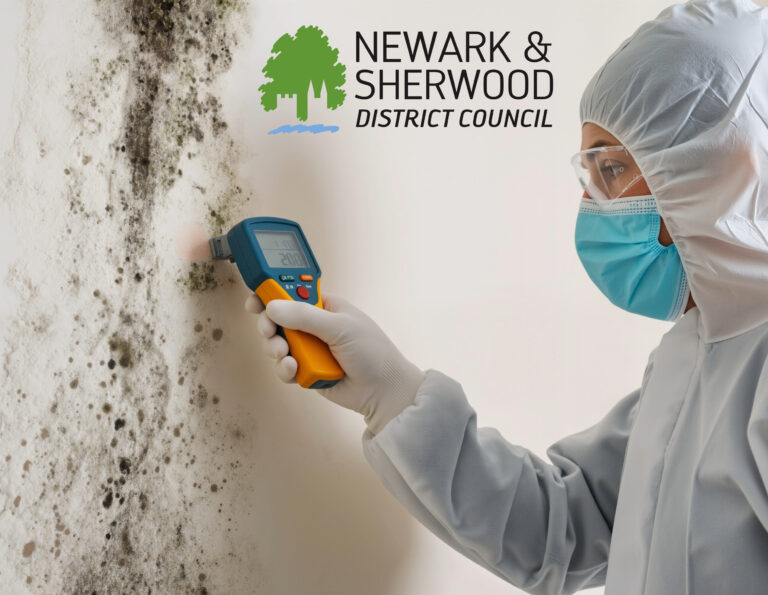
Newark and Sherwood District Council plan to spend more than £250,000 to tackle damp and mould in its properties ahead of Awaab’s law.
The law is set to come into effect for social housing landlords in October this year and will force social housing landlords to fix damp and mould with strict timeframes.
According to Nottinghamshire Live, Newark and Sherwood District Council has seen a 500% increase in reports of damp and mould in its council homes.
Newark and Sherwood District Council told Property118 the money would be spent on creating a new team to tackle damp and mould including additional damp and disrepair surveyors and customer service advisors.
Councillor Lee Brazier, Portfolio Holder for Housing at Newark and Sherwood District Council, told Property118: “We take the safety of tenants very seriously and, following a number of tragedies in social housing across the country, the government has intensified the scrutiny on social landlords.
“Awaab’s Law will be phased in from October 2025, introducing strict response times for social landlords, including us, to address potential hazards in our homes.
“We already respond to reports of damp and mould and have seen an increase in the number of repairs being reported, which could be for a number of reasons.
“To ensure we are able to respond to the specific requirements of Awaab’s Law which comes into force from October 2025, we’re investing approximately £250,000 in creating a new team that will focus on this area. The team includes an additional Damp and Disrepair Surveyor, Trade Operatives, an additional painter and Customer Service Advisor and a Supervisor.”
According to Nottinghamshire Live, between April 1 and December 4 last year, a total of 811 repairs were carried out in response to damp, mould, and related issues, while 795 inspections concerning damp and mould were also recorded during that period.
Mr Brazier adds they are training staff to help tenants manage and prevent damp and mould: “Once established, this team will be specialists in damp and mould, targeting these work areas specifically.
With this additional resource, we can respond to the new timescales whilst not taking away hope tenants will notice an improved service and reduced timescales for repairs.
“We are also providing additional training for our staff and information for tenants to ensure they are more aware of managing damp and mould and can identify it quickly. Early identification makes removal easier and reduces risks to tenants’ health.”
Under Awaab’s law, if a social housing landlord becomes aware of a potential hazard in a social home, they must investigate within 10 working days to determine whether a hazard exists.
The new rules will also require social housing landlords to cover the cost of alternative accommodation for tenants if the property cannot be made safe within a specific timeframe.
Housing Secretary Angela Rayner also confirmed that tenants will be able to challenge social landlords on failures to meet these new obligations.
She said: “If the property cannot be made safe within the specified timescales for Awaab’s law, then the social landlord must offer to arrange for the residents to stay in suitable alternative accommodation, at the social landlord’s expense, until required repairs are completed.
“Under Awaab’s law, where landlords do not meet their obligations by failing to comply with the new strict timelines for remedying hazards, tenants will be able to challenge them.
“They can seek to have poor housing conditions put right through their landlord’s complaints process, the Housing Ombudsman, and through the courts by bringing a housing disrepair claim.”
8 comments on this article
A different perspective could help you spot an issue, avoid a mistake or find a better way forward. Read the comments and add your own views if you wish.
1 year ago | 10 comments

1 year ago | 5 comments

Member Since June 2019 - Comments: 978
9:07 AM, 12th August 2025, About 1 year ago
I suspect the increase in mould is directly related to the excessive energy costs in the UK. People are much more reluctant to ventilate and may be heating fewer rooms.
Member Since February 2025 - Comments: 17
9:57 AM, 12th August 2025, About 1 year ago
So it takes Awaabs Law to gee Newark Council to do something about it’s damp ridden, mould ridden, rodent ridden dodgy houses that it insists it’s tenants have to live it – SHAME on the council.
No doubt the council staff were too busy chasing good landlords and penalising them instead of checking on their own crappy properties.
Now they want to seem like hero’s when in fact they are ROGUE Landlords!!
Member Since September 2018 - Comments: 3773 - Articles: 5
10:23 AM, 12th August 2025, About 1 year ago
Reply to the comment left by Paul Essex at 12/08/2025 – 09:07
my thoughts exactly.
Properties who are occupied by those on lower incomes I would argue are more susceptible because of the cut backs on the use of energy to heat, and the reticence to open the window to ventilate (they see it as letting warm air out).
Also a lot of properties could be classed as technically ‘overcrowded’. While a 2 bed flat may be good for 2 kids in one room and a couple in the other, because a lounge can also be classed as a ‘habitable room’, its now acceptable for a family of 5 or even 6 to be in a 2 bed flat. Extra people just add to the moisture content and of course more showers, more cooking, more washing hung about the property more often… it all adds up.
Landlords are VERY WISE to now take meter reads at every LL check too. This tracks energy consumption by the occupants. Compare this to the EPC which lists the average consumption, and it often shows a negative. Clear evidence they are not adequately heating the property to the average standard required.
If a tenant asks why a reading is being taken either give them some drivel about govt Net Zero targets and explain you are tracking energy use to see if there are any other grants you can apply for property upgrades for their benefit! 😉
Member Since September 2018 - Comments: 3773 - Articles: 5
10:25 AM, 12th August 2025, About 1 year ago
Amazes me – if the LL can show no external leaks into a property, no internal leaks, no building defects and yet mould is present….what else would it be other than the occupants lifestyle/habits?
Member Since July 2013 - Comments: 764
10:31 AM, 12th August 2025, About 1 year ago
Reply to the comment left by Reluctant Landlord at 12/08/2025 – 10:25
Don’t be silly, it’s always the LL’s problem, Michael Gove told us so and it’s now in black and white on the .gov website for all to see and quote to us.
Member Since September 2018 - Comments: 3773 - Articles: 5
10:36 AM, 12th August 2025, About 1 year ago
The new rules will also require social housing landlords to cover the cost of alternative accommodation for tenants if the property cannot be made safe within a specific timeframe.
hahahahahaah! Where???????
Member Since August 2025 - Comments: 2
9:08 PM, 12th August 2025, About 1 year ago
Reply to the comment left by Reluctant Landlord at 12/08/2025 – 10:23
Very helpful
Member Since August 2025 - Comments: 2
6:18 PM, 13th August 2025, About 1 year ago
Reply to the comment left by Reluctant Landlord at 12/08/2025 – 10:23
Very helpful