

Government vows to tackle rental discrimination in PRS
4 months ago | 28 comments


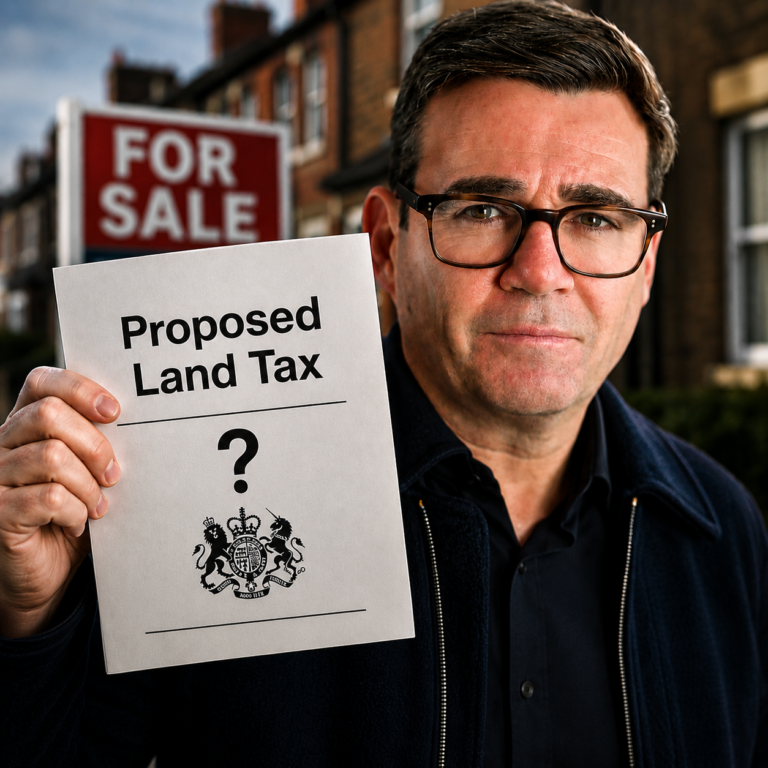
Hello, Andy Burnham has been reported to be considering replacing council tax and stamp duty with a new tax based on property values.
Under the proposal, the tax would be paid by property owners rather than tenants. Owner-occupiers would reportedly pay 0.48% of the property’s value each year, while landlords, overseas owners and second-home owners could face a higher rate of 0.96%.
For a landlord with a property worth £250,000, that would mean an annual bill of £2,400. On a £500,000 property, the charge would rise to £4,800 a year.
Would landlords realistically be able to absorb another cost of this size?
Some may try to recover it through higher rents, but that may not be possible if mayors are also given powers to freeze or cap rents.
Even without rent controls, tenants may simply be unable to afford the increases needed to cover the tax.
I also wonder whether the higher rate would lead to an exodus of overseas landlords and second-home owners, while persuading more UK landlords that remaining in the private rented sector is no longer financially worthwhile.
Could this proposal reduce the number of homes available to rent and push rents even higher?
Would a property tax of this size be the final straw for you, or could it be a fairer replacement for council tax and stamp duty?
Thank you.
Altan
96 comments on this article
A different perspective could help you spot an issue, avoid a mistake or find a better way forward. Read the comments and add your own views if you wish.
Previous Article
Buy to let lenders widen landlord options
4 months ago | 28 comments
4 months ago | 14 comments
4 months ago | 12 comments
Member Since September 2015 - Comments: 1038
12:12 PM, 29th June 2026, About 3 months ago
Landlords will in effect become unpaid Council Tax collectors, with assets to backup the Local Authority for non-payers.
Member Since May 2018 - Comments: 2550
1:32 PM, 29th June 2026, About 3 months ago
Reply to the comment left by Gromit at 29/06/2026 – 12:12
Yes, if this went ahead this would be one of the effects of the proposal. But despite the name “Fairer Share” the proposal isn’t anything at all to do with fairness; it is purely an asset-grab. And Andy Burnham’s support for it is also nothing to do with making the tax system more progressive. It’s entirely to do with the issues behind Pat McFadden’s comment that all back-bench labour MPs care about is who can be taxed to pay for benefits. The labour government came to power pretending to grow the economy, but they then launched a two-year attack on small business; they are obsessed by wealth distribution, not by economic success.
If the proposal went ahead as proposed it would cause a dramatic increase in rents. That wouldn’t bother most left-wing MPs because they don’t believe in market delivery anyway, and for the truly left-wing MPs and parties market–failure causes a proportion of the electorate to be more reliant upon them. It’s what they want.
Member Since September 2015 - Comments: 1038
3:47 PM, 29th June 2026, About 3 months ago
Reply to the comment left by Beaver at 29/06/2026 – 13:32
“………..they are obsessed by wealth distribution………….” into their own pockets (or those of their friends).
Member Since May 2018 - Comments: 2550
4:05 PM, 29th June 2026, About 3 months ago
Reply to the comment left by Gromit at 29/06/2026 – 15:47
I don’t know about this. There have been mixed reports about what Andy Burnham has achieved in Manchester, one of which is here:
https://www.dailymail.com/news/article-15841981/Burnhams-Manchester-miracle-homelessness-soaring-rents-REID.html
But I don’t know whether Andy Burham benefited personally from Deansgate Towers or not; the article does say that he opposes right to buy. He is reported as saying “the continued sale of social housing is like ‘trying to refill a bath without being allowed to put the plug back in’. Right to buy was a Margaret Thatcher innovation which Angela Rayner, a greater Manchester MP, took advantage of when she was working for a union before she became an MP.
The difficulty I have with right to buy is that where I live council tenants pay about 1/3 of market rent, together with a lower rate of council tax, then having paid below market rent for enough years they get to buy their property at a massive after-tax discount. If instead they only got perhaps a 10% discount from market rent and the council was exempted from capital gains tax if they immediately invested the funds in more residential property, they’d probably be able to house 2-3 families for every one family they currently house. Although they’d probably need to invest in alternative accommodation. That 3 bed semi might need to become 2-3 2-3 bed flats. I think that one of the problems with right to buy may have been that funds released from sale of council homes may not have gone to the local council.
I don’t know much about what else Andy Burnham believes in housing policy, other than he has recently supported a proposal that is clearly an asset-grab and that would raise rents for private sector tenants.
Member Since June 2026 - Comments: 12
4:31 PM, 29th June 2026, About 3 months ago
Hello, new to this forum. I am absolutely panicking. There are various issues:
1. The property land tax is on owners at 0.96%. Tenants will not have to pay council tax as this will be abolished. They will effectively pay less.
2. We can’t easily increase rent now under the new RRA as it can only be market rent, is easily disputed and delayed, can only be once a year. There is also no way a tenant can absorb basically twice the current council tax. If you have an expensive property it’s even worse.
3. So yields immediately go down and if you have a mortgage you could be in trouble.
4. CGT increases can be brought in quickly so even if you sell you could be paying 45% on the gain. It will be the top rate of tax if the gain is a lot and probably at least 40%.
5. It’s hard to move quick and sell in this market as the RRA now needs you to give 4 months notice to tenants. That’s a lot.
6. These changes are happening. It’s not a maybe. Individual landlords are at huge risk. Burnham has literally said these changes are coming.
7. Most people won’t care about this as they hate landlords. They will even be pleased. They are braying for our blood.
8. It won’t be long before rent caps come in especially with devolution to mayors . In london Khan is all for this.
Conclusion- we are stuffed. Do others agree with me?
Member Since May 2018 - Comments: 2550
5:40 PM, 29th June 2026, About 3 months ago
Reply to the comment left by Ana at 29/06/2026 – 16:31
At the moment it’s just a proposal. But I agree, it’s a very negative proposal.
When George Osborne stopped non-incorporated landlords from being able to offset their finance costs against rents, initially it made little difference when interest rates were low, then it really started to bite as interest rates went up. Landlords didn’t have any choice but to increase rents, effectively recovering extra tax from tenants. It’s not a progressive tax at all, George Osborne’s tax was levied on tenants indirectly, just as the consequences of increasing employers national insurance and dropping the threshold at which it kicks are being visited on employees now. The government just lies about what the real effect is and the indirect nature of the tax allows them to get away with this lie.
If this proposal went ahead landlords wouldn’t have any choice but to raise rents to recover the extra tax. It’s not a progressive tax.
But on the Renters Rights Act and market rents, I think that a variety of elements of the Labour Renters Rights Act will push market rents up, just as this latest proposal to replace Stamp Duty Land Tax and Council Tax would push market rents up because landlords would either have to sell, as the title of the article suggests, or put rents up to recover the additional costs and avoid an after-tax loss. IF labour introduced a percentage cap on rent increases then as you suggest, many landlords would be stuffed (or forced to sell) but IF landlords can chase market rent up then the effect is different, rents would rocket for all new-lets, just as they did in Scotland when the SNP introduced their proposal to cap rents.
The longer term effect of this proposed policy is that like the Labour Renters Rights Act it’s a bit of social-engineering that would in effect over the longer term makes a private rented property a luxury commodity that only relative high-earners could afford. But one of the really big, negative problems with this proposal is that under the the proposal tenants’ Council Tax would be replaced by the new tax, and this would be paid by the landlord. That’s a really negative development that would make the whole tax system less accountable. But one of the other really big questions is would those tenants in Social Housing and Council housing, currently paying council tax, not then have to pay this ‘property tax’? Councils and Social Housing Providers are property owners. Do we actually think that the costs of these social-housing tenants’ services would really be met by their social-housing and council landlords? Or would the costs of these local services get dumped on owner-occupiers and private sector landlords?
Member Since June 2022 - Comments: 28
6:17 PM, 29th June 2026, About 3 months ago
Reply to the comment left by Ana at 29/06/2026 – 16:31
Just to repeat: i’ts not .96% for landlords but .48%, the same as for owner occupiers. The .96% is for those who have a second home that they do not let, ie their own personal second home or holiday home.
Member Since July 2025 - Comments: 1
8:17 PM, 29th June 2026, About 3 months ago
Of course rent caps would come in before this proposal, so it would take years to recoup our losses.
Nobody cares about us. It started in earnest with Osborne. We are simply low hanging fruit and a popular political punching bag for crazed ideologies. Perhaps because we had some good years.
There was me thinking they had damaged us enough. There seems to be no let up. Plan your exit accordingly.
Member Since June 2026 - Comments: 12
8:23 PM, 29th June 2026, About 3 months ago
Reply to the comment left by Debra at 18:17
Thanks for correcting me on the 0.96 per cent point. I’m still not sure how landlords could increase rent by the whole amount of the new land tax or how to pay the 0.96 percent during vacancies. One of the good things about the property being occupied is that the current council tax isn’t the landlords responsibility. Reading
through the actual paper issued by Fairer Share as
this is what Burnham is apparently basing his policy on, it keeps saying that councils should be given powers to increase the percentage payable according to circumstances. And to even be able to add on additional property taxes. The more I read the worse it becomes. Burnham will also want some “early wins” and quick cash and I have a feeling that the increase in CGT route will look very appealing. Both Milliband and Streeting, potential chancellors, favour equalisation with income tax.
Member Since May 2018 - Comments: 2550
10:13 AM, 30th June 2026, About 3 months ago
Reply to the comment left by Ana at 29/06/2026 – 20:23
Bottom line is if you aren’t selling then keep bumping the rent up bit by bit, year on year. With the Renters Rights Act and the prospect of a more left-wing government you don’t have any choice.