
Landlords face plug-in solar panel requests
2 months ago | 14 comments


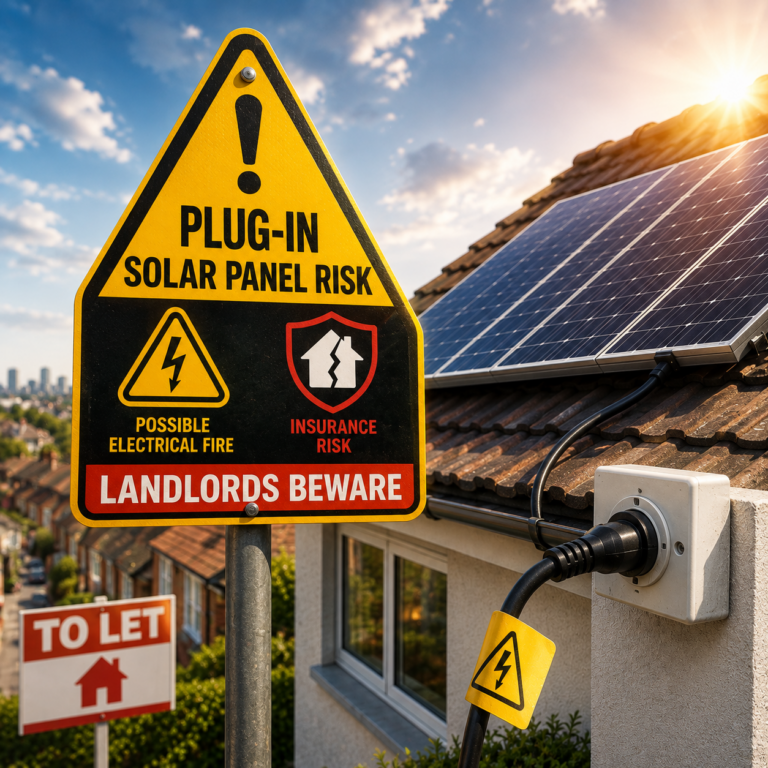
Landlords could face new electrical, fire and insurance risks as plug-in solar panels begin to appear at rented homes.
Risk assessment specialist Riskstop says property owners must understand how the technology is installed and whether existing electrical systems can support it.
Plug-in photovoltaic (PV) solar panel systems have been legal to buy and use in the UK since 27 August 2026 following government changes.
Already used in parts of Europe, the smaller systems are designed to make solar power accessible to flats and properties unsuitable for conventional roof-mounted panels.
The firm’s head of strategic planning, Johnny Thomson, said: “Unlike conventional roof-mounted PV systems, plug-in systems are designed to be installed by householders and connected directly to a standard electrical socket.
“They offer a relatively simple means of generating renewable electricity and may be particularly attractive to residents in flats, apartments, rental properties and homes unsuitable for traditional roof-mounted solar installations.”
He added: “Whilst plug-in PV systems are generally smaller than conventional solar installations, they should not be considered risk-free.
“They introduce many of the same electrical, fire and structural hazards associated with traditional PV systems, together with additional risks arising from user installation, product compliance, mounting arrangements and interaction with existing electrical circuits.”
Plug-in PV systems feed electricity through an existing socket circuit rather than being hard-wired into a property’s electrical distribution system.
Riskstop says the condition and suitability of the electrical installation, product compliance and the protection built into the equipment must all be assessed.
Although smaller systems are less complex than roof-mounted installations, they are still electrical generation equipment.
Landlords may also need to check whether the relevant network operator must be notified.
Panels installed on balconies, walls, terraces and other external areas must be securely mounted against wind and bad weather.
Consent from the landlord or freeholder may be required, alongside any relevant planning permission and compliance with the insurer’s conditions.
Regular visual checks can identify damaged cables, deteriorating components, loose fixings and signs of overheating.
Riskstop says insurers and brokers will increasingly need details of what has been installed, where it has been positioned and how it is being managed.
3 comments on this article
A different perspective could help you spot an issue, avoid a mistake or find a better way forward. Read the comments and add your own views if you wish.
Previous Article
HMO landlords are planning £10,000 upgrades
2 months ago | 14 comments
2 months ago | 16 comments
6 months ago | 10 comments
Member Since March 2022 - Comments: 388
3:06 PM, 3rd September 2026, About 1 month ago
Let’s be realistic here, people (including tenants) will just buy them from Lidl drill a hole in the wall and plug them in with no more thought than plugging any appliance in. Tenants will have proof that their electrical system is up to scratch in the form of an EICR so possibly may be safer than most domestic properties who have no such checks in place. Insurance companies look for every which way possible to avoid paying claims. It seems that having solar panels on your roof can increase insurance premiums and not informing the insurer could invalidate your insurance. Will the same apply for plug in devices? Will they be a cost effective way of increasing an EPC level? Maybe tenants should seek a landlords approval but what grounds would a landlord have for refusing? At least that way the landlord will know and could consult their insurers.
Member Since August 2023 - Comments: 86
9:26 PM, 3rd September 2026, About 1 month ago
Just to get an idea of whether these plug in solar panels work or not just take a look at Germany:
As of August 2026, Germany has approximately 1.5 million registered plug-in solar systems—known as Balkonkraftwerke or “balcony power stations”
Approximately 430,000 new plug-in systems were registered during 2025 alone, according to Germany’s Federal Network Agency.
They definitely work and cut energy costs.
Member Since June 2013 - Comments: 727 - Articles: 1
9:53 PM, 3rd September 2026, About 1 month ago
Reply to the comment left by northern landlord at 03/09/2026 – 15:06
ITS A PLUG-IN SO nothing to do with insurers. complete scaremongering!