

L&G’s reported two-year licensing gap: could tenants really reclaim £15m?
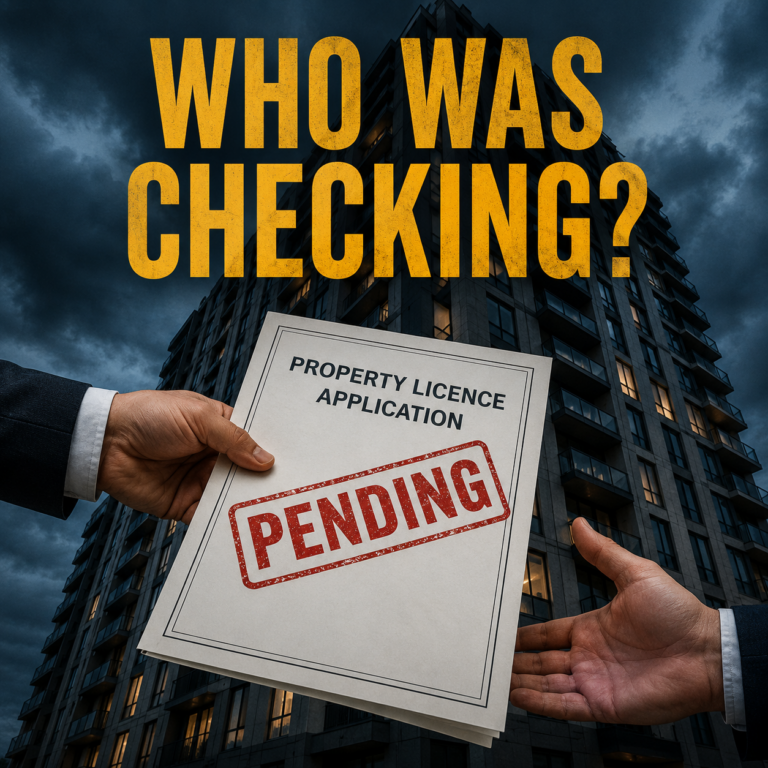

A letter from Lewisham Council says the licensing application for one tenant’s home was submitted 744 days after the council’s selective licensing scheme began. Reports suggest another 314 applications connected with the same Legal & General development remain pending.
That is the striking fact behind claims that L&G could be facing a rent repayment and civil penalty exposure running beyond £15 million. However, there is an important distinction between a frightening calculation and an actual bill.
At present, I can find no published tribunal application, Rent Repayment Order, civil penalty notice or finding that L&G has committed an offence. What we appear to have is a potentially serious licensing failure, hundreds of tenants who may have grounds to bring individual claims and some extremely speculative arithmetic.
What appears to have happened?
Lewisham Council’s selective licensing scheme came into force on 1 July 2024. Applications opened on 20 May 2024 and landlords were offered an early-bird discount, so this was not a scheme introduced without warning.
A council letter dated 10 August 2026, subsequently published by the Lewisham Letter, told a tenant at the Bale & Anchor development that the licensing application for their home had been made on 15 July 2026. The council said the landlord should have held a licence from 1 July 2024 and invited the tenant to consider applying for a Rent Repayment Order.
That is a gap of 744 days.
Inside Housing Living has reported that 315 properties operated by L&G had licensing applications pending. It also reported that Lewisham Council had been unable to identify an application for the development as recently as 27 March 2026.
L&G’s response was that managing agent Urbanbubble had delegated responsibility for licensing and had been engaging with the council since 2024. It said applications had now been made for all relevant properties and remained pending. Urbanbubble did not provide a comment to Inside Housing.
A licensing delay or an application delay?
This distinction matters. Calling this a dispute about “licensing delays” risks giving landlords the wrong impression.
Under section 95 of the Housing Act 2004, a landlord has a defence once a valid licensing application has been duly made. In other words, a landlord is not ordinarily committing an offence simply because the council takes months to process the application.
The critical allegation here is that valid applications were not submitted until July 2026, nearly two years after the scheme began. If that is correct, blaming the length of the council’s processing queue would miss the point.
There may still be facts that have not entered the public domain. For example, L&G or Urbanbubble might produce evidence of earlier applications, incorrect council guidance, failed payment attempts or technical problems with the application system. Those details could make an enormous difference. On the currently published facts, however, the concern is not that licences took too long to issue. It is that the applications may have been made too late.
Where does the £15 million figure come from?
One tenant reportedly pays £1,820 a month. Multiplying that rent by 12 months and approximately 300 flats produces £6.55 million. Using all 315 reported applications would produce £6.88 million.
A further £9 million has apparently been added by multiplying 300 properties by the former maximum civil penalty of £30,000. Combining those two figures creates the eye-catching claim that the total exposure could exceed £15 million.
What the £15 million figure assumes
- Approximately 300 qualifying and occupied tenancies;
- every tenant bringing a claim;
- each claim being made within the applicable time limit;
- the correct L&G entity being the immediate landlord;
- no successful reasonable-excuse defence;
- the tribunal awarding 100% of the relevant rent; and
- Lewisham imposing the maximum civil penalty on every property.
None of that has happened. Rent Repayment Orders are made following individual applications to the First-tier Tribunal. They are not a class action and an award is not automatically equal to 12 months’ rent. The tribunal considers the landlord’s conduct, the tenant’s conduct, the landlord’s financial circumstances and other relevant factors.
Civil penalties are a separate enforcement tool available to the council. They are not rent repaid to tenants and should not be presented as part of a single “rent repayment bill”. The maximum civil penalty increased from £30,000 to £40,000 from 1 May 2026 for relevant offences committed under the new provisions, although the correct cap for conduct spanning that date would require case-specific legal analysis.
The £15 million figure is therefore not an amount L&G has been ordered to pay. It is a combination of hypothetical tenant awards and hypothetical maximum council penalties.
Could the Renters’ Rights Act increase the claims?
There is a further complication that deserves more attention than the headline arithmetic. Changes introduced from 1 May 2026 increased the potential Rent Repayment Order period from 12 months to 24 months.
Government guidance on the transition indicates that the old rules continue to apply to the part of an ongoing offence committed before 1 May 2026, with the new rules applying to the later period.
For a tenant who had occupied throughout the alleged licensing failure, that could create a potential claim period covering up to 12 months under the old rules, plus the period between 1 May and the date on which a valid application was made. If 15 July 2026 was the application date, the alleged offence would normally have ended on 14 July because the application day itself is protected.
That does not mean every tenant can recover that entire amount. Occupancy dates, rent paid, benefits received, the identity of the contractual landlord and the tribunal’s assessment would all affect the result. There also appears to be no reported appellate decision dealing with this precise transitional calculation, so it would be unwise to present any aggregate number as settled.
Can a corporate landlord blame its managing agent?
This may become the most important issue for other landlords. L&G says Urbanbubble had delegated responsibility for obtaining the licences. However, appointing a managing agent does not automatically give a landlord a reasonable-excuse defence.
In Aytan v Moore [2022] UKUT 27 (LC), the Upper Tribunal explained that a landlord relying on an agent would need to establish the scope of the agent’s contractual responsibility, that reliance was reasonable and why the landlord could not reasonably have kept itself informed.
An even closer comparison can be found in LDC (Ferry Lane) GP3 Ltd v Garro [2024] UKUT 40 (LC). That case involved a large institutional landlord within the Unite group and an additional licensing scheme affecting 221 HMOs. The Upper Tribunal rejected the landlord’s reasonable-excuse argument and made the practical point that a substantial professional landlord should have systems capable of identifying licensing requirements.
Six tenants in that case received just over £23,000 between them, based on 50% of the relevant net rent. That alone demonstrates why multiplying every tenancy by 100% of the maximum possible award is not a reliable forecast. It also shows that sophisticated corporate ownership does not lower the compliance standard. If anything, the tribunal may expect stronger systems and oversight.
How many L&G properties are actually involved?
The numbers being reported also need untangling. Developer Watkin Jones says the two L&G build-to-rent blocks at Bale & Anchor contain 322 homes: 138 completed in 2023 and a further 184 completed in March 2024.
Some references describe the wider development as containing 365 homes. That number includes a separate block of 43 affordable homes sold to the CBRE UK Affordable Housing Fund. It should not automatically be included in calculations concerning L&G.
We are therefore left with 322 L&G homes, 315 reportedly pending applications and no public explanation for the seven-property difference. Nor do we know how many of the 315 homes were occupied throughout the relevant periods or which company appears as landlord on each tenancy agreement.
That last point could prove critical because a Rent Repayment Order is generally pursued against the tenant’s immediate landlord, not simply whichever corporate brand appears above the development.
The real lesson for landlords
Whether the eventual exposure is £500,000, £5 million or nothing at all, this story has already exposed a compliance weakness that affects landlords of every size.
Delegating licensing to an agent is perfectly reasonable. Delegating it and never checking whether the application, supporting documents and fee were actually received is something else entirely.
A landlord’s compliance record should identify every property, every applicable licensing scheme, the application deadline, submission confirmation, payment receipt, licence conditions and renewal date. Someone within the landlord’s own organisation should verify that evidence rather than relying on an email saying the matter is “in hand”.
If a business with more than £4 billion invested in build-to-rent and over 10,000 apartments can reportedly find itself facing questions over hundreds of licence applications, smaller landlords should not assume this is merely a corporate embarrassment with no relevance to them.
The £15 million headline may be premature, but the underlying question is entirely legitimate: who was checking that the applications had actually been made?
What do you think? Should appointing a professional managing agent protect a landlord where licensing applications are submitted late, or should the landlord always be expected to verify that the job has been completed? Please share your views in the comments below.
3 comments on this article
Learn from your peers’ experience
A different perspective could help you spot an issue, avoid a mistake or find a better way forward. Read the comments and add your own views if you wish.
Previous Article
Why selling with tenants puts landlords in a stronger positionNext Article
Has Anyone Had Problems with Rent to Rent?
Member Since January 2015 - Comments: 1614 - Articles: 1
8:46 AM, 30th August 2026, About 1 month ago
Hope someone’s told Rayner’s tenants.
Member Since October 2020 - Comments: 1376
11:22 AM, 30th August 2026, About 1 month ago
Yet another factor that will give pause for thought to any new potential corporate landlords.
The Council could support the tenant claims for RROs and leave it at that. This is not uncommon, although they’re more strapped for cash these days. They could also just go after the agent if there’s evidence that’s where the fault lies, although L&G have deeper pockets so….
Member Since January 2011 - Comments: 12256 - Articles: 1481
9:21 PM, 30th August 2026, About 1 month ago
UPDATE
Lewisham Council have been in contact to say that they have nothing to add at the moment, but will share updates if/when the situation develops.
They are aware of my investigation and reporting.