

Letting agents unprepared for Renters’ Rights Act
11 months ago


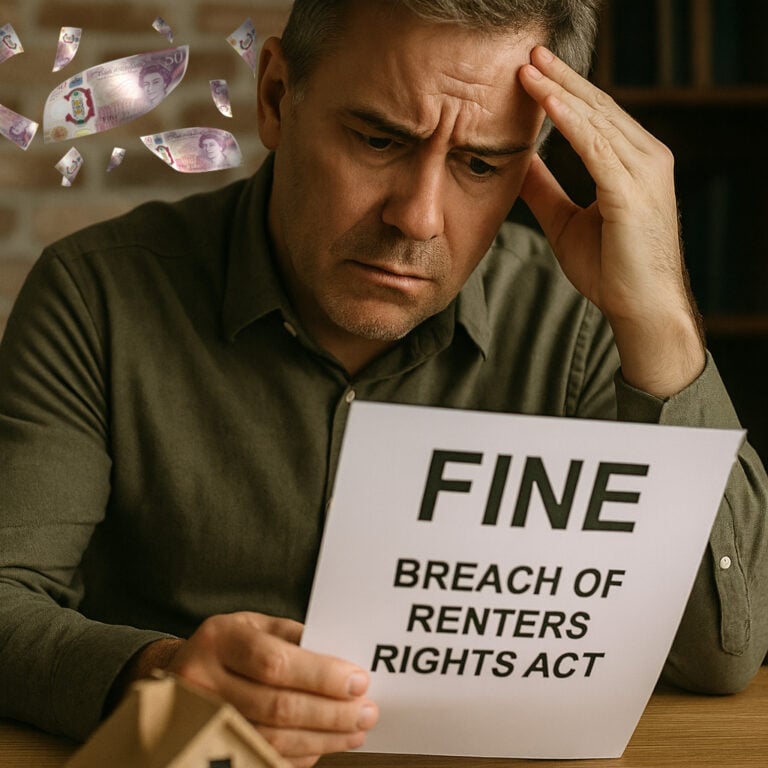
The government has warned landlords they could face fines of up to £40,000 under the Renters’ Rights Act.
The government has issued guidance for landlords on what constitutes an offence, with £40,000 penalties for serious or repeated breaches and £7,000 fines for other breaches of the rules.
Under the Renters’ Rights Act, councils will gain more investigatory powers and, from December this year, will have the authority to enter private rented properties without needing a warrant in certain circumstances.
According to the government guidance, from the 1 May 2026, landlords could be given a £7,000 penalty by the council for breaching the rules including:
Landlords could also be given a £40,000 fine as an alternative to prosecution if they are found to have done one or more of the following, the guidance says:
Landlords should be aware the 12-month restricted period following use of possession grounds 1 or 1A will not apply or will end early if:
As previously reported on Property118, critics argue the only people to benefit from the Renters’ Rights Act will be councils as they gain more enforcement powers.
The council will be able to fine the landlord, letting agent or anyone acting on a landlord’s behalf, except a qualified legal representative.
The government guidance says councils will need to be satisfied beyond reasonable doubt that a breach or offence has taken place before they take action.
Local authorities will need to gather evidence and give you notice that they will issue a fine. Landlords will then have 28 days from the day the notice is issued to make written representations. After this, the local authority will be able to decide whether to issue a final notice.
The Renters’ Rights Act places more weight on landlords who already carry most of the operational burden. Councils gain powers, yet the expectations placed on responsible housing providers keep rising. The landscape is tougher, not fairer.
What serious landlords should do next
Reassert control over compliance files. Treat this as protection, not punishment. A clean, well-organised record on each tenancy makes it harder for councils to misinterpret your actions and easier for you to defend professional decisions.
Map every date that creates risk. Model the timing of notices, documentation deadlines and any potential use of Grounds 1 or 1A. Build a simple calendar so you never fall foul of a technical breach that has nothing to do with the quality of your management.
Strengthen possession planning. Clarify which grounds you might rely on in the next 12 to 24 months. Keep a written justification for each route. This protects you from accusations of recklessness and reinforces that your decisions are commercially rational.
Systemise written communication. Verbal agreements are now liabilities. Standard templates for notices, terms, renewal discussions and statutory information sheets shield you from disputes and keep the council’s narrative in check.
Advantage through professionalism
Councils may have sharper teeth, yet well-run landlords still outperform enforcement pressure. Professional systems convert anxiety into leverage and show that credible operators are not the problem.
6 comments on this article
A different perspective could help you spot an issue, avoid a mistake or find a better way forward. Read the comments and add your own views if you wish.
Previous Article
Incorporation and Mortgages: Financing When You Move to a Company
11 months ago

11 months ago | 14 comments

Member Since August 2021 - Comments: 6
9:45 AM, 1st December 2025, About 10 months ago
The Governments seem to be giving Councils more powers. It started with Covid and those powers are still in place and now with powers to make significant fines. My question is where does the money land up from any fines? If in Council Hands would this not be a conflict of interests and an easy way to make more money to spend in wasteful council administration?
Over the last few years Landlords have hit hard without justification and the political class do not realise that many will sell up and the rest will pass on increased costs to renters!
Member Since February 2018 - Comments: 628
10:58 AM, 1st December 2025, About 10 months ago
Reply to the comment left by Walker at 01/12/2025 – 09:45
“You will own nothing and you will be happy”
It’s communism, although this time around it’s the state linked in tandem with the corporate, fascism, as defined by Benito Mussolini and practised by the re Anschluss Austrian government of Dolfuss and Schushnigg, global corporate fascism and thuggish communism aren’t two opposing extremes, they are but factions of the same people.
Member Since June 2019 - Comments: 973
3:03 PM, 1st December 2025, About 10 months ago
All vastly out of proportion to the level of ‘crime’ – way higher than drug dealers, fraudsters and criminal damage.
Member Since October 2020 - Comments: 1376
11:06 AM, 2nd December 2025, About 10 months ago
One of the offences listed is:
“try to end the tenancy using a ‘notice to quit’ or purported notice of possession”.
If a tenant moves out without ending the tenancy and is living elsewhere as their principal home, the tenancy may no longer be assured and the usual advice has been to serve a common law Notice to Quit alongside regular notices, (s21/s8). If the tenant doesnt move back in during the notice period, the NtQ may be enough to end the tenancy. This has been a possible alternative for landlords otherwise facing months waiting for court action without rent. It seems that this practice may in future be illegal attracting a £7,000 or £40,000 fine.
Its also possible that the process of implied surrender also used by landlords in cases of abandonment, may become outlawed and subject to heavy fines. If so, its yet another reason not to accept any tenant without a perfect rental history and a UK guarantor.
Member Since September 2022 - Comments: 68
11:31 PM, 2nd December 2025, About 10 months ago
I had a foreign accent woman called me from the council who told me that there is no need to give gas certificate to the tenant within 28 days of being issued.
She asked me if I had engaged a solicitor because my tenant had ignored my section 13 notices. So no more talking to tenants. Take legal action, straight away.
That’s what landlords are up against!
Member Since December 2021 - Comments: 163
2:08 PM, 3rd December 2025, About 10 months ago
I’ve already decided, that in the event of my local authority coming after me for £7k, for something petty or stupid like this, or a rent repayment order, I’ll turn up in Court with Section 8 notices for every single tenant, and will advise the LA there and then, that I’ll serve the whole lot if they proceed, and I’ll publicly name the LA employee responsible!
Why don’t they just ban us, rather than a “Death by a thousand cuts”