

Government vows to tackle damp and mould in PRS
10 months ago | 18 comments


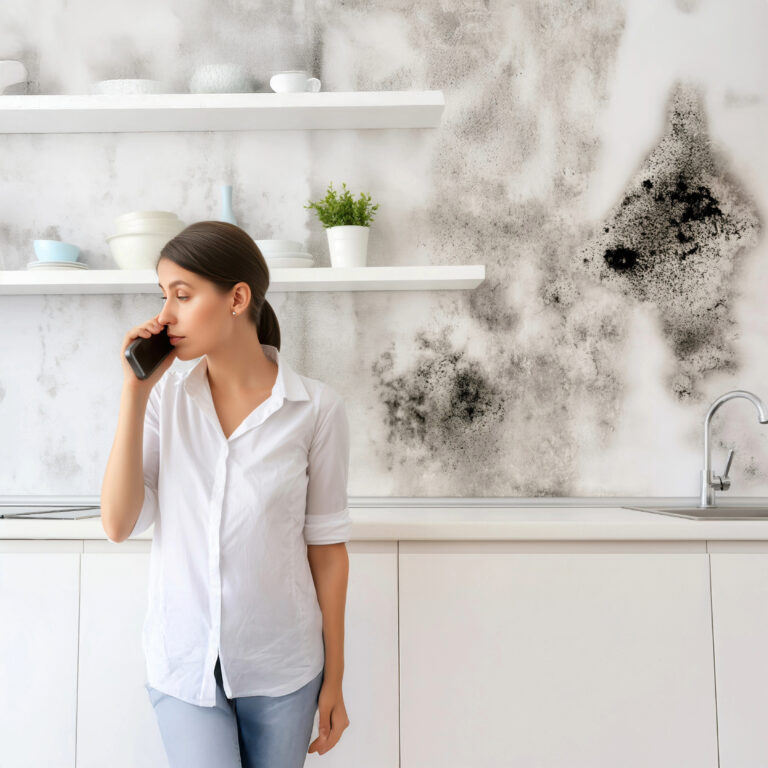
An organisation claims private renters and social housing tenants are suffering anxiety as damp and mould problems in their homes go unresolved.
Research by the Centre for Ageing Better says landlords play a vital role in tackling damp and mould issues, but claims many tenants’ mental well-being is being negatively affected when problems go unresolved.
The organisation says damp and mould can be caused by a range of factors, including inadequate heating, poor insulation and building quality, slow repairs, and a lack of ventilation.
According to the survey, of only 3,982 people nationwide conducted by Censuswide and commissioned by Health Equals, almost three in ten (29%) respondents living in private rented accommodation or social housing who had previously experienced problems with condensation, damp, or mould said their landlord had not resolved the issue.
However, a third (33%) reported that their landlord had successfully addressed the problem.
More than 40% of survey respondents living in privately rented or social housing with a household member who has experienced stress, anxiety or depression due to cold, condensation, damp or mould in the home, reported that the issue was not resolved by their landlord.
Millie Brown, deputy director for Homes at the Centre for Ageing Better, said: “No one should have to live in a cold, damp or mouldy home that damages their health and potentially poses a threat to their life.
“But the reality is that many people most at risk, especially those with health conditions and older people, are disproportionately living in poor quality homes that are making them more ill.”
As previously reported by Property118, in the latest English Housing Survey, the majority of private renters (77%) agreed they felt safe and secure in their home, and 65% of renters said their landlord responded promptly to maintenance issues.
The research also reveals 57% of people who own their home outright are concerned about energy bills, increasing to 74% among social tenants and 76% among private tenants.
One in four people from low-income households (25%) cannot comfortably heat their living rooms in cold weather, compared to around one in 20 (6%) among high-income homes.
More than one in five people (21%) from low-income households live in homes with condensation, damp or mould compared to around one in eight people (12%) in high-income households.
The organisation is calling for the Decent Homes Standard implementation date of 2035 to be brought forward claiming “renters shouldn’t have to live in homes that could damage their health for another decade.”
The group is also calling for the government to introduce a Warm Homes Plan to tackle “the poorest quality housing stock and those who need support the most.”
14 comments on this article
A different perspective could help you spot an issue, avoid a mistake or find a better way forward. Read the comments and add your own views if you wish.
Next Article
Lower mortgage rates to boost housing market
10 months ago | 18 comments

10 months ago | 5 comments

10 months ago | 3 comments
Member Since May 2022 - Comments: 106
9:47 AM, 13th January 2026, About 9 months ago
“Renters shouldn’t have to live in homes that could damage their health for another decade.”
I notice a distinct absence of “lifestyle” being a cause or significant contributory factor, but always a failure of the landlord.
Member Since October 2022 - Comments: 11
9:53 AM, 13th January 2026, About 9 months ago
It also affects the mental health of landlords 80%of damp and mould is caused by tenants blocking ventilation, refusing to air a property, drying washing indoors, switching off all extractors regardless of conditions prohibiting within tenancy agreements , I suppose these conditions will now be described as being unfair.
Too many Landlords will fall foul of Anwabs law due to no fault of their own, time to exit the sector before broke councils start sending out the fines.
Member Since September 2018 - Comments: 3759 - Articles: 5
10:11 AM, 13th January 2026, About 9 months ago
Claims of damp and mould (when CLEARLY) down to tenant use/misuse of the property is causing mental health for landlords.
The time and effort into PROVING that the property and LL is not to blame for what are usually very clear signs that it is the way that the property is being used is the source of the issue is absolutely draining.
I am now literally treating every tenant like an child and explaining the basics of general housekeeping. Common sense has gone out of the window and so has personal responsibility.
I read a very interesting thing yesterday from one council highlighting the type of complaints they receive about housing and when they do go and assess the properties, they themselves note that they can’t make tenants take action to improve issues which result from their own action.
The first commandment for all landlord’s…
Cover thy own ar$e!
Member Since June 2019 - Comments: 977
10:58 AM, 13th January 2026, About 9 months ago
Reply to the comment left by Reluctant Landlord at 13/01/2026 – 10:11
Do you have the reference for this – it may be a useful counter argument for landlords in future.
Note that number 1 was inadequate heating – unless the heating system is actually broken that is entirely down to the tenants actions.
Member Since August 2025 - Comments: 6
11:55 AM, 13th January 2026, About 9 months ago
Awaabs law defies basic science. Mould usually only occurs where there is pure water. Pure water does not happen if there is penetrating or rising damp (both of which are defects with the building). It generally only occurs if there is condensation. Condensation can be cured with improved insulation, ventilation or improved heating. To create a law that makes a landlord alter the fabric of a building is a mostly waste of time when most of the time the Condensation occurs due to the lifestyle of the occupier. Even if the landlord prevents Condensation for one tenant, the next tenant may have similar issues but in different locations!
The photo at the top of this article is a great illustration but maybe the lady should get off her phone and clean the wall with one part bleach and 4 parts lukewarm water. Problem solved!
What concerns me is that social housing tenants (and eventually private sector tenants) will realise that if they can not be bothered to clean thier dwelling for a prolonged period, when the mould gets a bit unsightly they can call in the landlord to give the property a full ‘spring clean’. For free! It’s going to end up costing the council tax payers millions!
Thank goodness I sold all my BTL years ago!
Member Since October 2023 - Comments: 31
12:33 PM, 13th January 2026, About 9 months ago
We have experience of this issue with just 1 tenant. The house was fine when they moved in, then problems. They insisted washing had to be dried indoors because it would get stolen from their enclosed garden. They said saucepan lids stopped ‘badness’ in food being boiled away. Opening a bathroom window after a shower wasted heat. When they moved out claiming we were awful landlords a new tenant came in and magically the problem did nor arise. We have found tenants need to be advised about how to ventilate. The school curriculum does cover it in years 7/8/9 but too many simply do not retain it. Damp houses with damp, heavier, denser air cost more to heat. Even the neighbours told them no-one in the street had ever had washing stolen when they had moaned to them. Saucepan lids can save 40% of the cost of cooking on a ring etc etc. Landlords do have a duty of care to advise tenants when they move in, at the check at the end of the first month and at each 6 month check. Tenants often just don’t know, especially if from a different climate. Brits can struggle with heat etc in homes in France and Spain and complain, so no surprise newcomers may struggle here. That said, two fellow landlords have said they have had tenants who used it as an excuse to stop paying rent.
Member Since May 2017 - Comments: 842
12:37 PM, 13th January 2026, About 9 months ago
Reply to the comment left by Xpropertyinvestor at 13/01/2026 – 11:55
I’ve had that happen. The tenant let the mould build up, my agent went and cleaned it off while the tenant looked on and offered a cup of tea. On completion the tenant said she’d call again next time it built up so my agent could come and clean it again.
Section 21 was issued and the new tenants haven’t had any mould.
Heaven help landlords when section 21 goes
Member Since October 2019 - Comments: 445
1:49 PM, 13th January 2026, About 9 months ago
I have a tenant who has it all. Full central heating, the latest high heat gas fire at a cost of £900 BUT he won’t use any of it as he won’t pay for the gas! He’s been given notice but won’t quit and knows all the tricks and will stay till the bitter end in a freezing flat! Why do I bother ???
Member Since September 2018 - Comments: 3759 - Articles: 5
4:25 PM, 13th January 2026, About 9 months ago
Reply to the comment left by Paul Essex at 13/01/2026 – 10:58
look at this…
https://bradford.moderngov.co.uk/documents/s54193/2.%20Regen%20Env%20OSC%20Housing%20Standards%20HMO%20Report%20January%202026.pdf
3.20 and 3.21 in particular.
Member Since September 2018 - Comments: 3759 - Articles: 5
4:33 PM, 13th January 2026, About 9 months ago
Reply to the comment left by Xpropertyinvestor at 13/01/2026 – 11:55
where there is no penetrating damp nor structural defects (including internal leaks) then you need to look at where exactly mould is located.
Mould is the result of condensation build up. Mould does not appear overnight.
Therefore if it is hidden from view, it has inevitably occurred because of the lack of air circulation in that area.
If not hidden from view then it has landed in a colder location (in comparison to the rest of the room) but has not been dried off or dealt with in a timely fashion.
All down to tenant behaviour/lack of knowledge/lack of care or a combo of all three.