
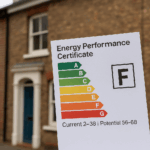
Atom bank study questions accuracy of EPC ratings
7 months ago | 7 comments



More than 4.5 million private renters in England and Wales, equivalent to 41% of the sector, had to limit their use of gas and electricity last winter to manage crippling energy costs, Citizens Advice reveals.
The charity says that 3.5 million renters, or one in three tenants in the PRS, found it challenging to maintain a warm home.
Many resorted to extreme measures such as missing hot meals, wearing gloves indoors or heating only a single room.
The organisation says the government must ‘urgently deliver promised new rules’ for landlords to upgrade properties to a minimum of EPC C by 2030.
Emily Wise, an energy adviser at Citizens Advice North Lancashire, said: “Sadly, this is an all too familiar story.
“Many of the renters we help day-to-day say their landlords are hesitant to fix the substandard conditions they live in.
“Leaky, cold and damp housing is a huge problem in our local area, as many homes are particularly deteriorated due to salty sea air and high winds.”
She added: “Too often, this is forcing renters to spend disproportionately on gas and electricity in an attempt to achieve basic levels of comfort, as well as having to regularly choose between eating and heating their homes.
“Despite this, many of those we help are reluctant to raise these issues with their landlords because they fear putting their tenancy at risk.”
Citizens Advice says that with winter looming and energy prices remaining 50% higher than pre-2021 levels, tenants are struggling with poorly insulated homes.
It adds that more than half of renters (57%) occupy homes with an energy performance certificate (EPC) rating below C, making them costly and difficult to heat.
Its research shows that tenants in homes with the minimum E rating faced an extra £317 on energy bills last winter, a cost that could have been avoided with an upgrade to a C rating.
The charity warns that delays to imposing tighter EPC rules will leave tenants stuck in uncomfortable and costly homes for years to come.
The organisation also claims that many renters are hesitant to request essential repairs, such as better insulation or fixing draughty windows, because they fear rent rises or a strained relationship with their landlords.
Nearly a third (29%) avoid raising such concerns, while 13% of those who did request upgrades faced conditions like higher rent, and 7% were outright refused.
The charity is also calling for robust enforcement of the Renters’ Rights Bill to empower tenants to demand improvements without fear of repercussions.
It is also calling for financial support for landlords to ensure these upgrades are feasible.
The chief executive of Citizens Advice, Dame Clare Moriarty, said: “Our advisers are bracing for more calls this winter from renters trapped in cold, leaky homes.
“It’s unacceptable that so many tenants are afraid to ask for the very basics – like fixing draughty doors or replacing poor quality single-glazed windows.”
She adds: “By 2030, the government must ensure no renter lives in a home that is excessively difficult and expensive to heat.
“And renters must urgently be given the security they deserve so they can ask landlords to fix substandard housing without fear of retaliation.”
Every day, landlords who want to influence policy and share real-world experience add their voice here. Your perspective helps keep the debate balanced.
Not a member yet? Join In Seconds
Login with
Previous Article
'Second cites' spearhead rental yield surge for landlordsNext Article
Government announces new Homelessness Minister
7 months ago | 7 comments

7 months ago | 1 comments

7 months ago | 1 comments
Sorry. You must be logged in to view this form.
Member Since May 2025 - Comments: 74
9:01 AM, 17th September 2025, About 7 months ago
Reply to the comment left by Slooky at 16/09/2025 – 19:48
France has lots of nuclear. Our nuclear strategy is a mess.
My electric bills in France are halff UK rates.
They also have a different approach. For example immersion heaters are 1kw and on all the time to create base load. Whereas our immersion is at least 3kw for rapid heating so more bursty load and usually timed.
The energy efficiency of French homes is usually worse than UK. Wood burners are the norm outside cities.
Member Since April 2023 - Comments: 174
9:34 AM, 17th September 2025, About 7 months ago
Reply to the comment left by Suspicious Steve at 17/09/2025 – 09:01
Thanks for explaining. The house we stay in still has gaps between the roof and the walls.! I do love the windmills they look beautiful. I don’t understand people’s objections to them in the UK. As long as they are not near people’s properties I don’t see a problem.
Member Since May 2018 - Comments: 1999
10:00 AM, 17th September 2025, About 7 months ago
Reply to the comment left by Slooky at 17/09/2025 – 09:34
I think one of the other issues in UK is that we have been paying all these levies, we have lots of wind energy, but the grid can’t get it to where it’s needed because the grid isn’t up to it. We’ve been paying the levies but not getting the infrastructure.
And in terms of local electricity generation we don’t have the capital allowances to make it worthwhile.
Member Since October 2013 - Comments: 1630 - Articles: 3
11:31 AM, 17th September 2025, About 7 months ago
Reply to the comment left by Beaver at 17/09/2025 – 10:00
Also, when it’s too windy, they have to turn them off, and when there’s no wind, they can’t produce any energy. But even when they aren’t producing energy, we still have to pay them.
Useless negotiating by the government (Tory and Labour) or scam?
Member Since May 2018 - Comments: 1999
11:44 AM, 17th September 2025, About 7 months ago
Reply to the comment left by NewYorkie at 17/09/2025 – 11:31
It’s very hard to know who gets incentivised or how isn’t it? I’ve often wondered at the fact that the companies who are the gatekeepers for any grants that might be available (never to me) are companies selling wall insulation of one kind or another.
But properties in Sweden and Germany have been generating electricity locally, and storing it locally as hydrogen in both Germany and the Scandinavian countries for years. There’s nothing at all in our tax system that truly incentivises local energy generation and storage.
In fact, if you’re a small portfolio non-incorporated landlord, not only are there no capital allowances helping you to make the situation better, even just from the point of view of improving energy security, the truth is that you are actually penalised for raising finance.
And on top of all that nonsense, your tenants (the people paying both the electricity or gas bills and also the extra tax bill being imposed upon the landlord in the form of higher rents that the landlord has no option but to pass on to avoid a cash loss) are charged more tax for electricity than they are for gas.
Both conservative and labour policies in recent years have been a bit like Donald Trump’s tariffs: American consumers pay for those in the form of higher prices. Tenants pay the price for the incoherence of recent conservative and labour policies: The only good thing that you can say about these two parties are that the SNP in Scotland have been worse.
Instead of empowering local generation and storage, somebody somewhere gets incentivised to buy windmills that aren’t even made in the UK, possibly not even in Europe, and having generated the energy they can’t get it to where it’s needed.
Member Since February 2018 - Comments: 627
12:01 PM, 17th September 2025, About 7 months ago
Reply to the comment left by Slooky at 17/09/2025 – 09:34
They are dreadfully inefficient, actually consume a lot of oil, are difficult to dispose of and each replacement leaves a large concrete spike in the ground, as to Bird life, an utter disaster especially for larger breeds. As to ‘beautiful’, drive down from Reims toward Troyes in France on the A26 at night, red light pollution you can see for miles all blinking away in their hundreds, it’s appalling.
Member Since May 2018 - Comments: 1999
12:46 PM, 17th September 2025, About 7 months ago
Reply to the comment left by moneymanager at 17/09/2025 – 12:01
And yet a lot of houses with south-facing rooves or walls could have photovoltaics instead and store their energy (rather than sending it back to the grid, which isn’t worth it financially): Something already being done in parts of Europe and Scandinavia, including at more northerly latitudes than where most people in the UK are. But the tax system in the UK penalises you for doing this…it’s the preserve of either the very wealthy, or poor people who can access grants.
For most of us in the “squeezed middle”, which is where most landlords sit, despite all the hot air that’s been pumped out by conservative politicians over the last decade and is still being pumped out by labour politicians now, the only thing that makes sense today after considering everything (including tax) is a modern condensing gas boiler.
Competent politicians….where are you?
Member Since July 2017 - Comments: 51
4:47 PM, 17th September 2025, About 7 months ago
my flat was a EPC grade C , said upgrade with new windows would give a few extra point, so I did this. Put it up for sale and it is now a grade D , the new windows made no difference, but they added it now needed floor insulation on a top floor flat. Costing between £5,000 and £10,000. A different surveyor. Why would you need insulation , when you get the heat from the floor below. First time I have heard of this needing done. Sometimes I wonder if these surveyors know what they are talking about or getting money from builders. The tenant cut the wifi /thermo for the boiler as he didn’t want it coming on and having to pay for it. He would rather spend the money on cigs. His choice.
Member Since May 2018 - Comments: 1999
4:51 PM, 17th September 2025, About 7 months ago
Reply to the comment left by loretta wight at 17/09/2025 – 16:47
If you search this site for posts from Mick Roberts on EPCs you’ll find a recommendation for someone who can help you beat the system.
But the truth is….if as a landlord you have to spend so much time working out how to beat the system you have to wonder whether it’s the system that’s wrong.
Member Since May 2025 - Comments: 74
5:04 PM, 17th September 2025, About 7 months ago
Reply to the comment left by loretta wight at 17/09/2025 – 16:47
The EPC assessment is a black box – who knows what it’s doing. It does seem very biased towards big projects.
I’ve come across lots of examples where improvements make the score worse.
I suspect councils are buying fake EPCs to get to C
Blog post about it here:
https://think-we-are-stupid.blogspot.com/2025/03/are-councils-buying-fake-epcs.html
as my friend lives in a terraced council house which amazingly got a C yet the privately owned neighbours which have been improved are D and E !!
I looked at doing an EPC assessor course to understand more about how it’s calculated. 3 days of computer on-line training and you’re almost an assessor !!
I wrote this blog about it.
https://think-we-are-stupid.blogspot.com/2025/02/landlord-epcs-part-2.html
EPCs have zero transparency and seems to have zero linkage to SAP (Standard Assessment Proceedure) which was created by the Building Research Establishment.