

Energy-efficiency rules threaten to damage the PRS in Scotland
1 year ago | 1 comments


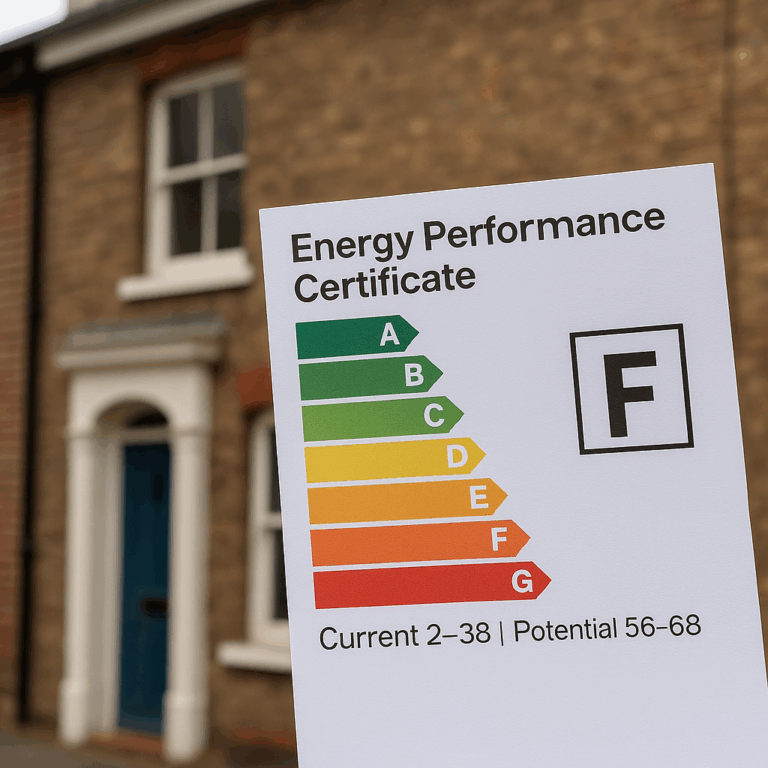
The official methods for assessing household EPC emissions may be overstating the environmental impact of British homes by as much as half, a study reveals.
According to Atom bank, its findings raise concerns about whether current tools can genuinely support the UK’s ambition to reach ‘Net Zero’.
Working with Experian and Durham University, Atom compared predicted emissions based on Energy Performance Certificates with meter readings from more than 1,000 homes.
The results showed a sharp gap between projected and actual carbon output, with properties across different ratings consuming similar amounts of energy.
Atom’s director of ESG, Edward Twiddy, said: “The UK has made real progress in addressing the challenge of decarbonising its economy but continuing that momentum will require better data and more targeted action.
“This study reveals that EPC ratings do not reliably reflect actual household emissions, with inaccurate data being a clear hindrance to reaching net zero.
“If most households are using similar amounts of energy, the focus should be on where that energy comes from and then how to make that clean energy as affordable as possible.”
He added: “The findings of this trial have important implications for green lending, banks’ carbon reporting, and the future use of EPCs in measuring and reducing residential emissions, which has implications for social issues like fuel poverty.”
The bank’s conclusion challenges the assumption that higher-rated homes consistently perform better and the research highlights weaknesses in using EPCs as a benchmark for both green lending and government policy.
University College London’s Energy Institute noted a similar pattern in national data, suggesting that little difference exists in energy consumption once a home is rated above band C.
The team has been examining the issue for a government study that is yet to be released.
Atom is working with industry body B4NZ to encourage other lenders to share information and press for reforms.
The bank wants EPCs to draw on direct measurements such as smart meter readings rather than theoretical estimates.
It is also calling for cheaper renewable electricity to replace gas as the primary fuel for heating.
7 comments on this article
A different perspective could help you spot an issue, avoid a mistake or find a better way forward. Read the comments and add your own views if you wish.
1 year ago | 1 comments


1 year ago | 1 comments
Member Since May 2025 - Comments: 92
8:34 AM, 11th September 2025, About 1 year ago
I’ve known for ages that EPCs are a work of fiction. I have a small flat which is a score of 58 (D) yet if you turn the heating on for just 30 mins it’s too hot and you have to open the windows ! I have a large 6 bedroom early Victorian house which is grade 2 listed with many original single pane sash windows yet that’s almost a C (D – 63). The scores makes no sense.
EPC assessors do a 3 day on-line course – they are hardly building scientists. The reports are biased towards big ticket item expenditure and break-even beyond my lifetime.
Council and social housing dont even need to achieve E and there’s no pressure to improve the energy performance of these 3.8 Million homes (presumably occupied by the poorest in society yet this “greedy” socialist government landlord doesnt consider them a priority and lets them “suffer fuel poverty”).
Here’s some of my blog posts on this topic:
https://think-we-are-stupid.blogspot.com/2025/02/ofgem-vs-epcs-fight-is-on.html
Firstly Red Milband has increased the energy price cap far in excess of any savings EPC improvements would yield. No surprise about that as the government raises more tax from this move.
Secondly I wrote about some alternative ideas on improving EPC scores
https://think-we-are-stupid.blogspot.com/2025/02/landlord-epcs-part-2.html
There is no transparency in how EPCs are calculated. The software is proprietary and therefore we dont know all the options to improve energy efficiency.
The assessment scheme has apparently changed as well – who knows what that means to the score.
Don’t even get me started that there’s no investment relief for energy improvements. The only option is capital gains relief when you dispose of the property. So I’m being expect to spend £15k probably every 5 years per property until the property reaches C (or whatever the target will be). I get no tax relief on the expenditure. The tenant supposedly benefits from lower energy bills and yet there are calls to stop landlords increasing rent to recover the investment. The business case is broken.
Crazy.
Member Since May 2018 - Comments: 2594
3:43 PM, 11th September 2025, About 1 year ago
Reply to the comment left by Suspicious Steve at 11/09/2025 – 08:34
I agree. The EPC system is a black box. In my view it is insufficiently to be used to tell a tenant that they can’t rent a band E or F property. Telling landlords they can’t rent out Band C properties in future does nothing either for tenants or for the environment.
But even if government thought that they could improve the EPC system to make it useful then they should allow landlords to offset their finance costs for Band C properties at the very least.
Good to see Atom bank doing research to query, and hopefully call-out, this kind of nonsense.
Member Since October 2013 - Comments: 1759 - Articles: 3
5:21 PM, 11th September 2025, About 1 year ago
The government’s net zero ambitions are based on a false premise.
Member Since December 2024 - Comments: 73
9:57 PM, 11th September 2025, About 1 year ago
What is the point in racing to net zero when the worst polluting countries are in no hurry?
In global terms, the UK’s carbon footprint is tiny.
Member Since October 2013 - Comments: 1759 - Articles: 3
7:49 AM, 12th September 2025, About 1 year ago
Global CO2 = 400ppm. Manmade CO2 = 3% of that 400 = 12ppm. UK CO2 = 1% of that 3% = 0.0003ppm.
People often quote UK CO2 as 1%. It’s not. It’s just 1% of 3%! I would say that can be described as infinitesimal, and certainly irrelevant on the world stage.
When the net-zero bigots trot out their usual nonsense, always remember these simple numbers, and add on the Drax scandal for good measure. This stupidity is why Milliband is destroying UK Plc, and Starmer is too weak to stop him.
Member Since May 2018 - Comments: 2594
10:57 AM, 12th September 2025, About 1 year ago
Reply to the comment left by NewYorkie at 11/09/2025 – 17:21
True…and MANY EPCs are based on false premises.
As we all know, the EPC system is supposed to give an idea of energy performance, not really C02 reduction, in the sense that it is supposed to give tenants and homeowners an indication of what it might cost to heat a property. And that’s why modern condensing gas boilers are generally better for EPC’s than electric heating.
There’s a lot of BS spouted about EPCs and then of course when you delve into it in detail you find that the government charges more tax for electricity than it does for gas anyway.
The idea of having an EPC system that might give a homeowner, landlord or tenant some indication of what it might cost to heat a property in itself is not a bad idea. But if some muppet in government then misuses the system and says “…we’re going to ban all landlords from renting out properties below band C or D…” because the muppets are trying to use the reduce-carbon-emissions-lie to strut about at climate-change conferences and further their own careers then that doesn’t achieve much. It certainly doesn’t achieve much for tenants.
So congratulations to Atom Bank for doing some research to expose some of the lies. Lets hope that we get to hear about more research of this type.
And let’s hope that rather than just strutting about pretending to save the world some of our politicians learn the lessons of history. If there is an argument for improving properties it’s probably as much about increasing energy security and diversifying our energy provision.
If we reduce our reliance on Russian oil and gas, or even on coal mined by unionised workers whose unions turn the lights out in order to raise the salaries of members who don’t actually dig for anything then that’s not a bad thing. We might need to drill for more North Sea oil and gas to be able to invest in our infrastructure to do it, as the Norwegians did: But that’s a short-term investment for long-term benefit.
But if there’s more research out there to explode the EPC black box and inform our economic policy, particularly tax policy, then that’s great news.
Member Since March 2018 - Comments: 198
12:26 PM, 3rd October 2025, About 1 year ago
If accurate and justified, the software supplier and government would be transparent about the benefits of particular improvements. The lack of transparency in the EPC rating system shows how uncertain the software supplier and government are, regarding the accuracy and justification for the assessments.