


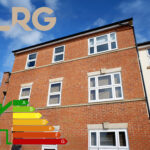
Energy efficiency gains help transform England’s PRS

12:01 AM, 27th August 2025, 1 year ago
1
Categories:
England’s housing stock has expanded by 9% over the past decade, reaching 25.4 million dwellings by 2023, outpacing the 7% population growth, the English Housing Survey reveals.
An analysis of the report’s data by Nationwide’s senior economist, Andrew Harvey, found that a key driver of this transformation is the improvement in energy efficiency.
That’s particularly the case in the private rented sector, as the UK pushes towards its 2050 net-zero emissions target.
In the PRS, which comprises 4.9 million homes (19% of total stock), 48% of properties now hold A to C energy efficiency ratings.
Nationwide says that’s a big improvement over 10 years, driven by new construction and retrofitting measures like loft and cavity wall insulation.
Energy efficiency improvements
Mr Harvey said: “Over the past 10 years, energy efficiency has improved across the stock thanks to the higher efficiency ratings of newly built properties and the improvements carried out on many existing homes, such as loft and cavity wall insulation.
“Low carbon technologies such as air source heat pumps are expected to play a greater role in future in terms of decarbonising and improving the efficiency of the housing stock.
“However, these are currently quite a rare feature, with only 276,000 dwellings in England using a heat pump as the primary heating system (1.1% of total stock).”
More rural dwellings have a heat pump (7.6%) compared to urban (0.5% of dwellings), which probably reflects more limited access to mains gas networks.
More homes with solar panels
Mr Harvey continued: “There is a much wider uptake of solar panels, with 1.5 million dwellings in England having photovoltaic (PV) panels – nearly 6% of dwellings.
“Over 15% of properties built in the last 10 years have PV.”
He added that electric vehicle (EV) charging points are growing in popularity with 1.8 million dwellings currently having an EV charge point – around 7% of the total stock.
The data shows that 72% of social housing properties have achieved A to C ratings due to stricter regulations, while the PRS figure nearly matches the owner-occupied sector at 49%.
The rise in energy efficiency reflects a broader trend of greener homes, bolstered by the integration of low-carbon technologies.
16% of PRS homes are ‘under-occupied’
The mix of property types has remained largely consistent, the report reveals, though flats have grown in prominence in private rentals, rising from 38% in 2013 to 42% in 2023.
In social housing, flats dominate at 45%, while in owner-occupied homes, semi-detached properties lead at 29%, with flats making up only 10%.
In owner-occupied homes, 87% have at least one spare bedroom, with 53% classified as ‘under-occupied’ (two or more spare bedrooms), a trend that continues to rise.
Conversely, only 16% of private rented homes are under-occupied, while 8% of social rented properties face overcrowding, where bedroom numbers fall short of household needs based on standard definitions.
Tags:
Energy Efficient Homes, green homes England, net-zero housing, private rented housing, solar panels, sustainable rentals
1 comment on this article
Learn from your peers’ experience
A different perspective could help you spot an issue, avoid a mistake or find a better way forward. Read the comments and add your own views if you wish.
Previous Article
Council fines landlords £450,000 for unlicensed rental propertiesRelated Articles

Landlords face rising challenges amid new legislation claims NRLA
1 year ago | 9 comments
MPs claim EPC upgrades are no excuse for landlords to hike rents
1 year ago | 35 comments
Member Since June 2019 - Comments: 977
11:07 AM, 27th August 2025, About 1 year ago
That transformation involves rent rises and the rapid disappearance of the cheaper rental properties . Even councils and housing associations are ditching low EPC properties rather than upgrading them.