

Rent growth slows as rented homes take longer to let
3 years ago | 1 comments


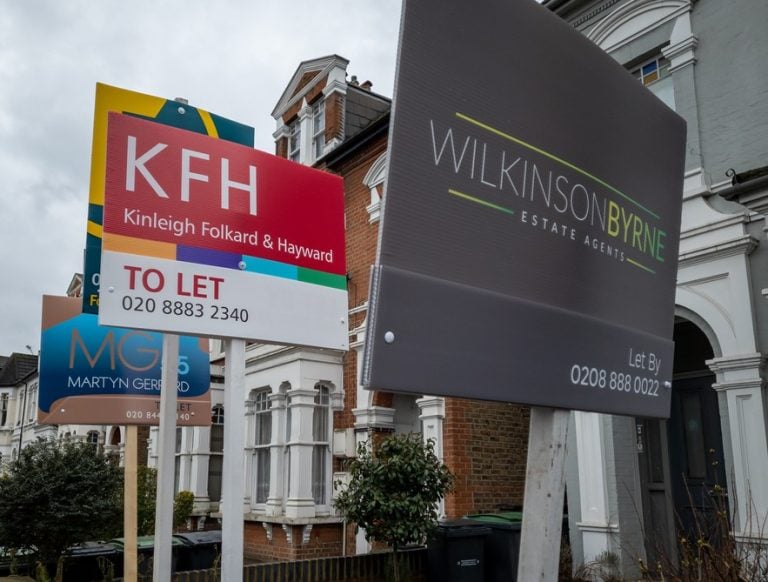
The cost of renting in the UK has hit a new high as average rents across the UK rose by 9% in the 12 months to February – the highest rise recorded by the Office for National Statistics (ONS).
The trend of rising rents is consistent across the UK, with all nations experiencing significant growth.
England saw average monthly rents climb to £1,276 (an 8.8% increase), followed closely by Wales at £723 (9.0%) and Scotland at £944 (a sharp rise of 10.9%).
Northern Ireland also reported a substantial rent increase of 9.3% in the year to December 2023.
London continues to be the most expensive place to rent, with average rents reaching £1,276 a rise of 10.6% in the last year.
The North East remains the most affordable region, with rents averaging £842 and a more moderate increase of 5.7%.
While rents are on the rise, house prices in the year to December fell by 2.2% – though the annual fall recorded in January was 0.6%.
The ONS said: “Average UK private rent increased by 9% in the 12 months to February 2024.
“This was up from 8.5% in the 12 months to January 2024, and represents the highest annual percentage change since this UK data series began in January 2015.
“Average UK house prices decreased 0.6% in the 12 months to January 2024, to £282,000. This was up from a decrease of 2.2% in the 12 months to December 2023.”
The ONS adds that in the 12 months to January 2024, average house prices fell by 1.5% in England to £299,000 and to £213,000 in Wales – a 0.8% drop.
House prices in Scotland to £190,000, a 4.8% rise, and in Northern Ireland average house prices increased by 1.4% to £178,000.
Ben Twomey, the chief executive of Generation Rent, said: “These figures are shocking but not surprising – we’ve been feeling the impact of sky-high rents and unaffordable rent increases since 2021 and we have reached the very end of what we can afford.
“As the cost-of-living crisis apparently eases, the cost of renting crisis is continuing at pace.
“Renters are being squeezed to their absolute limit and something has got to give. 9% increases in a year across all tenancies is well above the rate our wages are rising, illustrating how badly renters are protected.”
He added: “This is not just down to landlords’ costs going up – more than half of privately rented homes have no mortgage attached to them – so clearly landlords are raising the rent just because their tenants have no choice but to pay these prices.
“The government needs to listen to renters and take decisive action to slam the brakes on soaring rents in the worst-hit areas.
“Outlawing unaffordable rent rises would give renters much-needed breathing space while the government must get to work building many more affordable and social homes to address the shortage that has caused this.”
Fred Jones, the chief operating officer at Upstix, said: “On Monday, Rightmove said that house prices were higher than a year ago, and today, official statistics say the opposite. Why? Because they are comparing apples and oranges.
“Rightmove’s data records asking prices, which reflect a level of optimism many would consider unwarranted.
“The ONS measures official sale prices. While the market has avoided the crash that many had predicted when interest rates began to rise, it remains constrained, with sale times the longest for four years.”
He added: “This disconnect has a clear implication: sellers must be realistic about pricing if they want their transactions to complete.”
Sarah Coles, the head of personal finance at Hargreaves Lansdown, said: “This is a very early glimpse of the January joy, which suffused the property market at the start of 2024, and encouraged a decent chunk of buyers and sellers to rejoin the property party.
“These figures actually reflect sales in the autumn, when mortgage rates were higher – but on their way down – and they have already had a positive impact.”
She adds: “The lag in property figures means we’re looking at sales agreed since about October.
“At the start of this period, according to Moneyfacts, the average two-year fixed rate mortgage had fallen back from a high point of 6.85% in August, to 6.47%.
“It then continued to fall throughout the rest of 2023, and hit 5.62% in January. It means the figures emerging in the coming months should look even more positive.”
7 comments on this article
A different perspective could help you spot an issue, avoid a mistake or find a better way forward. Read the comments and add your own views if you wish.
Previous Article
PRS supports more than 390,000 jobs and generates £45 billionNext Article
Call for rent cap in Wales to help key workers
3 years ago | 1 comments

3 years ago | 11 comments

Member Since February 2022 - Comments: 88
12:26 PM, 21st March 2024, About 3 years ago
Here’s how it works – if you are a Tory : 1. you make life difficult for ordinary decent landlords .
2. You drive many out, reduce supply , increase rents, dish out crocodile tears!
3. Rich landlords buy up many of those properties – especially as rents have been driven up by the Tory monkeys who dance to their organs!
4. Supply is restored but to big Ltd companies who now make a fortune.
5. Renters despair!
6. Tories : more crocodile tears while they laugh all the way to the bank!
Member Since February 2022 - Comments: 88
12:27 PM, 21st March 2024, About 3 years ago
It’s so transparent!!!
Member Since August 2015 - Comments: 230
12:40 PM, 21st March 2024, About 3 years ago
It would be most interesting to compare the increase percentage with other essential items within CPI list such as food or may be car insurance. If you also compare the percentage with CPI or RPI the real level of change will be shown.
Member Since September 2015 - Comments: 1043
1:05 PM, 21st March 2024, About 3 years ago
Reply to the comment left by Rerktyne at 21/03/2024 – 12:26
About right!
Member Since May 2018 - Comments: 2594
1:08 PM, 21st March 2024, About 3 years ago
Reply to the comment left by Rerktyne at 21/03/2024 – 12:26
Both the tories and labour have attacked the PRS over the last couple of decades. But the worst offender has been the SNP.
A small portfolio landlord cannot deduct finance costs. An incorporated landlord can.
If any government wants to fix this problem it needs to open choices up. It needs to make it financially worth it to rent out rooms in your own home. It needs to make it more attractive to be a good landlord than rent your property on Airbnb. It needs to provide tax incentives to make it worth it for landlords to provide tenants with alternative sources of energy.
Government policies from all the major parties have been all stick and no carrot. And when the BOE raises interest rates on finance costs that landlords are unable to deduct nobody should be surprised at the pain being inflicted by *government* policy on tenants.
Member Since September 2015 - Comments: 1043
1:17 PM, 21st March 2024, About 3 years ago
BenTwomey is under the delusion that a Landlords cost is only a mortgage. DUH! He seems oblivious to the increased costs to hire tradesmen and increased insurance premiums. And not to mention the extra administrative cost that he and his ilk have successfully got the Government to implement (with much more to come).
Then in London you’ve got Sadiq Khan chaffing at the bit for rent controls that the incoming Labour Government is likely to accede to, driving rents up in advance of controls being introduced.
Generation Rent, a shelter et al with the Government have created the perfect storm with Tenants in the frontline being sacrificed for their anti landlord crusade.
Member Since May 2018 - Comments: 2594
1:23 PM, 21st March 2024, About 3 years ago
Reply to the comment left by Gromit at 21/03/2024 – 13:17
That’s right: If Sadik Khan wanted to do something for tenants he needs to learn from the failed SNP experiment in Scotland.
I heard a report yesterday that 11 tenants are chasing every rental property. What is actually happening here is that the tenants with the greater spending power are outbidding the tenants with the least spending power in the PRS. That competition is a consequence of government policy, both local and national.