

Flooded property – Should rent be paid?
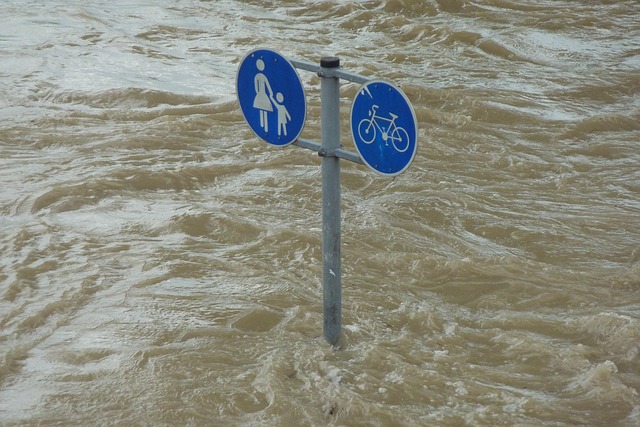

Can anyone give me some advice on whether my tenant should carry on paying their rent? My flat was flooded due to torrential rain last week and the management company have made a claim on the buildings insurance.
The loss adjuster came to look at the property yesterday (and the flat next door as this was also flooded). Both sets of tenants have had to be re-homed which the insurance company is paying for so there is no cost to the tenant. I have been told that it’s either the insurance company will pay for the temporary accommodation for the tenant, or they will give me the loss of rent. The tenant has been told by the loss adjuster that they can go and rent another flat for a six-month period and the insurers will pay for it as it is going to take at least 3/4 months before my flat is habitable again.
My tenant thinks she will not have any rent to pay for six months as the insurance is paying for her temporary accommodation and as she is not living in my flat she thinks she does not have to pay me any rent either.
Does anybody know whether she should continue to pay me rent or will I just have to take the hit and wait for the flat to be habitable again?
Many thanks
Arthur
6 comments on this article
Learn from your peers’ experience
A different perspective could help you spot an issue, avoid a mistake or find a better way forward. Read the comments and add your own views if you wish.
Previous Article
Can one buy a property for a friend and charge him rent?Next Article
Beta Users Wanted for new Landlord App - Alphaletz!
Member Since December 2015 - Comments: 828
10:35 AM, 4th September 2020, About 6 years ago
if its not habitable then rent cannot be charged? perhaps local council will rehouse tenant whilst you remedy the problem?
Member Since January 2020 - Comments: 559
10:42 AM, 4th September 2020, About 6 years ago
If the tenant is still being provided with accommodation then rent should still be paid by the tenant. As long as you pay the moving costs and anything similar so that the tenant is not out of pocket (presumably your insurance will cover this). Just to be clear about this – the tenant won’t be paying you rent for your flat, but will be paying rent to the other landlord. Hopefully you insurance cover will meet the rent that you will lose, which it seems they will from what you say.
I am not sure what you are expecting.
Member Since October 2017 - Comments: 121
11:12 AM, 4th September 2020, About 6 years ago
Arthur – the insurance company should be covering your loss of rent. I would contact them to discuss it.
Member Since April 2014 - Comments: 37
11:24 AM, 4th September 2020, About 6 years ago
The loss adjuster should have given you the option to receive either loss of rent or to pay for alternative accomodation. I would suggest the normal way would be for you to receive loss of rent from the insurers. Yoiur tenant is then released from the tenancy and they rent somewhere else.
If it is a substantial flood you could easily be looking at 6 months before the flat is habitable again.
I would suggest you speak to the loss adjuster and tell him you want loss of rent paid to you.
Alernative accomodation is designed mainly for owner occupiers because they will need somewhere else to live whilst their property is repaired.
Member Since July 2017 - Comments: 465
1:59 PM, 4th September 2020, About 6 years ago
Having had this happen myself several years ago. The insurance company paid me the loss of rent while the property was uninhabitable. The tenancy with the existing tenant was cancelled and the tenant move out and rented a similar property at a similar rent elsewhere. (Part of the rent paid by the tenant was refunded as they had paid a month in advance). Be aware however that the loss of rent cover only covers this period. If you have a one month void as soon as the property is habitable and fit to rent the insurance company will not pay you rent for this period. So if you can, try to show some potential tenants around a few weeks before the property is ready to minimise your void period.
Member Since November 2015 - Comments: 603
8:23 PM, 4th September 2020, About 6 years ago
We had this last year. The temporary accommodation was more expensive than our rent, so the insurer covered that and the tenant carried on paying rent until they could move back in.