

Government insists private rented sector remains stable after Renters’ Rights Act
4 months ago | 10 comments


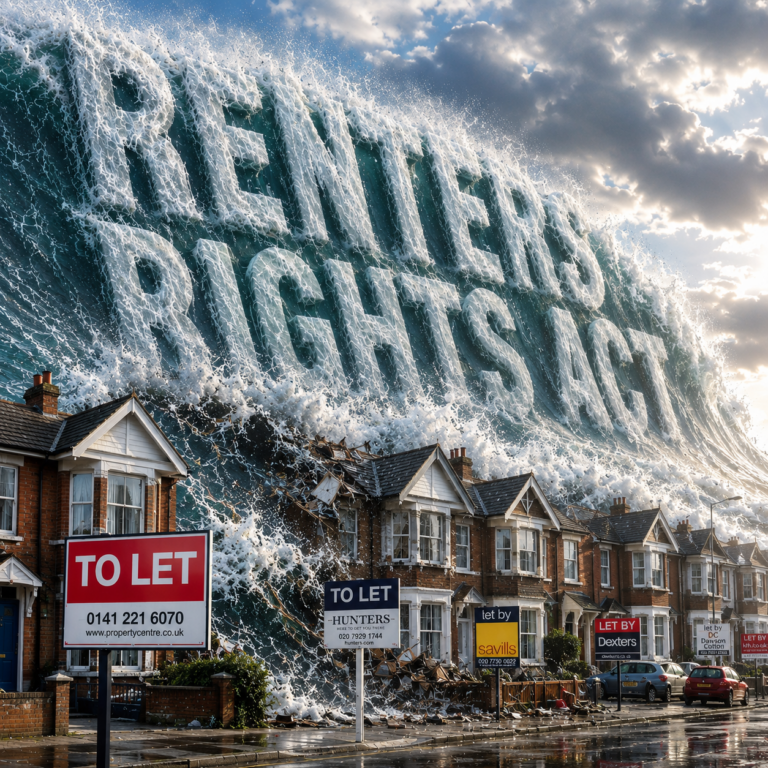
Landlords are the life blood and custodians of a fragile ecosystem, who left alone, largely solve and don’t create problems.
Nobody likes admitting they are wrong, but housing minister Matthew Pennycook’s claim that the Renters’ Rights Act (RRA) has maintained stability in the rental market is delusional and dangerous. Here is why I think so.
If there are 1,000 tenants and 1,000 properties, and everyone finds a home, then the system is in balance.
If there are 1,000 tenants but 1,010 properties, then if any tenant wants to move, they have a choice of 11 properties.
11 landlords will have empty properties and reduce rents to attract the tenant who can pick from 11 properties. The media will report on a glut of properties, and market rents will reduce as no landlord wants to be without a tenant. Landlords with empty property will sell, and a balance will be restored. In the meantime, each of the 11 landlords with empty properties will chase the single available tenant with lower market rents.
Now, conversely, if there are 990 properties but 1,000 tenants, then ten tenants are homeless. For every home that comes free, 10 potential tenants are looking for it. If a landlord evicts a bad tenant, the bad tenant will not be able to find a home because ten other good tenants are looking for that same home.
The media will hysterically report that for every house on the rental market, there are 10 people looking. New market rents will soar because of a tiny proportional lack of property. A 1% reduction in property can easily create a 1000% increase in people without homes, fueling a hysterical media.
By deliberately messing with the private rented sector with restrictive policy, Pennycook knows he has reduced available rental housing stock, but claims this is stable. By causing even a small percentage reduction in available rental property, the government has created a tsunami. The evidence is there with fewer available properties and corresponding pressures on market rents.
Pennycook is the master and architect of such a policy, which is causing misery for tenants as prices rise for many looking for property to rent.
For the last decade, it appears every policy the government (not just this one) has implemented has been punitive for landlords. Namely, preventing landlords from offsetting full mortgage costs.
Forcing landlords to keep properties empty after evictions, yet doubling council tax on empty property. Allowing tenants to go further in arrears before they can be evicted. Imposing disproportionate fines on landlords. Imposing more complex regulations on landlords, even allowing utility companies to charge high standing charges on empty property, all act to increase landlord costs.
The government will now look towards rent controls to cure the problem of rising rents, a problem of their own making and a solution that would further reduce rental stock. Yet oddly, they will not seek to control many landlords’ costs, which are at the whim of the Bank of England interest rate rises.
Such action is being considered because, contrary to what Pennycook says, the government has destabilised the market. Rent controls will shrink the rental market further and lead to more homeless tenants. In trying to cure the symptoms rather than fix the cause, which of course is his own bad policy and lack of available housing.
Millions of landlords are now renting below the NEW market rents to existing tenants. They have not raised rents to the new market levels. The few new properties on the market seek higher rents because the demand appears so high
Compare this to the serenity under the 1988 Housing Act which relaxed legislation and made life easier for landlords. There was no tsunami when relaxing regulation it went as smoothly as a mill pond. Millions of properties were added to the private rental sector, and whilst rents may have been higher than corresponding mortgage payments. The banks wouldn’t lend to millions of tenants, leaving them with no option but to rent.
If people want permanent homes, then the problem lies with the banks not lending to them. If a tenant is paying more in rent than the mortgage, then the banks could be forced to lend to the tenant. It is the bank that is stopping someone who can afford the cost from being denied a permanent home. The villain here was never the landlord providing that home.
All free markets find equilibrium. By reducing rental housing stock even by a small percentage, the government has created a tsunami. If the government impose restrictions on market rents, more landlords will sell, reducing the PRS further. Restrictive policy chokes a democratic free market. This will only result in more homelessness.
What does the Property118 community think?
Thanks,
Paul
14 comments on this article
A different perspective could help you spot an issue, avoid a mistake or find a better way forward. Read the comments and add your own views if you wish.
4 months ago | 10 comments

4 months ago | 5 comments

4 months ago | 3 comments
Member Since June 2019 - Comments: 977
9:38 AM, 23rd June 2026, About 4 months ago
The RRA alone would probably be OK but it is just part of a continuous attack during the last 15 years, and attack that seems likely to go further and deeper with more taxation and more tenant focussed legislation on its way.
Couple things with irritations such as MTD and the typical demographic of current landlords I see a slow moving tsunami which I fear the government will try to stop by banning all evictions at some point when they finally realise what they have done (whilst of course blaming the landlords who are just as much victims as the tenants)
Member Since June 2018 - Comments: 21
9:59 AM, 23rd June 2026, About 4 months ago
This. Exactly this, is what no one outside the sector seems able to see.
The 1988 act was brought in for a reason, and cured the problem.
Member Since January 2024 - Comments: 434
10:35 AM, 23rd June 2026, About 4 months ago
The next hit will be when CGT rates are aligned with income tax rates. Best to sell before this happens, Asset prices are not likely to be going up materially any time soon and taxes and regulations will just keep on increasing.
Member Since March 2024 - Comments: 346
11:12 AM, 23rd June 2026, About 4 months ago
Reply to the comment left by Ryan Stevens at 23/06/2026 – 10:35
Whilst the headline rates may be aligned, there may be some return to indexation or a taper for length of time the asset has been held.
If not then long held property sales would be hit hard as many years of gains crystallised in one year will mean the gain is perhaps taxed at a marginal rate of 45% and immediately leaving the residual amount in the firing line for 40% IHT.
A restoration of indexation or taper relief against higher headline CGT rates could be no worse for property gains whilst catching those who are able to recycle what many people would regard as income generated over a relatively short time frame into CGT with lower rates if they have the flexibility and accountants to enable them to do so.
Member Since May 2014 - Comments: 654
11:21 AM, 23rd June 2026, About 4 months ago
Reply to the comment left by Wolfey at 23/06/2026 – 09:59
The 1988 housing act was a logical solution that solved the housing problem and a great boost to the economy.
We now have an acute shortage of council housing and lots of demand for private housing and the Government’s solution to this problem is to take us back to the future with the RRA
Member Since March 2024 - Comments: 346
11:27 AM, 23rd June 2026, About 4 months ago
As someone who sold off most of my portfolio and now have some bank shares I’m not in agreement with the notion of banks being compelled to lend just because there may be a temporary arbitrage making mortgage cheaper than rent. (Within a few years we had base rate between 0.1% and 5.25% and of course rent doesn’t account for the fact a landlord has to do that very expensive thing – maintain the property).
Also banks do not have a totally free hand – some might be tempted to cherry pick the best renters for mortgages just on the basis that they had a good rent payment record – but lending is quite tightly controlled in the wake of the 2008 crash on what multiples of income they can lend on and what other commitments must be taken into account and of course a deposit is a big consideration nowadays.
As well as making a mortgage unaffordable, a small or no deposit is not really doing any favours to renters becoming high LTV owners as even a slight downturn in the property market can immediately put them in negative equity.
Member Since August 2015 - Comments: 30
11:43 AM, 23rd June 2026, About 4 months ago
Get out while you can and put your cash into other forms of investment. If the mooted tax on wealth is introduced one can expect that second homes and privately owned residential rentals will be first in the line of fire.
Member Since January 2024 - Comments: 434
12:01 PM, 23rd June 2026, About 4 months ago
Reply to the comment left by Keith Wellburn at 23/06/2026 – 11:12
I think it is highly unlikely that there will be a return to indexation. Labour needs all the tax it can get and evil landlords and other investors are an easy target.
It will be wonderful, taxed on inflation which governments and presidents try hard to create!!
Member Since August 2023 - Comments: 44
12:10 PM, 23rd June 2026, About 4 months ago
Punitive taxes, draconian fines, over regulation are all costs which the tenant has to bear. It is naive to think otherwise. It seems more important to governments to blame landlords for housing shortages than accept the necessary remedy that stares them in the face.
The effect will be rents must go up to pay for the additionally costs for those who remain in the sector. Bad landlords will flourish, and good small landlords will exit. Professional larger landlords will cope but will be price be price savvy.
By the time the Penny’s dropped Mr Pennycook will be long gone. I hope I’m wrong.
Member Since June 2026 - Comments: 1
12:19 PM, 23rd June 2026, About 4 months ago
I was never a landlord so please excuse my ignorance but I will share my experiences nonetheless – having remarried and with two houses my wife and I had the option to rent one of those properties.
However the Income Tax and the CGT made it an easy decision. As a landlord you bear the cost of owning the property whilst the government wants to help themselves to a huge chunk of any income and asset appreciation. It’s as if you are working for the government and get a small notional salary FOR A PROPERTY YOU OWN!!!!!
Not for me.
We sold up one house. It was a bonus to see it go to a first time buyer who had been renters for a long time up that point.
I know there are many landlords out there who will be able to make this work but I wasn’t prepared to be one of them.