

EPC C targets under fire over impact on older homes
4 months ago | 1 comments


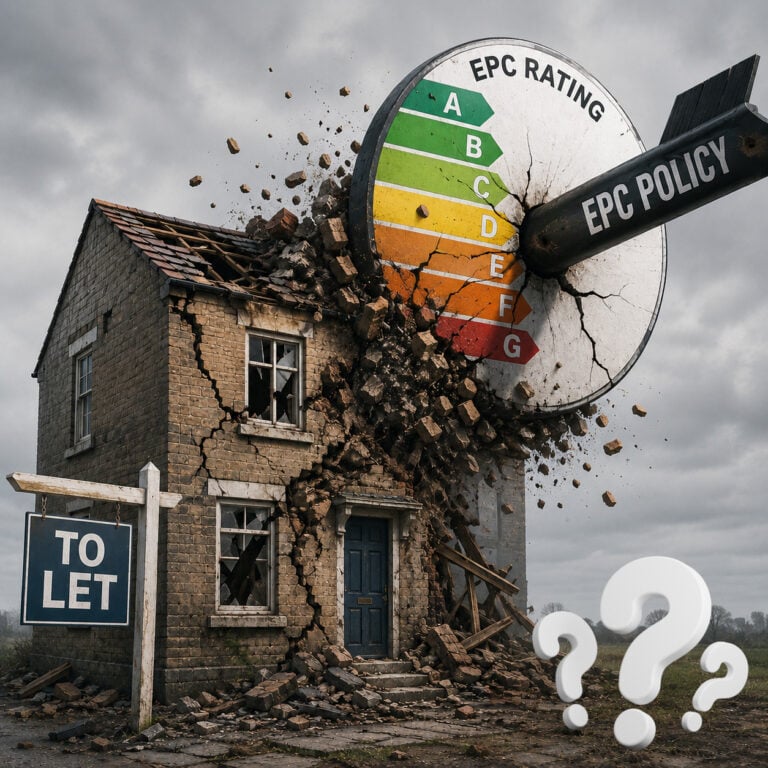
As landlords sell, we are now seeing a smaller pool of rental properties, putting pressure on supply and increasing rents. All this was predicted but ignored by a government that saw landlords as a problem and not a solution.
Well, here is some breaking news: EPC targets are equally inappropriate and will do great damage to the rental sector and here is why I think so.
EPC policy requires landlords to set property at level ‘C’ by 2030. However, all other properties can remain at lower levels. The government are now aware that a higher proportion of landlord properties now reaches level ‘C’ than owner-occupied properties and no doubt claims this as a great success. They know this because they pay the Office for National Statistics to report on it.
However, what they are missing is that by 2030, there will be two tiers of property. A large slug of rental property at level ‘C’ and a large slug of other property below that.
Here is the elephant in the room: What landlord is going to buy a lower-rated property, pay the higher stamp duty, and pay the improvement costs in order to rent?
At that point, a would-be landlord would not buy a lower-rated property because it would first need to be made legally compliant at level ‘C’, and the costs would likely be too much. This two-tier system will put pressure on the PRS, effectively stopping homes from coming onto the market for renters.
It would be sensible for all homes to be treated the same for EPC targets, but apparently not by the government and housing minister Matthew Pennycook.
This is yet another example of damaging policy which must be reversed to avoid further damage to the PRS. Whilst previous governments were no better, it is a signal that the policies the government implement are important and for the sake of people who rent the housing, the policy must be consistent and stable.
What does the Property118 community think?
Thanks,
Paul
12 comments on this article
A different perspective could help you spot an issue, avoid a mistake or find a better way forward. Read the comments and add your own views if you wish.
4 months ago | 1 comments

4 months ago | 3 comments

4 months ago | 24 comments
Member Since June 2026 - Comments: 8
12:34 PM, 30th June 2026, About 4 months ago
The scale is the part that keeps getting understated. From the UK ownership and EPC data I track, 211,693 active freehold-owning companies – about 51%, so over half the company-owned base – hold at least one property currently rated EPC D or E. If the minimum letting standard moves to C, that’s the cohort facing a forced upgrade-or-dispose decision. This isn’t a fringe of bad stock; it’s the middle of the market. A separate, smaller group of 24,546 owners already sit below the current MEES line at F/G and can’t legally re-let at all. The real risk isn’t landlords refusing to comply – it’s that for a chunk of that 211k the cheapest ‘compliant’ option turns out to be selling, and a wave of simultaneous disposals damages supply rather than improving it. Consistent standards across tenure types, as others here have said, would land far better than a rental-only cliff edge. – Dror
Member Since May 2018 - Comments: 2573
12:41 PM, 30th June 2026, About 4 months ago
Reply to the comment left by at 30/06/2026 – 12:34
True, and the available market data from the Mortgage Works suggests that (a) there is no significant uplift in value from making significant EPC improvements before selling to an owner occupier (b) that the rental premium for a band C property as compared to a band D property is unlikely to cover the cost of the required upgrade (c) that there is a significant price premium for EPC band A and B over D in some parts of the country, although not as much as the value gained by adding an extra bedroom, bathroom or toilet.
And all of this means that financially astute landlords will look at their properties, work out what the best route forward is and either sell, or get rid of tenants, make the necessary improvements and dramatically increase rents. Tenants will actually lose choice when in reality they would benefit more from increased competition.