

EPC C targets under fire over impact on older homes
4 months ago | 1 comments


As landlords sell, we are now seeing a smaller pool of rental properties, putting pressure on supply and increasing rents. All this was predicted but ignored by a government that saw landlords as a problem and not a solution.
Well, here is some breaking news: EPC targets are equally inappropriate and will do great damage to the rental sector and here is why I think so.
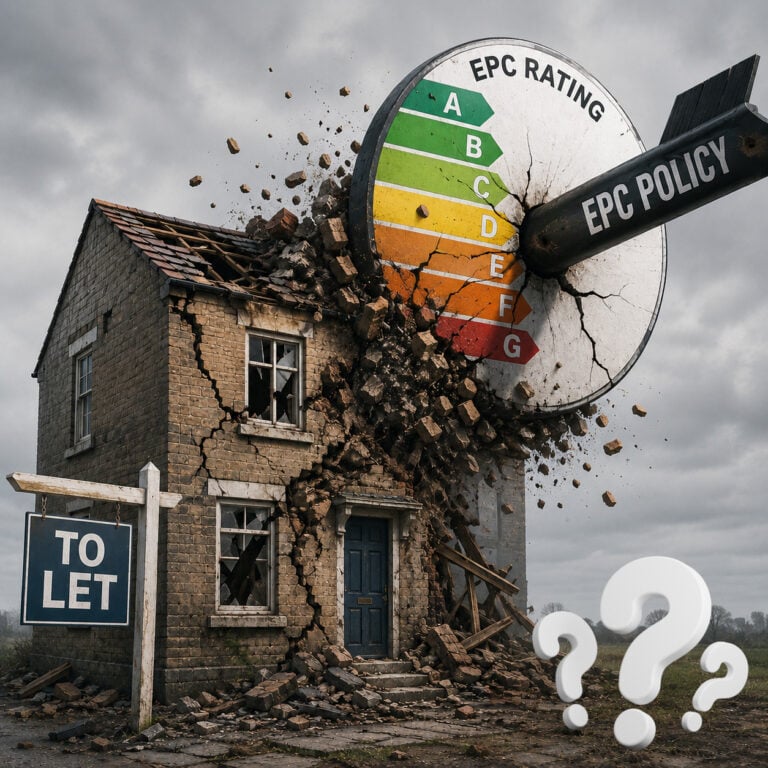
EPC policy requires landlords to set property at level ‘C’ by 2030. However, all other properties can remain at lower levels. The government are now aware that a higher proportion of landlord properties now reaches level ‘C’ than owner-occupied properties and no doubt claims this as a great success. They know this because they pay the Office for National Statistics to report on it.
However, what they are missing is that by 2030, there will be two tiers of property. A large slug of rental property at level ‘C’ and a large slug of other property below that.
Here is the elephant in the room: What landlord is going to buy a lower-rated property, pay the higher stamp duty, and pay the improvement costs in order to rent?
At that point, a would-be landlord would not buy a lower-rated property because it would first need to be made legally compliant at level ‘C’, and the costs would likely be too much. This two-tier system will put pressure on the PRS, effectively stopping homes from coming onto the market for renters.
It would be sensible for all homes to be treated the same for EPC targets, but apparently not by the government and housing minister Matthew Pennycook.
This is yet another example of damaging policy which must be reversed to avoid further damage to the PRS. Whilst previous governments were no better, it is a signal that the policies the government implement are important and for the sake of people who rent the housing, the policy must be consistent and stable.
What does the Property118 community think?
Thanks,
Paul
12 comments on this article
A different perspective could help you spot an issue, avoid a mistake or find a better way forward. Read the comments and add your own views if you wish.
4 months ago | 1 comments

4 months ago | 3 comments

4 months ago | 24 comments
Member Since January 2025 - Comments: 75
5:27 AM, 15th June 2026, About 4 months ago
Haven’t you seen the longer-term net zero roadmap that has been set out by the government to be net zero by 2050?
EPC C will eventually apply to owner occupier properties too. Mortgage companies will eventually be banned from lending on D and below and you legally won’t be able to sell unless you are a C. The roadmap says that government approved contractors will carry out the works to your property if you cannot afford it and then it is a loan against the house to be paid back once sold
Obviously none of this is law yet, but neither is the EPC C rule for rentals.
In Scotland, 2033 is already the proposed deadline for owner occupied properties needing a C. Possibly 2035, the year keeps changing as we all know it’s pie in the sky stuff
Member Since June 2026 - Comments: 6
6:15 AM, 15th June 2026, About 4 months ago
The two-tier point is a real one. If lower-rated properties become effectively unlettable without significant upfront investment, the economics stop working for most landlords — and those homes either sit empty, get sold to owner-occupiers, or fall further into disrepair. None of those outcomes help renters.
From our experience upgrading energy efficiency across a large portfolio, the challenge isn’t the target — warmer, more efficient homes are better for residents and the right direction of travel. The challenge is the timeline, the cost, and the lack of practical support for landlords who want to comply but can’t absorb the bill in one go.
A two-tier system that penalises rental stock relative to owner-occupied homes of the same rating doesn’t serve anyone well. Consistent standards across all tenure types would be a more logical place to land.
Member Since June 2023 - Comments: 4
7:24 AM, 15th June 2026, About 4 months ago
Labour won’t survive the next election, and reform the likely victor at the moment say they will scrap net zero, renter’s rights act and section 24. But only time will tell.
Member Since May 2025 - Comments: 92
8:18 AM, 15th June 2026, About 4 months ago
And councils and social housing landlords still don’t need to achieve E let alone C. Two tier at its best.
There is zero incentive to buy more rental property at the moment. I am selling as tenants leave. If this stupidity is still here in 2030 then I will evict all my tenants and sell. Why would I spend such large sums of money with zero tax relief other than CGT for zero return. My tenants will be living in the property for free for 5 years to cover the capital outlay.yet I would still be paying tax in the rental loss.
I have recently increased rents by 4% o cover all the new government stealth taxes. Almost zero from the increases goes to me. Tenants are worse off. Real winner is Rachel.
Member Since July 2013 - Comments: 524 - Articles: 1
12:06 PM, 15th June 2026, About 4 months ago
They hate the “Kulaks” and cannot abide private individuals making some moolah.
They would prefer everything, including the PRS, is ran by large corporations. In other words a corporate state, much like China and Vietnam are.
Member Since October 2022 - Comments: 277
4:33 PM, 15th June 2026, About 4 months ago
They know that EPC C will decimate the PRS. It’s what they are counting on, otherwise they would be making it a level playing field. They want to tip the balance away from the landlord to the owner occupier and make renting as close as possible to owning as they can get away with.
Member Since July 2013 - Comments: 524 - Articles: 1
4:43 PM, 15th June 2026, About 4 months ago
Reply to the comment left by Peter Merrick at 15/06/2026 – 16:33
But they are Ok with large corporations delivering the PRS, they just hate individual landlords doing it.
Member Since October 2022 - Comments: 277
10:01 PM, 15th June 2026, About 4 months ago
Reply to the comment left by David Lawrenson at 15/06/2026 – 16:43
Yes David, they have made it quite clear that they want to “professionalise” the sector, i.e. they want to see the end of the “amateur” landlord and for everybody to be able to rest assured that the are safe in the hands of the professionals, i.e. corporate landlords.
So tenants will no longer be individual people with a story and a history, but a commodity that does or does not follow the rules and pay the required rent. Never mind about individual needs or circumstances or getting to know the person as a human being.
Member Since July 2013 - Comments: 524 - Articles: 1
12:39 PM, 16th June 2026, About 4 months ago
Reply to the comment left by Peter Merrick at 15/06/2026 – 22:01
And the sad reality is that tenants of these so called professional big corporation landlords have a worse experience than those who are customers of Mum n Dad landlords. FT did a piece on it some years ago.
Member Since May 2018 - Comments: 2573
5:07 PM, 22nd June 2026, About 4 months ago
Reply to the comment left by Suspicious Steve at 15/06/2026 – 08:18
The Mortgage Works produces a private sector rental report on energy efficiency, the latest version of which is here:
https://www.themortgageworks.co.uk/-/media/tmw-direct/documents/private-rental-sector-report-spring-2026.pdf?rev=5452ffdffed74fa8bc46fd421333717c&hash=0D0D63E8F349C2E9F57B7E341F48C949
Page 4 suggests that a band A or B property attracts a price premium over a D property and the report suggests this is 12.2% on average, but as high as 19.1% in the North of England. But a band C property only attracts a 3.7% premium over D.
I think it unlikely that landlords will recover their costs of moving from Band D to C with a 3.7% premium, and so if landlords are forced to upgrade from D to C in order to continue renting out their properties they will either (a) sell (b) evict the tenants to do the upgrades then relet at a far higher premium (c) for those that can, move family members back in. And so if government policy goes ahead as planned this will constrain the supply of rental property and push the average PCM rent up, so together with the effects of the Renters Rights Bill tenants will pay MUCH higher rents. The government has already been told that landlords can increase rents to recover the costs of EPC improvements.
It would make far more sense if tenants were permitted to rent any property, including properties below band D. There is already some evidence in this report that the market CAN sort the problem out. Instead of the you-must-be-band-C-or-above control freakery which is really about keeping a has-been, political non-entity trying to salvage his career out of the way by giving him an opportunity in becoming the latest climate change Tsar, it would make far more sense to introduce the capital allowances to encourage improvements in energy efficiency and review the EPC system to make it more meaningful to prospective property purchasers and tenants. Even if an EPC is based on assumptions, giving a tenant an estimate of energy cost, or an estimate of how much energy can be generated and stored (which won’t necessarily reduce the combined energy/rent bill) would give a tenant more information about a property. If those estimates and assumptions can be challenged by landlords using their own data then this would encourage landlords to generate data on their properties in order to make them more attractive to prospective tenants.
Some tenants may want to pay higher rent and either believe that they are helping reduce climate impact, or perhaps that they are less susceptible to energy price spikes. But stopping tenants from renting the properties they want to rent achieves nothing. If you look carefully at the reports from The Mortgage Works it adds more value to a property to add a bedroom or a bathroom. This is because in a free society and a free market tenants need to focus on what they need, not on what government is trying to coerce them to do. All that the control-freakery does is make it harder for the market to sort the problem out.