

London boroughs’ EPC rankings revealed
1 week ago


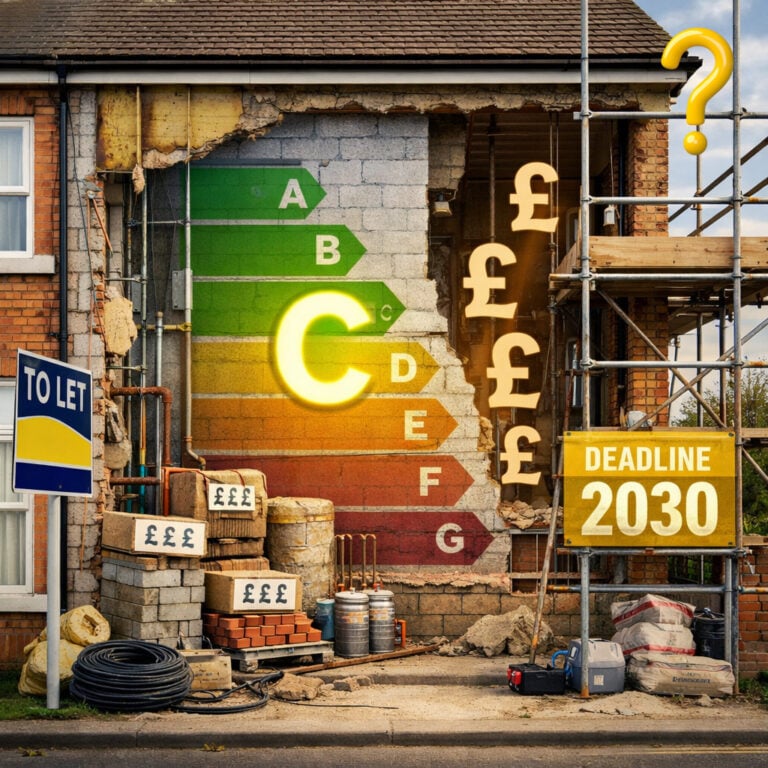
I’ve been digging into the EPC open data register to work out what the EPC C 2030 deadline actually means in practice for a typical small portfolio. Not the headline figures from government consultations, the actual numbers from real EPC certificates in real postcodes.
Thought it might be useful to share what I found, because the picture is more nuanced than “it’ll cost you £6,000-7,000” that keeps getting quoted.
The government publishes every EPC certificate through their open data portal (epc.opendatacommunities.org). It’s free to access. Each certificate includes the current rating, the potential rating after improvements, and a list of specific recommended upgrades with estimated cost ranges.
I pulled every domestic EPC in my local authority area and filtered for properties currently rated D, E, F, or G , the ones that need upgrading.
The spread of upgrade costs is enormous. A D-rated mid-terrace from the 1930s with reasonable loft insulation and double glazing might only need a boiler upgrade and cavity wall insulation to hit C, potentially £2,500-4,000 total. A solid-wall Victorian end-terrace rated E with single-glazed sash windows and no loft insulation could easily exceed the £10,000 cost cap.
The single biggest factor in whether your upgrade is affordable is wall type. Cavity wall insulation costs £350-500 and can shift your rating by 5-10 points. Solid wall insulation (internal or external) costs £5,000-15,000 and many landlords on Property118 have rightly pointed out it can cause damp issues in older properties.
The second factor is your current heating system. If you’ve got a modern condensing gas boiler rated A, you’ve already banked those points. If you’re still on an old non-condensing boiler, the swap alone (£2,000-3,000) can add 10-15 points to your score.
Properties that achieve EPC C under the current assessment method (EER) before October 2029 will be deemed compliant until their EPC expires, which is 10 years. That means if you get assessed at C under the current system before the new Home Energy Model kicks in, you’re potentially covered until 2039.
The new HEM system requires you to meet two criteria: fabric performance AND either smart readiness (solar panels, battery storage) OR heating system performance (heat pumps). This is likely to be harder and more expensive to pass. Several people on webinars have confirmed this interpretation.
So there’s a genuine argument for getting your properties assessed sooner rather than later under the current system, even if your EPCs aren’t due for renewal.
What I’d actually want to know per property after going through this exercise, I realised what would actually help me (and I suspect many landlords) is a simple per-property view.
The specific upgrades recommended for THIS property (not generic advice)
What I’d actually want to know per property:
I’m curious, how many of you have actually looked up your properties on the EPC register and gone through the specific recommendations?
And for those who’ve already started upgrading, did the recommended improvements actually move the needle the way the certificate predicted, or was the reality different?
Interested to hear real experiences. The government estimates feel very average-based and I suspect the property-by-property variation is huge.
Thanks,
Kshitig
Every day, landlords who want to influence policy and share real-world experience add their voice here. Your perspective helps keep the debate balanced.
Not a member yet? Join In Seconds
Login with
Previous Article
Rents tick up as Renters’ Rights Act deadline approaches
1 week ago
1 week ago | 1 comments

2 weeks ago | 1 comments
Sorry. You must be logged in to view this form.
Member Since April 2026 - Comments: 4
12:46 PM, 3rd April 2026, About 6 days ago
Reply to the comment left by Peter Rowley at 02/04/2026 – 15:38
Peter, thanks for pulling out the full Annex A guidance. This is really useful and I suspect most landlords haven’t seen it.
The worked examples make the revenue vs capital distinction much clearer than the general guidance does. The key takeaways for anyone reading this:
Replacing an existing heating system with a heat pump — revenue expense, fully deductible against rental income. That includes installation, pipes, and making good.
First-time loft insulation — capital expenditure, not deductible. Which feels counterintuitive given it’s one of the cheapest and most effective upgrades available.
Double glazing replacing single glazing — revenue expense, because you’re using modern equivalent materials. But upgrading existing double glazing to triple glazing is less clear.
The Example 6 BUS grant scenario is the one more landlords need to see. £12,500 total cost, £7,500 grant, £5,000 out of pocket — and only the £5,000 counts towards the cost cap. The full £12,500 goes in the accounts as an expense. That’s a significant benefit that I’d guess very few landlords are aware of.
The challenge, as Beaver has outlined in detail, is that most of the upgrades needed to get older properties from D or E to C are likely to be capital rather than revenue. First-time insulation, first heating system where none existed, battery storage — all capital. So the landlords who need to spend the most get the least tax relief. It reinforces the structural disadvantage for non-incorporated landlords that Beaver described.
This is exactly the kind of per-property analysis that would help landlords make better decisions — not just “what does the upgrade cost” but “what’s the actual after-tax cost given my ownership structure and what already exists in the property.”
Member Since January 2020 - Comments: 93
4:03 PM, 3rd April 2026, About 6 days ago
Reply to the comment left by Beaver at 03/04/2026 – 10:33
Semi & Detached house. For Flats plug-in Solar will be available soon, but I expect Tenants will purchase there own.
Member Since May 2024 - Comments: 16
7:19 PM, 3rd April 2026, About 6 days ago
Just sell up before 2030 and zero cost!
Member Since February 2023 - Comments: 7
8:21 AM, 4th April 2026, About 5 days ago
Reply to the comment left by Neil P at 02/04/2026 – 11:39
Im confused I was under the impression that the tenants had to have the advantage of the payback on the solar panels to reduce there electric bills?
Member Since February 2023 - Comments: 7
8:21 AM, 4th April 2026, About 5 days ago
Im confused I was under the impression that the tenants had to have the advantage of the payback on the solar panels to reduce there electric bills?
Member Since May 2018 - Comments: 1999
11:05 AM, 4th April 2026, About 5 days ago
Reply to the comment left by Pete England – PaTMa Property Management at 03/04/2026 – 16:03
So how much is the SEG revenue that you receive and how much was the installation? I.e. as the landlord how much ROI does the SEG revenue vs. the capital outlay of the solar panels?
Member Since May 2014 - Comments: 88
11:09 AM, 4th April 2026, About 5 days ago
Reply to the comment left by LincolnshireLandlord at 04/04/2026 – 08:21
This HMO is all-inclusive of bills, so I pay the electricity – and take the savings.
Member Since May 2014 - Comments: 88
11:12 AM, 4th April 2026, About 5 days ago
Reply to the comment left by Peter Rowley at 02/04/2026 – 15:38
Can you clarify this bit please Peter?
“The total cost of installation was £12,500. With the £7,500 BUS grant, their out-of-pocket expense was reduced to £5,000. Person G’s personal investment (£5,000) to install the heat pump and related works are an allowable expense for tax purposes, as it replaces the previous heating system. For tax purposes, the whole cost should be included in Person G’s accounts as an expense.”
You’re saying £12,500 goes as tax allowable on your return, even though you’ve only spent £5,000? Seems unusually generous from HMRC?!
Member Since January 2020 - Comments: 93
11:39 AM, 4th April 2026, About 5 days ago
Reply to the comment left by Beaver at 04/04/2026 – 11:05
I purchased the 10 panels for £4600 to fill the roof on the Semi. The SEG Export was 15p a kwh with Octupus & BG so the big question is how many kw’s will it generate and export. I expect the ROI will be 10years, but it really depends on the price of electric going forward. My solar system at home saves be over £3000 a year and should pay for itself within 5 years. Has to be worth doing on an HMO.
Member Since August 2018 - Comments: 158
11:52 AM, 4th April 2026, About 5 days ago
My EPCs say that a 2.4KWh system will add around 9 points but does anyone know what happens if you fit say, a 4KWh system? Do you get more points?