

What to do in case of disruption to an HMO?
Hi Everyone, with a number of shared properties, I am wondering what our legal obligations are for providing heating, lighting, gas, and electricity, etc., in the event of disruption, security alerts, or war.
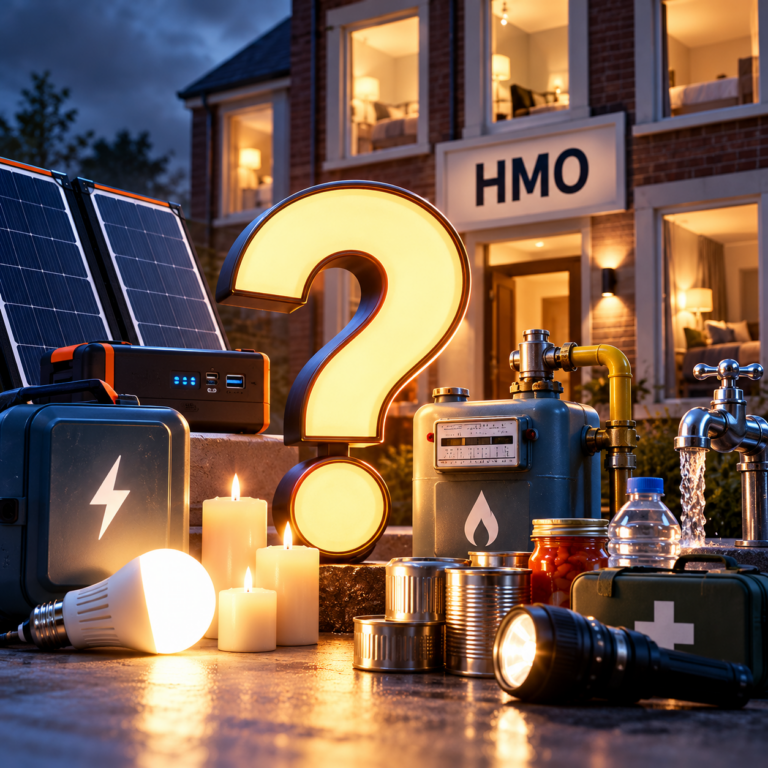
I do not wish to be alarmist, but we are all being recommended to stock up with food, candles, etc but what about disruption to gas and electricity supply for HMO’s?
We are thinking of having portable solar panels with USB ports for our own use to enable phones, etc to be charged.
But what are our overall liabilities for providing for HMO residents in these situations?
Many thanks
Karen
Editor’s note: The HMO Management Regulations 2006 require managers to maintain shared facilities and fire precautions, and prohibit unreasonably causing interruptions to gas or electricity supplies. Crucially, regulation 11(b) says managers are not obliged to undertake action concerning utilities that is another party’s responsibility, beyond promptly bringing the problem to that party’s attention. This is particularly relevant where the fault lies with the external supply network.
These regulations do not impose a general requirement to install generators or solar panels to replace an interrupted public supply. However, landlords should check their tenancy obligations and HMO licence conditions. Existing safety duties remain relevant: government fire-safety guidance explains the requirements for fire alarms, emergency escape lighting where necessary, and regular testing and maintenance. A prolonged outage that compromises these systems needs prompt assessment by a competent fire-safety adviser.
For practical preparation, the government’s Prepare website recommends battery or wind-up torches rather than candles, portable phone power banks, drinking water, food requiring no cooking, and an emergency plan. These are preparedness recommendations, rather than an HMO-specific legal requirement to supply emergency kits.
Landlords can share this advice with residents, display emergency contacts and encourage eligible residents to join utility Priority Services Registers. Residents relying on powered medical equipment should agree a contingency plan with their care or equipment provider.
3 comments on this article
Learn from your peers’ experience
A different perspective could help you spot an issue, avoid a mistake or find a better way forward. Read the comments and add your own views if you wish.
Previous Article
Council requiring HMO landlords to hold utility accounts?Next Article
Tightening of Gas Safe requirements?
Member Since July 2013 - Comments: 2098 - Articles: 21
2:08 PM, 22nd October 2026, About 4 weeks ago
Karen, do nothing. You cannot anticipate security alerts or war. Who is recommending you stock up on candles and food? (What about loo paper, dried food and demijohns of drinking water?)
If your gas or electricity supply is disrupted you will be in the same position as dozens of neighbours. Deal with problems at the time.
Asking about your “overall liabilities for providing for HMO residents” is too wide-ranging and vague to give a sensible answer absent specific circumstances. I own HMOs and am not taking steps in anticipation of war.
Member Since January 2015 - Comments: 1668 - Articles: 1
11:42 AM, 24th October 2026, About 3 weeks ago
Portable solar panel may void your building insurance whether freehold or Leasehold.
If a leasehold property your would need freeholder permission if attached to / through an external wall or roof.
Member Since September 2026 - Comments: 60
2:51 PM, 31st October 2026, About 2 weeks ago
Hi Karen,
There is a difference of two words in the regulations that settles most of this.
Under the 2006 HMO Management Regulations, regulation 5(2) says you must not unreasonably cause or permit an interruption to water or drainage. Regulation 6(4), covering gas and electricity, says only that you must not unreasonably cause one. The permit limb isn’t there. So a network outage you had no hand in doesn’t breach it, and that covers the bulk of what you’re worried about.
Regulation 11(b) is the flip side, and worth reading closely. It frees you from acting on matters that are another party’s responsibility, but it carves out the step needed to bring the problem promptly to their attention. That is your real obligation during an outage. Report it, and keep a dated note that you did.
Where your residents hold tenancies rather than licences, section 11 of the Landlord and Tenant Act 1985 points the same way. The implied covenant is to keep the installations for the supply of gas and electricity in repair, not to guarantee the supply itself, and it reaches only installations you own or control. The mains network is neither.
On the solar panels, I’d come at it from a different direction to the insurance point. At the moment you have no duty here at all. Supply equipment for shared use and regulation 7(2)(f) pulls it inside your maintenance duty, and a lithium battery bank in common parts belongs in your fire risk assessment. The kit creates the obligation you don’t currently have.
OJ