

Landlords receive guidance on reasonable pet requests
4 months ago | 8 comments


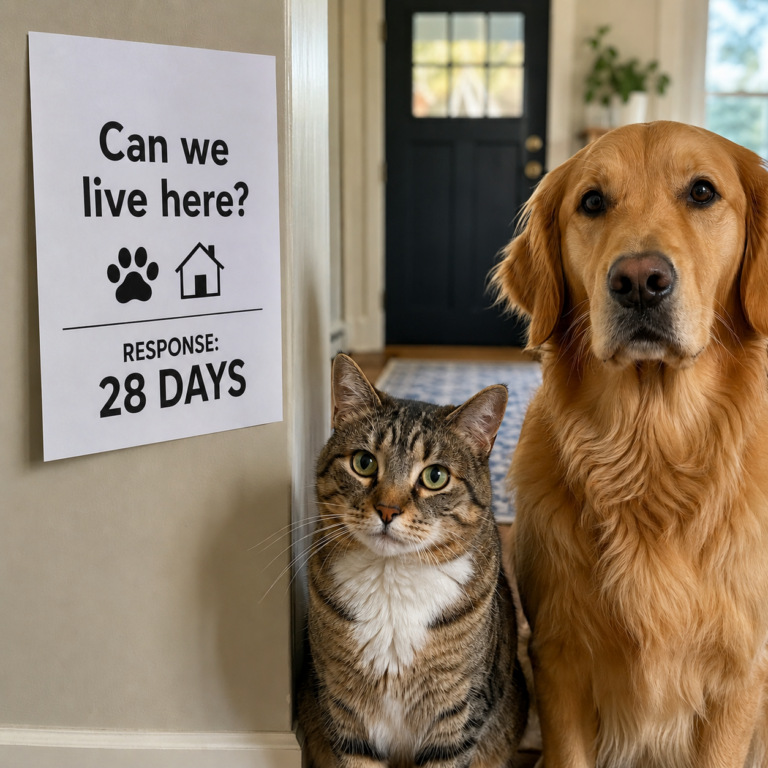
Several published landlord guides are stating the wrong timeframe for responding to tenant pet requests under the Renters’ Rights Act.
The correct answer is 28 days.
Here is what the law says, why the 42-day figure is wrong, and what landlords need to do.
The 42-day window does not appear in the Renters’ Rights Act as enacted.
It appears to have originated from an earlier draft of the Bill as it passed through Parliament, where a longer period was proposed and subsequently amended before Royal Assent.
The final Act — section 11, which inserts new section 16A into the Housing Act 1988 — is clear.
A landlord who receives a written pet request must respond in writing within 28 days.
Missing the 28-day window has two immediate consequences.
First, deemed consent.
If you fail to respond within 28 days, the request is treated as having been granted. You cannot reverse this.
The tenant is entitled to keep the pet regardless of your views on it.
Second, enforcement.
Local housing authorities have investigation and civil penalty powers under the Act.
Penalties for non-compliance can reach £7,000 for a first breach.
A landlord who has read that the window is 42 days and responds on day 35 has already breached the Act and lost the right to refuse.
The pet request process under section 16A is straightforward if you follow it properly.
Yes — but only on specific grounds.
A blanket ‘no pets’ policy is no longer enforceable under the Act.
Valid grounds for refusal include a freeholder or superior lease restriction that prohibits pets, genuine unsuitability of the property for the specific animal requested, or a building management restriction that applies to all occupiers.
Refusal based on a general preference or policy is not valid.
The reasons must be specific and documented in writing.
Yes. Granting consent with conditions is permitted and is generally the most defensible approach.
Note that charging a higher deposit specifically for pets remains prohibited under the Tenant Fees Act 2019 — insurance is the correct mechanism.
There are limited circumstances where the deadline can be extended.
If you need further information from the tenant, for example, details about the breed or size of the animal — you can request this within the 28 days.
You then have 7 days from receiving that information to respond.
If the property is leasehold and you need freeholder consent before you can respond, you must apply to the freeholder within the 28-day window.
You then have 7 days from receiving the freeholder’s decision to respond to your tenant.
The 28-day window is strict. Deemed consent cannot be reversed.
If you are using a template pack or compliance guide that states 42 days, check it now — and check any response letters it provides reference the correct timeframe.
For more information about landlords’ tenant pet requests under the Renters’ Rights Act, visit the DocPilot website for more information.
David Osborne is the founder of DocPilot, which provides UK legal document templates updated for the Renters’ Rights Act 2025 and Employment Rights Act 2025.
Editor’s note: A reference to landlords being able to ask for pet insurance has been removed since this was dropped from the version of the Act that received Royal Assent.
15 comments on this article
A different perspective could help you spot an issue, avoid a mistake or find a better way forward. Read the comments and add your own views if you wish.
Previous Article
Why EPC policy will damage the housing sector?
4 months ago | 8 comments

5 months ago | 4 comments

5 months ago | 34 comments
Member Since June 2019 - Comments: 973
9:05 AM, 15th June 2026, About 4 months ago
There is of course no way of proving that you did not receive a request, the requirement should be to have received the landlords reply. Deemed consent seems entirely unreasonable and high risk.
Member Since October 2020 - Comments: 1376
9:50 AM, 15th June 2026, About 4 months ago
Requiring the tenant to have pet insurance is another clause that didn’t make it into the final draft of the Act. In fact it would now be illegal under the Tenant Fees Act.
I wonder how long it will be before Generation Rent or others tell tenants that the needn’t bother with any of these regulations as if they just get a pet and then tell yhe landlord, there is probably going to be nothing they can do about it.
Member Since November 2022 - Comments: 126
10:53 AM, 15th June 2026, About 4 months ago
Note that the 28 day (or longer, where relevant ) period can be extended by agreement (s16A(4) Housing Act 1988).
Member Since January 2024 - Comments: 426
5:00 PM, 15th June 2026, About 4 months ago
“The most common condition is requiring the tenant to maintain pet damage insurance throughout the tenancy.
Note that charging a higher deposit specifically for pets remains prohibited under the Tenant Fees Act 2019 — insurance is the correct mechanism.”
Apparently this is illegal – you cannot ask the tenant to take out insurance.
You can of course increase the rent annually (within RRA requirements) to the maximum that the market will bear, and all landlords would probably be wise to do so.
Member Since August 2022 - Comments: 118
5:14 PM, 15th June 2026, About 4 months ago
In my experience, the pet usually arrives before the request for consent. So all the above is irrelevant.
Member Since October 2020 - Comments: 1376
6:06 PM, 15th June 2026, About 4 months ago
I just checked and your website has the wrong information on it too. S17 of the Bill didn’t make it into the Act and consequently if your £14.99 Pet Request Response Pack also says that landlords can require pet insurance, you are leading landlords into breaching the Tenant Fees Act and are likely to be sued.
Member Since November 2025 - Comments: 6
11:41 AM, 16th June 2026, About 4 months ago
Surely if a tenant gets a pet, before making an application, they have breached the rules so automatic refusal?
Member Since October 2020 - Comments: 1376
3:25 PM, 16th June 2026, About 4 months ago
Reply to the comment left by Robert Needham at 11:41
Yes, but what are you going to do if the tenant says they can’t now remove the pet.
Member Since November 2025 - Comments: 6
10:52 AM, 17th June 2026, About 4 months ago
Reply to the comment left by DPT at 16/06/2026 – 15:25
Well, would breach of tenancy allow for eviction notice?
Member Since November 2022 - Comments: 126
10:56 AM, 17th June 2026, About 4 months ago
Reply to the comment left by Robert Needham at 17/06/2026 – 10:52
Discretionary ground.