
Jeremy Corbyn calls for rent controls to prevent ‘excessive’ landlord profits
1 year ago | 46 comments


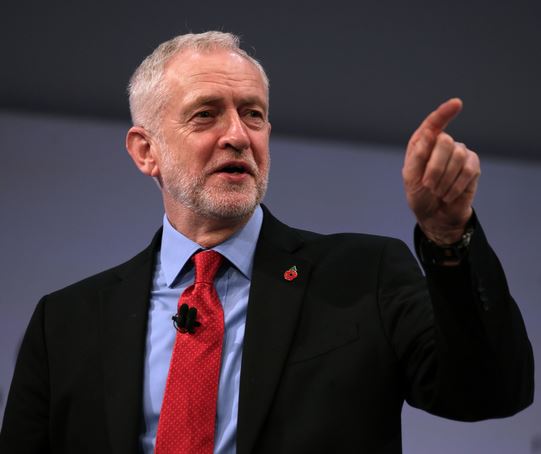
Jeremy Corbyn is now, thankfully, a complete irrelevance. I’ll never forget how happy I was when he lost the election, he represented an existential threat. But his simplistic economic views are still attractive to many. It’s populism at its worst, exploiting a problem, rather than providing a solution for the cause.
It’s either deceit or stupidity. Because I don’t think he’s an insincere man, I’d suggest the latter. He’s an idiot.
Corbyn: “There’s nothing wrong with rent controls“, it seems to me a reasonable way of preventing excessive profits being made in the private rented sector and exploiting people who are in desperate housing need.”
Trite left-wing cliches and sweeping generalisations. How is he defining excessive profits? How does he know what profits landlords are making? Did he think to ask why rents are high? Of course not.
The price of rent is the result of supply (currently low), demand (currently high) and costs (currently excessive). As far as profit, there are good and bad years. On the rare occasions I’ve seen higher profits, it has been to balance previous years of lower profits. It’s a dynamic system that reacts quickly. When profits are low, businesses struggle, sell up or go bankrupt. When profits are high, businesses invest and grow. The former is happening now, not the latter.
Small landlord businesses are finding it extremely hard to exist. Unlike Corbyn, they’re actually doing something to prevent homelessness, not just talking about it, and they’re doing so in incredibly hard circumstances with no support or appreciation. By advocating rent controls, Corbyn is indirectly suggesting this already struggling sector should do the job for free, or even at a loss, which is already happening.
It’s not the role of a private business to subsidise people on low income, that’s the job of the welfare sector. It’s the responsibility of the government. But it’s also worth pointing out renters are not universally a poor underclass. I have tenants on 6-figure salaries and the majority spent less than 30% of their salary in rent.
TYPICAL EXAMPLE:
2-bed house @ £140k
Investment:
Deposit (25%) £35k
Stamp duty £7k
Loan costs £7k
Purchase costs/fees £1.5k
TOTAL CAPITAL INVESTMENT £50.5k
Rent £800 (7% yield)
Loan £105,000
Mortgage (interest only) £440
Maintenance £100
Management/letting £100
Insurance £25
Certificates £15
Miscellaneous/contingency £50
Total costs £730
Profit £70
Income tax @ 40% £28
Net profit £42
Section 24 tax £88 (£110 @45% tax)
Total -£46 (-£68) per month
How much profit? Often none.
In the example above, a typical business model, around -£50 a month or -£600 a year. A loss. At the same time, the government makes around £100 a month with Section 24 tax (that’s on top of income tax) or £1,200 a year. In practice, S24 is somewhere between tax on turnover for the landlord and VAT on rent for the tenant. None of this is a secret. Anyone can spend 30 minutes researching the sector and work this out for themselves.
For a small business, as things stand, it is barely sustainable. Landlords are selling up, estate agents report a rise from 16% to 35% in sales from the sector. This reduces rental stock, which is failing to keep up with demand and driving up rent. The poorest renters suffer the most. ‘People who are in desperate housing need’, as Corbyn puts it, are pushed out of the bottom of the sector, some into emergency housing, and an increasing number onto the streets. The sale of rental stock reduces overall housing stock as the buyers’ market reaches saturation with less need for new build, which continually misses its annual target.
(As an aside, it’s effectively Labour and Tory policy to close down small landlord businesses and have big corporations to take over – so far, unsuccessfully – but that’s a conversation for a different time.)
While Corbyn would be the first to back a minimum wage, he has Olympic levels of ideologically inspired cognitive dissonance when it comes to private businesses covering their costs. Why would anyone invest in a sector where they don’t get paid a wage and lose money? No one in the public sector works for free, but private landlords are apparently expected to.
However, landlords still make a profit from the capital gain, right? I’m forgetting that.
Although the day-to-day business loses money, the capital investment grows – in theory, a return similar to an ISA. In theory. But on a recent valuation, I got £155k on a property that was valued at £170k 18 years ago – a £15,000 loss – and I’d spend £40,000 doing up. Last year, I lost £30,000 on a bad tenancy (I’ve lost smaller amounts on others). I’ve lost thousands through cladding issues. I own property that’s still in negative equity from the 2008 crash. So there are no guarantees and profit is likely to be significantly less than expected, particularly when you factor in capital costs and capital gains tax.
Like all populists, Corbyn offers no solution, only a fantasy – pricing rent at what he thinks it should be over what it actually is and expecting that to work. The costs involved don’t change. It’s like trying to lose weight by adjusting the scales. The corollary for tenants is higher rents for new tenants, evictions as landlords have to sell or go bankrupt, declining rental stock and less investment.
What use is rent control if there isn’t any property to rent?
Andrew
Every day, landlords who want to influence policy and share real-world experience add their voice here. Your perspective helps keep the debate balanced.
Not a member yet? Join In Seconds
Login with
Previous Article
PRS crisis deepens as landlords plan exit and rents surgeNext Article
Bank of England cut interest rates to 4.5%
1 year ago | 46 comments

1 year ago | 101 comments
Sorry. You must be logged in to view this form.
Member Since July 2013 - Comments: 1996 - Articles: 21
3:05 PM, 6th February 2025, About 1 year ago
Andrew
I think the easiest calculation of the additional s24 tax is:
for 40% tax payers, 20% (40%-20%) of the mortgage interest; and
for 45% tax payers, 25% (45%-20%) of the mortgage interest.
In your example the extra interest is 25% x £440 = £110 a month or £1320 a year.
Member Since March 2022 - Comments: 363
4:09 PM, 6th February 2025, About 1 year ago
Andrew, I think you would have been better off to just take the £55K that you laid out and invest it at 4%. That would bring in £2,200/yr (£183/month) in the first year.
You would also not have a mortgage that has to be paid no matter what. You would have the peace of mind of not having to worry about the risk of a tenant not paying rent, while they wreck your property causing thousands of pounds of damage that you will most likely never get back as you try for a year to get your property back via the Courts against a tenant on legal aid. You will never have to worry about the cost of a tenant’s boiler breaking down or worry about your tenants roof when the wind gets up, or upcoming legislation changes. Plus if you need to realise the cash you can just draw it out.
You could argue that you would lose on capital gain on the property but that is taxable as well.
Member Since January 2024 - Comments: 342
4:50 PM, 6th February 2025, About 1 year ago
The tax calculation in the question is incorrect. It should be 40% (assuming 40% applies) of profits BEFORE interest.
So the correct tax figure is £800-730+440=£510@40% = £204, minus £440@20%=£88, total tax payable=£204-88=£116.
Therefore, the after tax return is £70-116=-£46pm.(a loss).
Also, in response to other comments, when calculating a return, you should use current market value (NOT cost), less CGT, mortgage, etc to give you the net cash figure and see how the NET rental income, after tax, compares with what you could achieve, after tax, in savings accounts, tracker funds, etc., often for far less stress.
Member Since March 2022 - Comments: 137
7:49 PM, 6th February 2025, About 1 year ago
Andrew,
One of my BTLs is similar to your example. Here are the high level numbers
Value: £130,000
LTV: 75%
Rate: 3.05% IO
Total buying costs £7,635
Total invested £40,250
Monthly
Rent £710
Running costs (mortgage, insurance, service charge) etc £288
Maintenance reserve £108
No agent, I self manage. No S24. Profits are re-invested elsewhere.
Yearly Yield = 6.55%
Yearly ROI (with maintenance reserve) = 9.37%
Yearly ROI (no maintenance – unrealistic) = 12.6%
This means if everything stays the same I’ll get my £40k back in 10 years or less.
The property is well maintained and I raise the rent every year inline with market rates, no ifs or butts here.
The mortgage is due for renewal in a few more years; 6 months before its renewal I need to decide if the rates/fees and re-valuation will still keep an ROI I’m happy with otherwise its time to sell up.
It’s that simple if the rates/fees come down and rent and/or value go up then I’ll renew if not sale board will be going up.
If rent controls come in that just simply limits 1 of the 4 factors above meaning the likelihood of a sale just increases.
Member Since March 2023 - Comments: 1506
8:01 AM, 7th February 2025, About 1 year ago
I don’t have a mortgage on my properties so I guess I would be classed as making an excessive profit.. However my accountant (legally) turn this into a small profit. so the tax I pay can go to the great unwashed.
Member Since January 2015 - Comments: 1435 - Articles: 1
9:11 AM, 8th February 2025, About 1 year ago
If such a wonderful idea why is the Scottish Parliament repealing rent control legislation