

‘How to rent’ booklet update


A new edition of the ‘How to rent’ guide written by the Ministry of Housing, Communities & Local Government has been released on 17th January 2018.
Please Click Here to download the full document which must be provided by landlords and agents to all new tenants.
The guide is for tenants and landlords in the private rented sector to help them understand their rights and responsibilities. It provides a checklist and more detailed information on each stage of the process. including:
- what to look out for before renting

- living in a rented home
- what happens at the end of a tenancy
- what to do if things go wrong
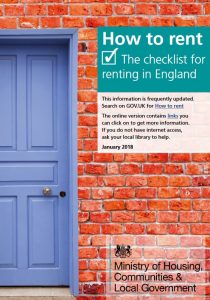
The booklet also confirms the following:
The landlord must provide you with
- A copy of this guide “How to rent: the checklist for renting in England” as a printed copy or, if you agree, via email as a PDF attachment.
- A gas safety certificate. The landlord must provide one each year, if there is a gas installation.
- Deposit paperwork. If you have provided a deposit, the landlord must protect it in a government approved scheme. Make sure you get the official information from the scheme, and that you understand how to get your money back at the end of the tenancy. Keep this information safe as you will need it later.
- The Energy Performance Certificate. This will affect your energy bills and the landlord must provide one (except for Houses in Multiple Occupation).
If your landlord doesn’t provide these, they can’t evict you until they do.
The landlord should provide you with:
A record of any electrical inspections. All appliances must be safe and checks every 5 years are recommended.
The landlord must:
- Maintain the structure and exterior of the property.
- Fit smoke alarms on every floor and carbon monoxide alarms in rooms using solid fuels – such as coal and wood – and make sure they are working at the start of your tenancy. If they are not there, ask your landlord to install them.
- Deal with any problems with the water, electricity and gas supply.
- Maintain any appliances and furniture they have supplied.
- Carry out most repairs. If something is not working, report it to the landlord (or their agent) as soon as you can.
- Arrange an annual gas safety check by a Gas Safe engineer (where there are any gas appliances).
- Give at least 24 hours notice of visits for things like repairs – the landlord cannot walk in whenever they like.
- Get a licence for the property, if it is a licensable property.
13 comments on this article
Learn from your peers’ experience
A different perspective could help you spot an issue, avoid a mistake or find a better way forward. Read the comments and add your own views if you wish.
Previous Article
Is Your Accountant More Of A Book-Keeper Than Tax-Planner?
Member Since May 2015 - Comments: 2326 - Articles: 2
2:15 PM, 8th February 2018, About 9 years ago
Reply to the comment left by Rob Crawford at 08/02/2018 – 13:00
I believe that you only have to issue the booklet at the start of the tenancy, therefore a Statutory periodic would require reissue as it is a new tenancy. A Contractual periodic is not a new tenancy and does not warrant reissue.
If you have any doubt issue the latest version and get the tenant to sign your copy.
Member Since April 2014 - Comments: 984 - Articles: 2
3:52 PM, 8th February 2018, About 9 years ago
Reply to the comment left by David Price at 08/02/2018 – 14:15
Hi David, thanks. I have also found Tessa Shepperson’s view where it is nicely explained. This supports our views. http://www.landlordlawblog.co.uk/2016/08/30/how-to-rent-booklet-laws/
Member Since April 2014 - Comments: 984 - Articles: 2
4:29 PM, 8th February 2018, About 9 years ago
Reply to the comment left by David Price at 08/02/2018 – 14:15
….ops, apologies, wrong link but still relevant. This is the link I meant to send: http://www.landlordlawblog.co.uk/2015/09/22/section-21-the-new-rules-the-prescribed-information-booklet-how-to-rent/