

What the government’s EPC consultation means for landlords
2 years ago | 42 comments


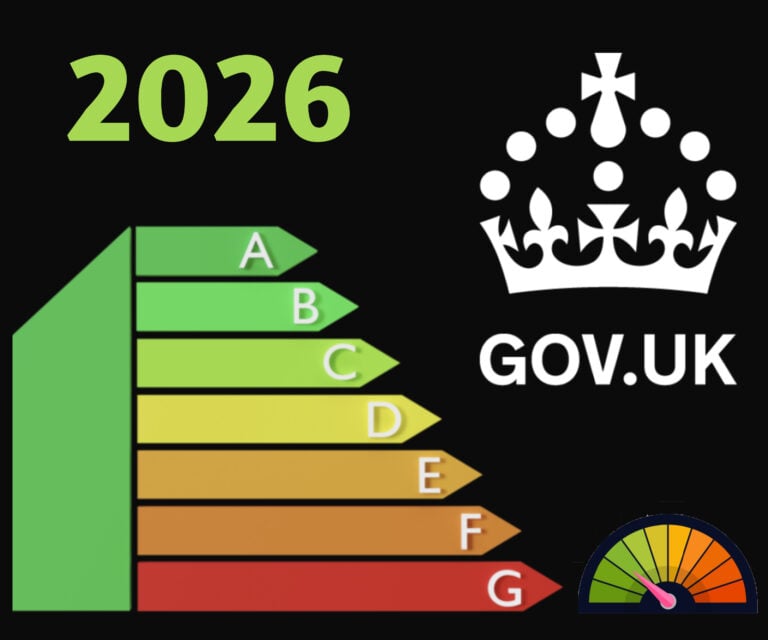
The way energy performance certificates (EPCs) are measured could be changed as soon as 2026.
The government has launched a consultation on proposed changes to the way EPCs are measured, which they claim will deliver a “more efficient and effective EPC system that works for landlords.”
The consultation is currently open and will run until February 26th
Under the current rules, EPCs are measured based on the amount of energy a property uses per square metre (e.g., for heating, lighting, etc.) and how much energy it loses (e.g., through poor insulation).
The energy assessor first calculates the property’s Standard Assessment Procedure (SAP) score, which is then used to determine the EPC rating.
However, the government proposes six potential metrics to calculate EPCs:
The consultation says: “These metrics together convey the key, complementary aspects of building energy performance, allowing the user to distinguish where the home performs more or less well. Supporting people to keep their energy bills low has always been a key purpose of EPCs and the energy cost metric will provide this information.”
The consultation also proposes requiring a valid EPC throughout the tenancy.
The consultation says: “Currently in both the private and social rental sectors when an EPC expires, a new EPC is only required when a property is re-let and not when the same tenant renews or extends their lease.
“The presence of a valid EPC throughout a tenancy, rather than solely at point of marketing, would ensure landlords and tenants are equipped with accurate and up-to-date information.”
At present an EPC is valid for 10 years, however, the government is considering changes to this rule.
The consultation says: “We are proposing to introduce for private rental properties a new trigger point where an EPC is required for when the current one expires.
“As the Energy Efficiency (Private Rented Property) (England and Wales) Regulations (2015) only applies to private sector properties which are required, or are part of a building which is required, to have a valid EPC, these types of properties (where the EPC has expired, and the same tenant remains in situ) are not covered by the PRS Regulations.
“Requiring a new EPC for rented buildings when the existing one expires would therefore ensure most new lease renewals are captured within the scope of the PRS Regulations.”
For HMOs, the government is considering expanding EPC requirements.
The consultation says: “We are proposing to extend the scope of EPCs so that a valid one is required for an entire house in multiple occupation (HMO) when a single room within it is rented out, as currently the guidance states that an EPC is not required in this instance, only when the whole house is rented out.
“Mandating EPCs for HMOs when a single room is rented out will ensure that HMOs will need to comply with the requirements set out in the MEES Regulations if they did not have a valid EPC before this point.
“This would provide consistency across the private rented sector. As a result, we are proposing a 24-month transitional period for any HMO landlords newly brought into the scope of the regulations to obtain a valid EPC.”
Property118 will be doing a series of articles on the proposed changes to how EPCs are measured and how they will affect landlords.
Landlords can fill out the consultation here and landlords can read the full list of proposals here
61 comments on this article
A different perspective could help you spot an issue, avoid a mistake or find a better way forward. Read the comments and add your own views if you wish.
2 years ago | 42 comments

2 years ago | 20 comments

2 years ago | 115 comments
Member Since April 2017 - Comments: 225
10:41 PM, 16th February 2025, About 2 years ago
Reply to the comment left by Beaver at 13/02/2025 – 12:34
couldn’t agree more. The age and function of older buildings is not being taken into account on the EPC’s. It’s that usual crap about “one size fits all” and we all know it doesn’t.
Member Since April 2017 - Comments: 225
10:43 PM, 16th February 2025, About 2 years ago
Reply to the comment left by AnthonyJames at 13/02/2025 – 13:56
Or your “battery” could be a hot water tank, which your surplus solar power goes to heat, like an immersion heater.
Bravo! This is the kind of thing that sensible, knowledgeable people would suggest.
Member Since April 2017 - Comments: 225
10:46 PM, 16th February 2025, About 2 years ago
Reply to the comment left by Beaver at 14/02/2025 – 09:42
Very true!
Member Since April 2017 - Comments: 225
10:48 PM, 16th February 2025, About 2 years ago
Reply to the comment left by Beaver at 14/02/2025 – 10:07
Too right matey!
Member Since April 2017 - Comments: 225
10:52 PM, 16th February 2025, About 2 years ago
Reply to the comment left by Beaver at 14/02/2025 – 10:59
It’s gonna be too late to get the incumbent idiot out. Donald John Trump has been put in there to finish the work Joe Biden started so we will end up with central bank digital currency which will be used to track, trace and limit/prevent what we do, where we go and what we are allowed to spend and bring in the system they have in China
Member Since January 2022 - Comments: 110
10:58 PM, 16th February 2025, About 2 years ago
Reply to the comment left by Rennie at 16/02/2025 – 22:43
Given how much a battery costs, I doubt it would work, also heating a hot water tank takes serious electric.
I doubt there is any surplus as electric heaters uses quite a few kw to charge up each day, if there is any surplus solar power it wouldn’t be enough to heat a hot water tank the size needed to fill a bath.
Unless technology take a huge leap forward, but here is hoping!
Member Since May 2018 - Comments: 2588
9:27 AM, 17th February 2025, About 2 years ago
Reply to the comment left by Chris H at 16/02/2025 – 22:58
There are houses in Sweden that can generate all their power from solar and they are on the same latitude as we are. So it must be possible here.
The problem isn’t reforming the EPC system. The problem is the tax system. The cost of what it takes to design effective systems is tens of thousands of pounds. Normal people can’t afford to do it. If the government wants significant changes then it needs to allow any small landlord to use roll-over relief to incorporate and it needs to make capital allowances available for energy efficiency improvements that use renewables.
Most band D properties are perfectly safe to live in. Energy Performance Certificates are about energy performance and there’s not very much wrong with most band D properties. The problem is with the tax system.
Member Since August 2016 - Comments: 1198
11:17 AM, 17th February 2025, About 2 years ago
Reply to the comment left by Beaver at 17/02/2025 – 09:27You’ll find the southern most part of Sweden is the same latitude as Glasgow. Stockholm is the same latitude as the Shetlands Islands. Sweden has much shorter days in winter than Britain with Stockholm seeing sunrise at 10am and sunset at 2pm in December absolutely useless for solar panels. And they become covered in snow and won’t work most of the time. And winter is when you need the vast majority of your electricity. Of course in the summer the daylight hours are much greater than the U.K. but in summer the requirements for heating and lighting are much much less.
Wind farms are no use when the wind stops blowing and hopeless when the weather gets really windy they have to be shut down. And the poor birds get chopped to pieces.
Member Since May 2018 - Comments: 2588
2:15 PM, 17th February 2025, About 2 years ago
Reply to the comment left by Dylan Morris at 17/02/2025 – 11:17
And whilst your comments about the latitude of Sweden are true there are houses in Sweden where owners have managed to generate all their energy for an entire year via voltaics and store it as hydrogen. If it’s technically (i.e. scientifically) possible in Sweden then it is technically possible in the UK. It’s the same latitude, same sun and similar weather.
Technically possible or not, what makes this practically impossible for most people is not the physics, the engineering, or the sun: It’s the TAX system. And the fact that our politicians are not driven by facts but by their attitudes and beliefs. So for example Rachel Reeves’ tax raid has just been reported to trigger mass job cuts in the private sector and some growth in the public sector:
https://www.telegraph.co.uk/business/2025/02/17/mass-job-cuts-loom-ahead-of-reevess-tax-raid/
This is the pursuit of an ideology, not pursuit of the objective of economic growth. What the UK needs to see is dramatic growth in the market for energy-efficient housing, even if that is only to increase energy security as opposed to dealing with that part of climate change that is caused by human activities.
If the government really wanted to solve the housing crisis, reduce our dependence upon imported fossil fuels and make our energy supply more resilient by diversifying it, then they would allow any buy-to-let business of any size to claim roll-over relief and incorporate, and allow the capital allowances for renewable energy systems to facilitate investment in energy efficient property.
The fact that they are not doing it is because they believe in a different ideology. That and the fact that politicians want to be seen to be ‘talking tough’ against an imagined enemy, whether that imagined enemy is asylum seekers, economic migrants or landlords.
The fact that nothing makes sense today other than a modern gas condensing boiler, and that it only makes much sense to upgrade your EPC if you are one of a small (but growing) number of incorporated by-to-let businesses is not the fault of landlords.
Member Since May 2018 - Comments: 2588
2:51 PM, 17th February 2025, About 2 years ago
Reply to the comment left by Beaver at 17/02/2025 – 14:15
A little bit more on this. It’s now some years since I watched a program about a house in Sweden that was managing to generate all of its energy for an entire year from photovoltaics and store it as hydrogen. Of course, the man in the program that did it was rich: This kind of thing is only for rich people. But if you look you will find other projects that are managing to do something similar. Here’s one:
https://fuelcellsworks.com/news/swedish-housing-powered-100-percent-by-sun-and-hydrogen
In terms of the physics, if this is possible in Sweden then it is possible in the UK. What makes it PRACTICALLY IMPOSSIBLE is that we have a ridiculous tax system and a government obsessed by damaging ideologies when the evidence suggests that they need to do something else.
Whatever anybody wants to believe about what they might be able to achieve in order to combat climate change is up to them. With China buying lots of coal from eastern Europe and Australia it will probably make little or no difference to climate change if we stop tenants renting band D properties. But energy security is another question; if a 21st century Adolf Hitler starts invading countries in Eastern Europe then energy security becomes more important.
If you have a more diverse energy system then it is harder for a Vladimir Putin to knock it out by sending missiles at power stations. In the UK in the past decades the greatest threat to ‘energy security’ has been our Unions. In the early 1970s our unions shut our power networks down and our lights had to be turned off. If we diversify our energy systems we have more security.
But again, it’s not the fault of landlords that diversification doesn’t happen: The recent comments the government made about it costing £5-6K on average to move a house from band D to band C is just a lie. It’s a lie that suits their current ideology. The fact is that many people are living in cramped accommodation, or have no accommodation. If you gave them the choice of spending £5-6K on something it would probably improve the lives of tenants more to have a gas condensing boiler and an extra bathroom or toilet.
If any there is any competent and honest politician out there, the way to fix this is to allow any landlord of any size to claim roll-over relief and incorporate and ensure that the relevant capital allowances are there to enable the buy-to-let market to deliver the solution.