

Tenants face rent squeeze as landlord supply falls – RICS
4 months ago | 8 comments


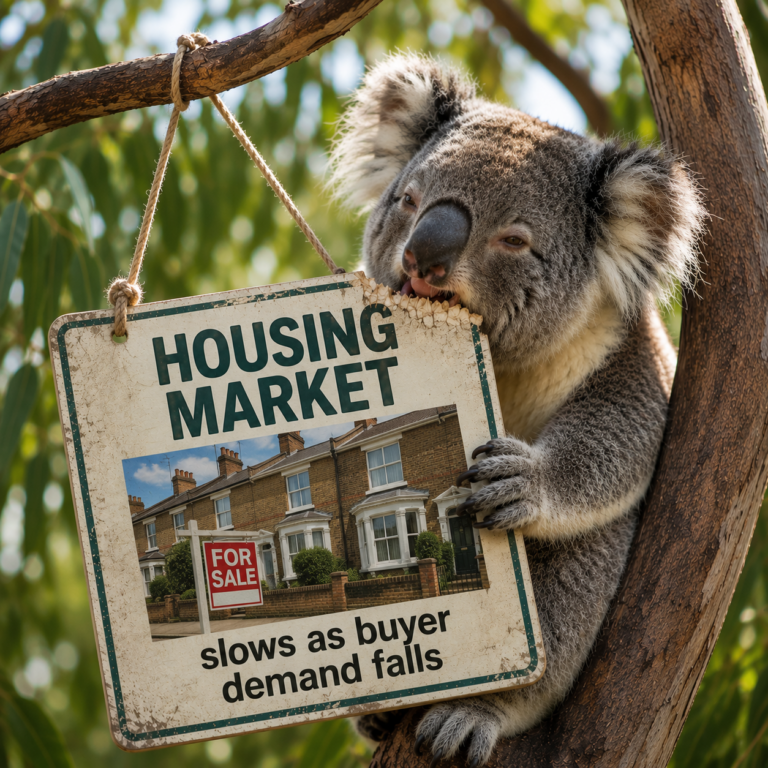
Sales have fallen and mortgage rates have risen as political uncertainty continues to weigh on the housing market, according to a new report.
Zoopla’s house price index shows that sales agreed are 7% lower in June, while three in five homes listed for sale since January are still on the market.
The property portal warns that an ongoing affordability squeeze is making it increasingly difficult for buyers.
According to the data, buyer demand has fallen 15% year-on-year across the UK, with political uncertainty and higher borrowing costs affecting regions differently.
Zoopla says mortgage rates peaked at 5% in April, leaving would-be buyers facing an additional £125 per month on top of average mortgage costs, around £1,500 a year.
In London, the rise in rates has added around £232 a month to the average first-time buyer’s costs.
Richard Donnell, executive director at Zoopla, said the housing market varies significantly across regions, with conditions diverging between the South and the North.
He said: “Higher mortgage rates have hit sales and squeezed affordability for home buyers alongside increased political uncertainty. The impact is less severe than what the market faced after the 2022 mini-budget, and mortgage rates have started to fall.
“It’s a buyer’s market across much of the South right now, but motivated sellers in northern England and Scotland are still finding buyers at broadly last year’s pace, which shows the housing market is not moving at one speed.
“The national picture can only tell you so much, and local market conditions vary considerably across the country. The most important step, whether you are buying or selling, is speaking to a local agent who knows what is actually happening on your street.”
The rise in mortgage rates varies regionally, with the North East seeing an increase of just £69 per month (£830 per year).
Mortgage rates have already started to fall, edging down to 4.8% in May. However, Zoopla says further declines are needed to improve affordability and support housing sales in the second half of 2026.
The data also shows house price inflation currently sits at 1.4%, with Zoopla expecting it to ease towards 1% over the second half of the year.
Prices are holding firmer in northern England and Scotland, while London and the South East are expected to remain flat or slightly negative.
Tom Bill, head of UK residential research at Knight Frank said: “A summer of tax speculation could stifle demand in the housing market for the second year running.
“After the seasonal spring bounce this year was cut short by higher mortgage costs arising from the Middle East conflict, it means buyers and sellers may not get a chance to properly catch their breath.
“The uncertainty is not limited to what will be contained in the Budget, but the identity of the Chancellor and the credibility of wider ambitions to reform property tax, many which are based on plans that are unachievable for a number of years.”
Nathan Emerson, CEO of Propertymark, said: “Economic and political uncertainty will always influence confidence, but people continue to move because of changing jobs, growing families, retirement and other life events that cannot simply be put on hold indefinitely.
“Property professionals are continuing to see healthy levels of enquiries and viewings, but many buyers are taking longer to commit and are carrying out more research before making an offer. Confidence has softened rather than disappeared, making realistic pricing and expert local advice more important than ever.
“The figures also reinforce that there is no single national housing market. Conditions vary considerably from one area to another, and local agents play a vital role in helping buyers and sellers navigate changing market conditions and keep transactions progressing.”
Jeremy Leaf, north London estate agent and a former RICS residential chairman, said: “A combination of too much property on the market across various price ranges, as well as continuing uncertainty about the protracted war in Iran and the subsequent impact on the economy, is proving lethal as far as homebuyer and seller confidence is concerned.
“Sales are taking much longer and it is proving increasingly difficult to generate commitment. However, the overwhelming majority of sales which have been agreed are proceeding, although inevitably more slowly and suffering relatively few price negotiations.
“This is likely to prove the ‘new normal’ at best, looking forward, particularly now that domestic political uncertainty is another factor to consider.”
Be the first to comment
Have you dealt with something similar? Share what you learned, raise a question or offer a perspective your peers may find useful.
Previous Article
Repeal of Vagrancy Act hailed as watershed moment
4 months ago | 8 comments
4 months ago | 1 comments

4 months ago | 17 comments
Not a member yet? Join In Seconds
Login with