

Tenants face rent squeeze as landlord supply falls – RICS
4 months ago | 8 comments



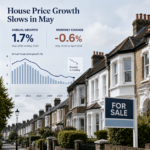
Rightmove says the average price of newly listed homes fell by 0.6% in June, down £2,113 to £376,191, as sellers lowered prices to attract buyers.
The fall is the largest June drop recorded by the platform in 14 years and leaves the average asking price 0.5% below the same point last year.
June normally delivers a small rise, with the average increase over the past decade standing at 0.1%.
This year, however, high stock levels and more cautious buyers have pushed new sellers to lower their prices earlier.
Colleen Babcock, a property expert at Rightmove, said: “It’s unusual to see a price fall of this size in June, as we would normally expect to see modest price growth at this point in the year.
“What’s different this time is a combination of factors, including wider economic uncertainty, the timing of the May bank holiday and unusual heatwave, and the high number of homes on the market, which together appear to be bringing forward the traditionally slower summer market.”
She added: “In this kind of market, sellers need to work harder to attract attention.
“Setting a competitive asking price from the outset is key, as buyers are taking more time to compare options and are quick to move on if a home doesn’t stand out on value.”
The number of homes for sale remains at historically high levels for this time of year as the competition between sellers is putting pressure on prices.
The firm also warns that more than a third of new listings are not going on to sell, underlining the difficulty facing sellers who price to high at the start.
Prices have fallen across all southern England regions and Wales.
However, more affordable northern markets, including the North East and Scotland, have held up better against last year’s levels.
Rightmove also says that new listings were 5% lower than at the same point last year, but still 6% higher than in 2024 and 12% higher than in 2023.
Sales agreed were 6% lower year-on-year, although activity was virtually level with 2024 and 5% above 2023.
Mortgage affordability improved slightly during the month as the average two-year fixed rate fell from 5.18% to 5.07%, reducing the average monthly mortgage payment by around £30.
Marc von Grundherr, a director of Benham and Reeves, said: “Buyers aren’t moving at the pace we’ve seen in previous years, largely because current market conditions and an oversupply of stock are affording them the luxury of both time and choice.
“A larger than usual dip in asking prices also suggests that sellers are finally accepting this reality and pricing to sell, rather than pricing according to their own expectations.
“So, whilst a quick sale is certainly still achievable, sellers shouldn’t be disheartened if they don’t find a buyer immediately.
“Today’s market rewards patience, pragmatism and proper pricing, and those sellers who embrace these realities are the ones most likely to achieve a successful outcome.”
Nathan Emerson, the CEO of Propertymark, said: “The latest figures suggest the market is continuing to find a more sustainable balance, rather than experiencing a loss of confidence.
“Buyers remain active but are taking more time to make decisions, meaning realistically priced homes continue to attract strong interest.
“National trends also mask significant regional differences, with local affordability, supply levels and demand continuing to shape market performance.
“In many areas, particularly where stock remains constrained, well-presented and competitively priced properties are still selling well.”
Jeremy Leaf, a north London estate agent and a former RICS residential chairman, said: “In our offices, sellers wanting to attract genuine buyers have been obliged to accept a larger dose of realism when it comes to asking prices, which are increasingly recognised as an aspirational starting point only.
“The amount of available stock – particularly flats – as well as concerns about the cost of living and mortgage rates, are making first-time buyers nervous about making financial commitments so the market is becoming even more price sensitive.
“Most sales are holding up but that lingering uncertainty about economic prospects is prompting lengthier transactions, which in turn increases the risk of further re-negotiation or even collapse.”
Be the first to comment
Have you dealt with something similar? Share what you learned, raise a question or offer a perspective your peers may find useful.
Previous Article
How many landlord updates from the Government?
4 months ago | 8 comments

4 months ago
5 months ago
Not a member yet? Join In Seconds
Login with