

Councils are telling you how they’ll pay for enforcement and you should listen
4 months ago | 8 comments


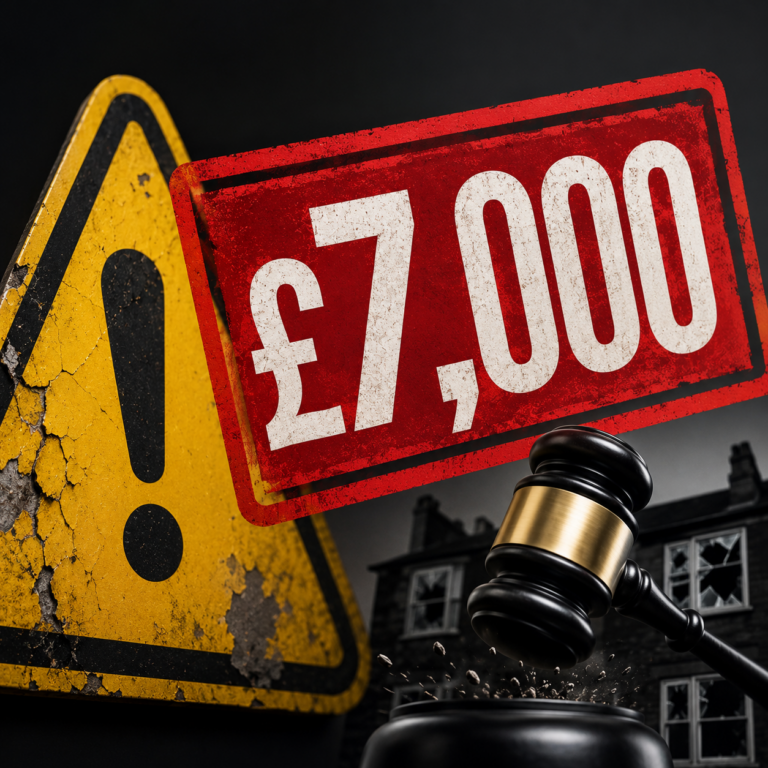
Landlords could face on-the-spot fines of £7,000 for each hazard found in a property and a £40,000 civil penalty for failing to remedy the issue and continuing to breach the new health and safety standards.
The government has announced changes to the Housing Health and Safety Rating System (HHSRS), which will come into force on 23 June.
The National Residential Landlords Association (NRLA) has urged landlords to carry out regular inspections of their properties to make sure they are hazard-free.
The HHSRS system is used by local authorities in England and Wales to assess potential health and safety risks in homes.
The National Residential Landlords Association (NRLA) explains on its website that, under new rules introduced through the Renters’ Rights Act, any hazard identified during a local authority inspection will now be categorised as high, medium or low risk, replacing the more complex A–J rating system.
High-risk hazards, known as Category 1 hazards, will continue to trigger a council’s duty to take enforcement action against landlords, although councils will retain discretion over how they deal with medium- and low-risk hazards, known as Category 2 hazards.
The NRLA says that while the list of hazards is not changing, some categories are being merged. These include Falls on the Level, which covers falls associated with toilets, baths and showers, as well as trip hazards and falls on level surfaces, and Fire and Explosions, which covers exposure to uncontrolled fire, smoke and fumes, and explosions.
Under draft guidance published by the government, councils will be able to fine landlords £7,000 per Category One hazard identified, or opt to impose a single £7,000 civil penalty for multiple breaches.
In the guidance, it explains that councils can decide the level of fines by assessing a range of factors, but that decisions will be made on a case-by-case basis.
The guidance says: “Local housing authorities need to have a policy basis to guide their decisions on when to issue a civil penalty.
“Each decision is to be considered on a case-by-case basis in line with that policy. Civil penalties under section 6A of the Act can only be imposed when, in the opinion of the local housing authority, it would have been reasonably practicable for the responsible person to secure the removal of the hazard.
Factors that a local housing authority should take into account when determining whether removal would have been reasonably practicable include:
The NRLA is urging landlords to document safety checks and inspect properties regularly to comply with the new health and safety regulations.
The industry body says on its website: “If landlords are complying with all current health and safety guidance under the HHSRS, landlords don’t need to do anything fundamentally different.
“However, landlords must continue to carry out regular inspections of their properties to make sure they are hazard-free and safe for tenants to live in.
“Documenting these, and other safety checks, is also essential when it comes to proving landlords are taking their health and safety responsibilities seriously.
“Landlords should also be sure to log and action any reports or complaints from tenants when it comes to potential hazards and keep a record of any remedial work carried out by themselves or tradespeople.”
15 comments on this article
A different perspective could help you spot an issue, avoid a mistake or find a better way forward. Read the comments and add your own views if you wish.
4 months ago | 8 comments

4 months ago | 4 comments
5 months ago | 7 comments
Member Since June 2019 - Comments: 975
9:23 AM, 12th June 2026, About 4 months ago
The issue here is that ‘hazards’ identified by previous council inspections have included tenants clothes drying rack in front of the back door and a tenants bicycle in a hallway – with pressure to make money I fear common sense will be thrown out.
Member Since May 2022 - Comments: 106
10:04 AM, 12th June 2026, About 4 months ago
We carried out and identified hazards under this scheme and advised tenants of the issue.
The next inspection, the same hazard was still there.
Tenant advised again that their lifestyle was creating a hazard.
Next visit, told we were harassing them and it was their home, leave them alone.
Under the new RRA, what steps can we take to evict a tenant who has a hazard which they will not remedy and we face £7000 fine for allowing them to remain.
Given the court delays it may take months for action in the meantime, are the council prepared to waive any fine?
I suspect not given the financial circumstances of many councils…this will be a source of income.
In my opinion………
Member Since August 2023 - Comments: 15
12:38 PM, 12th June 2026, About 4 months ago
I now adays wonder why I am a landlord. The fun and pleasure is all but drained out.
Member Since February 2023 - Comments: 93
1:07 PM, 12th June 2026, About 4 months ago
Reply to the comment left by Rakesh Joshi at 12/06/2026 – 12:38
Yeah by all the idiots running the country.
Member Since February 2023 - Comments: 93
1:22 PM, 12th June 2026, About 4 months ago
Say if the tenant will not let you in? They’ve given the tenants all the rights and the landlord none whatsoever, so it’s a bit contradictory and a bit of an impossible task if you have bad tenants but that’s all I see this government do, is make ridiculous and impossible laws for landlords without any thought whatsoever
Member Since January 2026 - Comments: 5
3:31 PM, 12th June 2026, About 4 months ago
Reply to the comment left by Ray Guselli at 12/06/2026 – 10:04
Under the guidance for using HHSRS the council should not take into account defects caused by the tenants when assessing hazards.
Member Since January 2026 - Comments: 5
3:33 PM, 12th June 2026, About 4 months ago
The council officers need to be trained to carry out these assessments correctly, especially when the potential penalties are so high. I have seen some horrendous assessments when the officers clearly have no clue what they are doing
Member Since October 2025 - Comments: 14
9:03 AM, 13th June 2026, About 4 months ago
Here’s a conundrum. My tenants are Muslim, and so they have a large shoe rack outside the door to their flat and on the upstairs landing. It could be considered an obstruction. Would I be accused of Islamophobia if I asked them to remove it?
Member Since January 2015 - Comments: 1615 - Articles: 1
10:13 AM, 13th June 2026, About 4 months ago
Reply to the comment left by Roger Radford at 13/06/2026 – 09:03
I’d be checking the block’s Fire Risk Assessment and buildings insurance as communal hallways, stairs and landings have to free and clear. That includes flammable materials.
Member Since January 2015 - Comments: 1615 - Articles: 1
10:15 AM, 13th June 2026, About 4 months ago
Reply to the comment left by Ray Guselli at 12/06/2026 – 10:04
You face a £40k fine for not rectifying / removing EACH of the hazards