

Councils reap £327m from landlord licensing fees
2 years ago | 3 comments


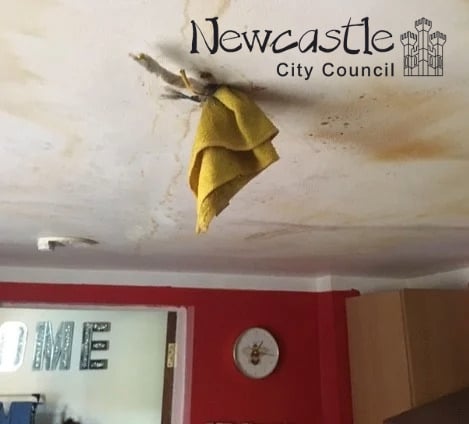
A private landlord has had the management of his eight properties taken over by a council after they were described as ‘disgusting’.
Property118 readers will be horrified by the photographs from the council published on this page – and they do little to promote the effort and work being done by good landlords.
Newcastle City Council says it has imposed an Interim Management Order (IMO) because seven of the properties had their licenses revoked since they no longer met the required licensing conditions.
Also, one property licence had expired, and the landlord failed to re-apply.
This order, under the Housing Act 2004, allows local authorities to assume control of rented homes when landlords neglect their duties.
All of the properties are within a selective licensing area and the council had tried and failed to get the properties licensed.
 The council’s cabinet member for housing, Cllr Paula Maines, said: “I am appalled by the disgusting conditions that this landlord has provided his tenants.
“This case really highlights the importance of having housing legislation and regulation that must be adhered to by private landlords in our city.
“Our property licensing schemes clearly outline what we expect from landlords and are intended to raise standards in the private rented sector, making landlords more accountable and improving property management.”
She added: “As we’ve shown, we will not hesitate to take enforcement action against those who fail to licence their properties or who provide inadequate housing to our residents.
“We will do all that we can to act against anyone who thinks it is acceptable to leave people living in such deplorable conditions.”
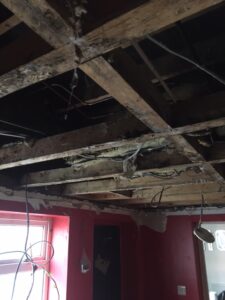 The council says that despite numerous efforts to engage with the landlord and inform him of his obligations under the selective licence rules, he remained unresponsive.
However, despite his lack of dialogue with the council, he continued to collect rent from tenants.
Consequently, the council judged him unfit to have a licence, noting no immediate likelihood of the properties being improved.
Tenants endured poor living conditions, including hazardous repairs, rat problems and missing safety certificates.
The landlord could have avoided the council’s intervention by delegating management to a competent third party, but he refused to do so.
 Now, the council’s private rented team will oversee the properties, arranging essential repairs to guarantee that residents enjoy secure and adequate homes.
The cost of improvements will be covered by rental income, which the council will collect directly during the 12-month IMO duration, instead of the landlord.
If the landlord still does not comply with selective licence requirements after this period, the council may seek a final management order, potentially lasting up to five years.
8 comments on this article
A different perspective could help you spot an issue, avoid a mistake or find a better way forward. Read the comments and add your own views if you wish.
Previous Article
Tenant refuses to hand over keys?
2 years ago | 3 comments

2 years ago | 4 comments
2 years ago | 4 comments
Member Since August 2017 - Comments: 22
10:17 AM, 4th April 2025, About 2 years ago
Judging by the number of horrific council housing properties, this is like the pot calling the kettle black. But, of course, councils are immune from prosecution for providing sub-standard housing. This particular landlord is clearly guilty of negligence and deserves to
be punished.
Member Since May 2014 - Comments: 653
10:27 AM, 4th April 2025, About 2 years ago
When is the labour MP Jas Atwal going to be punished for having several unlicensed properties and not maintaining them?
Member Since September 2018 - Comments: 3744 - Articles: 5
10:35 AM, 4th April 2025, About 2 years ago
despite all this…..this has only it the headlines because the LL applied for a licence in the first place.
What of those LL’s still out there operating without one at all?
Or the council properties that are in KNOWN terrible conditions but the council has yet do make good?
Member Since May 2024 - Comments: 223
6:23 PM, 4th April 2025, About 2 years ago
Roger, my thoughts entirely. Kettle calling the pot black.
Many council houses have never had a GSC or EICR, but that seems to be OK with the government? If a prs landlord does it on 1 house, there’ s a 30 – 40k fine… If the government doesnt do it on 1000 houses, well that’s ok…
There is no wonder why I do not want to live in the UK any more. My money will eventually follow me. I hope that anyone with any money will pull it out of the UK and just let the country tank and fail. I’ve had enough of the politicians there.
Member Since November 2017 - Comments: 266
11:28 AM, 5th April 2025, About 2 years ago
In a situation like this, what happens if the landlord decides to sell all the properties?
Member Since August 2014 - Comments: 336
1:05 PM, 5th April 2025, About 2 years ago
As the houses are now being ‘managed’ by the Council, will they be treating them as PRS housing, with all the regulations that apply, such as EPC’s, EICR, Gas Safe certs, or will they be treating them as Local Authority Housing?
I wonder if the tenants will continue to pay their rent, and whether the Council will continue to pay the mortgage costs on the properties? This will not work out well for the Council and I doubt they will see a penny profit. Unless the landlord has a lot of equity in these properties, the Council may well make a loss.
Member Since May 2024 - Comments: 223
2:22 PM, 5th April 2025, About 2 years ago
Often wondered what would happen in this scenario. Who gets the rental income? If the landlord has a mortgage that he can no longer afford and the bank repossesses the house, what will happen?
Thankfully mine are all paid for and I get people in ASAP for any repairs.
Member Since June 2023 - Comments: 67
9:19 AM, 6th April 2025, About 2 years ago
Reply to the comment left by Desert Rat at 05/04/2025 – 14:22
You are right. The article doesn’t indicate whether the landlord was under water due to increased mortgage payment rates or other financial demands upon them.