

The landlord’s tenant pet request response window is 28 days — Not 42
4 months ago | 15 comments


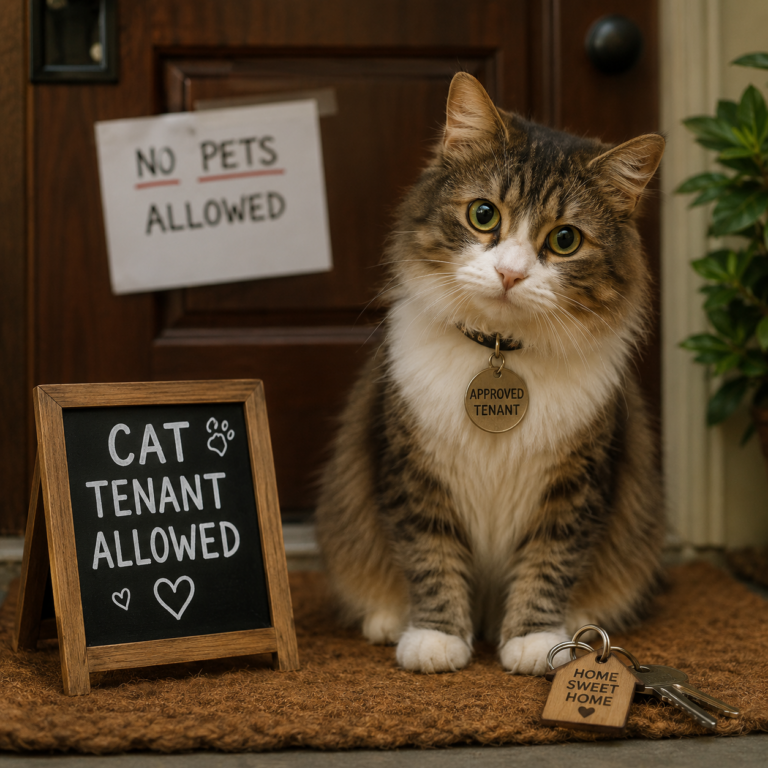
A pet charity has helped a tenant secure permission to keep a cat in her home after explaining the new rules to her landlord.
AdvoCATS helped Ms A* (real name withheld) gain permission to keep her cat, Marshy, after her landlord initially refused the request, saying the flat was too small.
Under the Renters’ Rights Act, tenants have the right to reasonably request a pet, and landlords cannot unreasonably refuse permission.
The pet charity said that when Ms A asked her landlord if she could keep a cat in her flat, she was told that “one-bedroom flats are too small for pets”.
AdvoCATS said that under the Renters’ Rights Act, landlords can no longer make “sweeping generalisations” when considering pet requests.
Tenants can submit a request to keep a pet and landlords have 28 days to respond in writing. If they fail to do so within that period, tenants can apply to the court. Landlords may request additional information about the pet, such as its size, but must do so within the initial 28-day period.
Once the tenant has provided the requested information, the landlord has seven days to issue a final decision.
In this case, AdvoCATS said that after it explained the rules to the landlord, permission was granted for the cat to remain in the property on the condition that Ms A took out pet damage insurance and agreed to have the flat professionally cleaned by the landlord’s chosen contractor at the end of the tenancy.
However, the charity drafted a response arguing that these conditions did not comply with either the Renters’ Rights Act or the Tenant Fees Act, providing supporting facts and web links.
AdvoCATS said that while pet damage insurance appeared in earlier versions of the Renters’ Rights Act, the provision was removed before Royal Assent.
Landlords and letting agents therefore cannot require tenants to purchase such insurance, or reimburse them for it, as a condition of keeping a pet.
The charity added that tenants can still choose to take out insurance voluntarily, and that Ms A had already offered to explore that option. It also said that requiring professional cleaning through a landlord-approved contractor is not permitted under the Tenant Fees Act 2019.
Following further correspondence, the landlord agreed to allow Marshy to stay.
Ms A said: “Having my cat with me means far more than simply being allowed a pet, he is family. He has been a constant source of comfort and companionship through some very difficult periods of my life.”
Jen Berezai, founder of East Midlands-based AdvoCATS, said: “This was a classic example of neither party quite knowing where they stand with the new legislation, which was quickly and simply resolved with some text drafted by AdvoCATS, the type of case that early indications lead us to believe is going to represent a significant percentage of our casework going forward. We’re so happy for Ms A and Marshy, and glad to have been able to help.”
As previously reported by Property118, the government has also provided guidance on situations in which landlords may refuse a tenant’s request to keep a pet. These include:
The government has also set out circumstances in which landlords cannot refuse a request for a pet, such as:
6 comments on this article
A different perspective could help you spot an issue, avoid a mistake or find a better way forward. Read the comments and add your own views if you wish.
Previous Article
What are your true returns on equity?Next Article
Landlords consider selling up despite rising yields
4 months ago | 15 comments

4 months ago | 8 comments

6 months ago | 10 comments
Member Since December 2023 - Comments: 1665
10:42 AM, 16th June 2026, About 4 months ago
It is a shame that there are landlords that don’t understand the rules. It will take time for everyone to become acquainted with the law.
Member Since February 2024 - Comments: 105
10:50 AM, 16th June 2026, About 4 months ago
And who cares if the poor landlord is allergic to cats? Sure, we can just limp off and die because we can’t breath or just scratch ourselves to death! Another PRS problem solved.
Member Since October 2019 - Comments: 445
8:16 AM, 20th June 2026, About 4 months ago
It’s all some people have in their lives. I’d allow it, so I must be a big softy!
Member Since January 2015 - Comments: 1617 - Articles: 1
9:59 AM, 20th June 2026, About 4 months ago
Reply to the comment left by LaLo at 20/06/2026 – 08:16
Just make sure you have enough money in the bank to pay for flea eradication in the property. It’s not a single treatment and if professionally carried is very very costly
Member Since May 2023 - Comments: 12
12:15 PM, 20th June 2026, About 4 months ago
Reply to the comment left by Judith Wordsworth at 20/06/2026 – 09:59
I have just had to completely strip a 3 bedroom house to get rid of fleas after a tenant moved out. It’s costly & you carry them into your car and house so you have to spray them for a few days. It is a stressful situation until you finally get rid of them & the bites take ages to heal leaving scars.
Another reason to sell up & sit on a beach I think.
Member Since November 2022 - Comments: 3
2:23 PM, 20th June 2026, About 4 months ago
I’m not a pet person and never have been. But even a landlady I know who owns cats herself said she wouldn’t allow them in her rental properties after seeing the damage they’ve caused in her own home. New carpets scratched to pieces.
I once had a tenant who kept dogs without permission. I knew, the minute I opened the front door VOOM – the smell almost knocked you over. I stripped the property back to brick, opened all windows and even doors… but it took a while. The smell lingered.
What I find most irritating is the Government wants to impose the rules but offers very little practical recourse when things go wrong.
That particular tenant did a moonlight flit, left around two months’ rent unpaid, and abandoned a house full of rubbish, furniture and old mattresses. The skips alone cost around £1,000. My local council would have collected it for FREE had the tenant arranged it, but I had to pay because I was the landlord.
The experience was so traumatic that I moved the property into short-term lets afterwards. I spent a small fortune on doing it up, a complete refurb, and I just didn’t want a repeat of events. This is a house managed by a lettings agent… and they let it get to that state. I’m not even mad about he rent arrears. I was just relieved they’d gone. No long drawn out court process and all that jazz.
Most landlords aren’t anti-pet. They’re anti-unlimited liability!!