
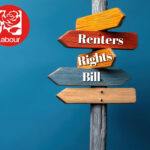
Labour warned that Renters’ Rights Bill reforms are ‘unworkable’
1 year ago | 7 comments



A shocking 474% increase in complaints about substandard living conditions in social housing has sparked urgent calls for a stronger private rented sector.
Industry body Propertymark points to the alarming figure in the Housing Ombudsman’s ‘Spotlight Report: Repairing Trust’, which compares data from 2024/25 to 2019/20 to expose deep-rooted issues in the maintenance of social homes.
The organisation says that a comprehensive review of taxes affecting private landlords is now necessary – including scrapping mortgage interest tax relief restrictions and reducing additional levies on BTL properties.
The call comes after the Ombudsman’s report warns that the government’s goal to build 1.5 million new homes by the end of this parliament is at risk due to an ‘unsustainable model for maintaining existing social homes’.
Now Propertymark is warning that without reform, Europe’s largest social housing stock could face a ‘managed decline’, particularly in areas with the least affordable housing.
Replacing these homes at current construction rates would take more than 60 years, it fears.
Propertymark’s chief executive, Nathan Emerson, said: “While it is positive that the UK government has recently announced its National Housing Bank which aims to inject billions into private investment and build an additional 500,000 homes, it is clear that satisfaction rates in the private rental sector are higher than in the social rented sector.
“Therefore, all governments across the country need to keep their fingers on the pulse of the issue of underinvestment and further encourage a vibrant and growing private rental sector by also reviewing the taxes that impact landlords throughout the UK.”
The Ombudsman’s report also highlights a transparency gap, noting ‘the difference in the proportion of non-decent homes reported to the Regulator of Social Housing compared to the English Housing Survey is stark and landlords need to understand what the true picture is.’
In contrast, the private rented sector appears to fare better, with 76% of tenants expressing satisfaction with housing services compared to just 64% of social renters, according to the English Housing Survey.
However, dissatisfaction with complaint handling is an issue for 47% of private renters and 66% of social renters.
Propertymark argues that the private rental market offers greater consumer choice, unlike the rigid allocation model of social housing, where tenants face challenges relocating if dissatisfied with their landlord.
To address the social housing repair crisis, the Housing Ombudsman proposes a National Funding Settlement, an annual allocation of funds to English local authorities.
That would work alongside establishing a national resident body to rebalance power dynamics between tenants and landlords.
It also advocates for a ‘universal vacant home’ standard, ensuring properties are fully prepared before being relet.
It urges social landlords to adopt predictive repair strategies and improve complaint handling and maintenance culture.
4 comments on this article
A different perspective could help you spot an issue, avoid a mistake or find a better way forward. Read the comments and add your own views if you wish.
1 year ago | 7 comments

1 year ago | 11 comments

1 year ago | 1 comments
Member Since December 2023 - Comments: 1665
10:02 AM, 23rd June 2025, About 1 year ago
I have no doubt that private rental properties are often better maintained than their social housing cousins. This is despite private rental properties being, on average, much older and cheaper.
Private landlords are more focussed on their investment. However, there is another reason.
Social housing tenants are far less likely to look after their homes, believing that the State should do everything for them. We’ve even started giving kids breakfast at taxpayer expense for crying out loud.
Will people ever be responsible for their own lives again?
Member Since February 2023 - Comments: 18
1:14 PM, 23rd June 2025, About 1 year ago
Reply to the comment left by Cider Drinker at 23/06/2025 – 10:02
It’s more likely that moral hazard and adverse selection are apparent in social housing. In the event of tenancy breaches, under the PRS and to manage risks, landlords will look to end the tenancy if they are really unhappy; hence, tenants are more in sync with the landlord’s interests. Under the social rental sector, the landlord will do everything to keep the tenants in situ despite the costs. LA and social housing providers are less likely to filter out potential applicants based on criteria seen in the PRS (e.g., rental payment history, job security, credit checks). Tenants who are less than ideal under PRS are much more likely to be picked up by the social rental sector.
Member Since September 2018 - Comments: 3770 - Articles: 5
1:24 PM, 23rd June 2025, About 1 year ago
Reply to the comment left by Cider Drinker at 23/06/2025 – 10:02
The Nanny State has eroded further to be a full Social State – where the system now actively promotes the idea of not requiring any personal responsibility for anything – underpinned by state funding that only serves to encourage the same.
A doctrine which equally does nothing but encourage anyone outside the country to arrive and claim ‘entitlement’ of the same.
Member Since September 2018 - Comments: 3770 - Articles: 5
1:33 PM, 23rd June 2025, About 1 year ago
Reply to the comment left by Richard AA at 23/06/2025 – 13:14
or more likely the social sector landlord knows the tenant can’t go anywhere else even if evicted.
Option 1
Evict a tenant, and then have a duty to re-home them probably? What’s the point. Next tenant will probably be exactly the same.
Option 2
Leave the tenant in situ (will tenant complain if they have nowhere else to go anyway unless approached by a ambo chasing Legal Aid solicitor?) and IF (big if) you get a call from the Social Ombudsman, apologies, do nothing, pay the pennies fine (comes out of taxpayer budget anyway) and carry on….