
Regulator report “Mould – It’s not Lifestyle”?
1 year ago | 17 comments


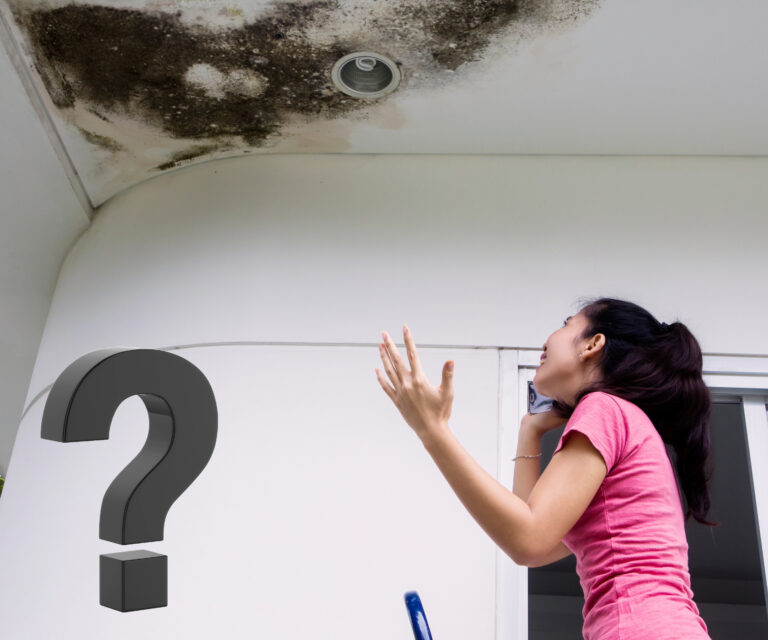
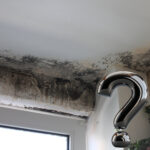
My tenants are demanding compensation for mould in the kitchen and have contacted Environmental Health, Citizens Advice Bureau, Shelter and a solicitor. He has sent a correspondence letter from a doctor stating that he “is suffering due to damp and mould in the home with respiratory issues and a cough” and has said he wants compensation for energy costs, rent paid, dehumidifier, and loss of earnings.
I spent 2 months doing it up when the last tenant left after 10 years. Within 5 weeks of the new tenants moving in, they reported mould in the kitchen and said there was damp in a couple of places. It never had these problems over 43 years in my family’s ownership. When I advised that the property needed to be heated and ventilated properly, he replied that it “seems like a waste of energy and our money. This strikes me as constructional damp”.
I also provided a dehumidifier for the basement, but they complained about the cost of running it, so I offered to pay them £175 for the running costs over the year.
A friend has been helping me and 17 days after mould was reported she took round some mould treatment. She also wrote a detailed report on the situation which I forwarded to the tenant. It noted that in the kitchen, it was 9.9°C, with a humidity of 80%. The rest of the property was similarly problematic although to a lesser degree. She advised the tenant to expel the damp air with a regime of opening windows each day, using dehumidifiers and the extraction fan in the kitchen. She also provided a hygrometer with which the tenant has taken temperature and humidity readings each day over three weeks.
The tenant has ventilated the property as recommended and his readings show that within the first 5 days the humidity in the kitchen had decreased by 26%. And after 14 days the humidity in the kitchen was reduced by 38% and the dining room was down by 40.5%. This appears to me to prove that he had not been ventilating sufficiently before and indeed when asked how he had previously been ventilating he replied that he opened the door each day to let the dog out into the garden.
They also use electric clothes dryers inside in a carpeted area, instead of using the garden, and the humidity readings in this area show the humidity increases significantly in that area each time.
In terms of heating, the tenant advised that he had set it to 44°C on the boiler and his girlfriend complained that the radiators were not getting hot enough. A heating engineer was fortunately present to service the boiler and advised that the boiler setting should be 65°C boiler, and that turning it down so far did not enable the radiators to heat up properly and hence to heat the property sufficiently. The temperatures in the house had already risen substantially with the expulsion of the damp air but have increased further since the setting on the boiler was rectified.
My friend visited the property again 11 days later and wrote a 2nd detailed report on the situation which I again forwarded to the tenant. It provided follow-up information and advice to the tenants and also reported that a gutter on the back wall was broken as well as some moss on the little glazing units beside the front door into the kitchen.
On learning of these issues, I immediately arranged for someone to visit the property 3 days later and make repairs to the glazing units, and any other issues that he identified which included a small crack in the wall near the kitchen window. He has also arranged for a full upgrade to the guttering arrangements in 2 weeks’ time to replace fascia boards, gutters and downpipes and weather shielding. This wall was cut back to the brick had a new proof course put in and re-plastered within the last 10 years or so. It was unfortunate that this wall can only be seen from my neighbour’s garden, so I was previously unaware of the problem although it had only been repaired a year ago, so I had assumed it was okay. I accept that this may have added to the humidity but do not believe it is the primary cause and it is on the opposite side of the house to the kitchen.
I feel that I have done everything that I can possibly do but it doesn’t seem to be enough. We have been very careful not to apportion blame at any point and have simply assessed the situation objectively and offered advice. However, the tenant is now getting very aggressive and has contacted a lawyer, the Citizens Advice Bureau, and the health and housing department of the Brighton and Hove council. Do you think I should get my own lawyer?
Do you think I should offer some compensation, and if so what sort of amount? The law seems loaded in the favour of the tenants, and this could get very expensive and I’m on low income. Any support or advice would be very much appreciated.
Posted on behalf of my friend/the landlord.
Jennie
Every day, landlords who want to influence policy and share real-world experience add their voice here. Your perspective helps keep the debate balanced.
Not a member yet? Join In Seconds
Login with
Previous Article
Call for government action as landlord numbers slideNext Article
Why the victimisation of landlords shames everyone
1 year ago | 17 comments
1 year ago | 12 comments

1 year ago | 1 comments
Sorry. You must be logged in to view this form.
Member Since January 2020 - Comments: 1102 - Articles: 1
9:10 AM, 27th February 2025, About 1 year ago
Reply to the comment left by Disgrunteld Landlady at 27/02/2025 – 07:12
S21 cannot be used, they are only a few months in to a 12-month fixed period.
Member Since August 2023 - Comments: 10
11:05 AM, 10th March 2025, About 1 year ago
Whilst I sympathise with you, the council as you know will.
I suggest that you put two air brick ventilations in each room. One near ceiling height and one, one feet about the skirting board so that there is a good air floor in the room.
Make them fixed in the open position so that the tenant cannot close them and also open the vents in the double glazing windows. Tenants normally closed them. Finally if you have not, issue them with a ‘Prevention of dampness and Mould guide for the home’.
Either get them to sign it and/or send it by email.
When the council comes, show them the airbricks, a copy of the Prevention of dampness and mould guide’.
This normally helps and good luck!
Member Since August 2023 - Comments: 94
12:34 PM, 10th March 2025, About 1 year ago
Reply to the comment left by GlanACC at 21/02/2025 – 18:38
You cannot issue an S 21 as a tenant is only been in a few weeks
If there is a breach of the AST where the property isn’t being heated and ventilated causing the issue, which can be independently proven by more than one source then you may have case for eviction. However, based on the everything is for the tenant that could be an expensive long journey.
I can’t remember the name of it but there is a device on the market. It’s an electronic device which changes the positive negative condition of moisture i.e. water. You know me when you have to have one of these per property and is known to be very effective, but not cheap. It’s a unit very much like a Wifi unit but not a Wi-Fi unit.
Member Since August 2013 - Comments: 21
7:27 AM, 15th March 2025, About 1 year ago
Reply to the comment left by Ross Tulloch at 21/02/2025 – 10:02
Agreed. It’s important to explain to these tenants that the damp is generated by their breathing, cooking, drying clothes etc. and that they are responsible for eliminating that moisture by daily window opening in each room for at least 20 minutes. They should follow that, if weather cold, with adequate heating. Damage due to failure to do this is also their responsibility.
Member Since September 2022 - Comments: 59
7:37 AM, 22nd March 2025, About 1 year ago
Barring any leaks, the response to mould is simple. It wasn’t there when the tenant moved in. The property has been in existence for a number of decades without any problems. It means that it is their lifestyle.
Ventilate the place and watch the problem disappear.
Unless you want the landlords come every morning, open all your windows and later on come back and close them.