

Landlord penalty quashed after council fails to meet six-month rule
2 months ago | 14 comments


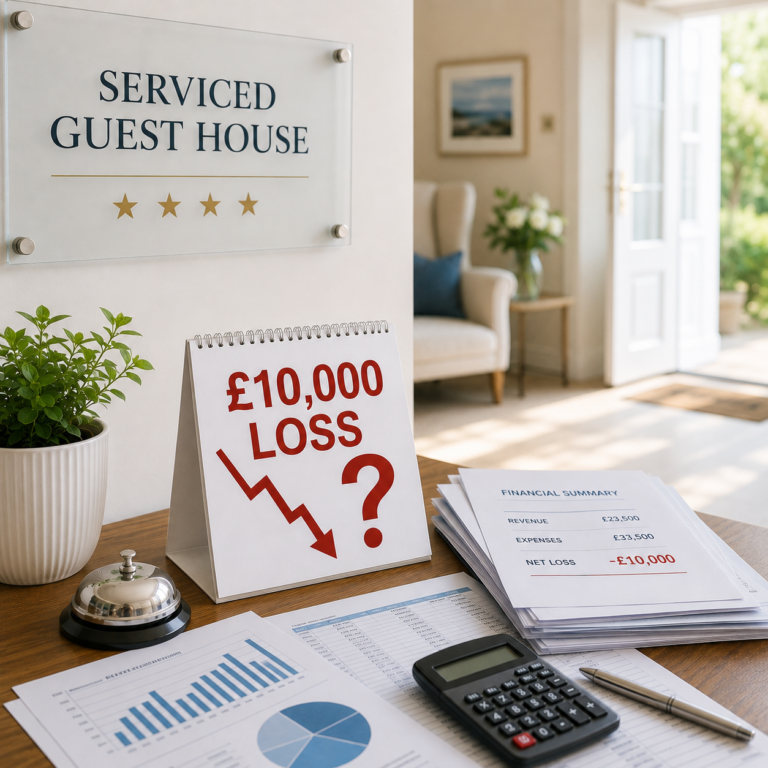
Hello, I run a small, serviced guest house in the London Borough of Barnet and would be interested to hear whether other accommodation providers have faced a similar situation.
An occupier took a room under a signed serviced-accommodation licence in mid-2025. The agreement states that no tenancy is granted or intended and that facilities are shared.
He paid for around six months but stopped paying in January 2026. I served written notice terminating the licence and requiring him to leave by 11 February, but he has remained in the room.
The unpaid accommodation and use-and-occupation charges I am claiming now exceed £10,000 and are increasing by £60 a day.
There have also been incidents that have caused disruption and concern among other guests. These were reported to the police, and one resulted in an arrest, although no charge followed. One elderly guest now avoids the shared areas because she says she feels unsafe.
I took specialist legal advice through the panel solicitors appointed by my legal-expenses insurer. I was advised that, because I accept payment but do not live at the premises, the resident-landlord and excluded-occupier exceptions do not apply.
The solicitors’ advice was that a possession order is required and that I must not attempt to remove the occupier myself. Although the written agreement describes the arrangement as a licence, I understand that the court will ultimately determine its proper legal status.
I filed a possession claim using forms N5 and N119 in February 2026. I am still waiting for the claim to be listed and for a hearing date.
Meanwhile, Barnet Homes, which manages housing services on behalf of the London Borough of Barnet, has explained its position through complaint correspondence rather than a formal homelessness decision.
My understanding is that the council does not currently consider that it owes the occupier a homelessness duty.
I am challenging that position and there is now a live complaint with the Local Government and Social Care Ombudsman. One of the issues I have raised is whether someone whose licence has ended may be regarded as homeless even though they remain physically in the accommodation.
From my perspective, I am caught in an impossible position. I cannot lawfully recover the room without completing the court process, but the occupier is not paying and the council does not currently appear willing to accommodate him.
My legal-expenses insurer has also declined to fund debt-recovery proceedings after its solicitors assessed the prospects of recovering the money at below 50%, apparently because of the occupier’s financial circumstances.
I therefore face the possibility of obtaining possession eventually but recovering little or none of the growing debt.
The main assured-tenancy reforms introduced under the Renters’ Rights Act do not appear to offer a straightforward solution to this type of disputed licence arrangement.
Has anyone running serviced accommodation, a guest house or a B&B experienced something similar? Is there any effective route I may have overlooked, and does the interaction between licence agreements, possession proceedings and homelessness duties deserve wider policy attention?
Alexander
Every day, landlords who want to influence policy and share real-world experience add their voice here. Your perspective helps keep the debate balanced.
Not a member yet? Join In Seconds
Login with
Previous Article
Government sets EPC B target for commercial buildings by 2031Next Article
More buy to let lenders cut mortgage rates
2 months ago | 14 comments


2 months ago | 5 comments
Member Since January 2015 - Comments: 1572 - Articles: 1
10:34 AM, 29th June 2026, About 2 months ago
Who drafted your Serviced Accommodation License agreement?
Why did you not, when the guest failed to vacate, not remove their possessions and change the locks.
I think you have been ill advised to seek a Possession Order from a court as this implies an AST not a SAL.
Some useful reading/information
https://lettingshub.co.uk/letting-agents/blog/comparison-of-a-licence-to-occupy-v-ast-v-holiday-let/
https://theindependentlandlord.com/licence-to-occupy/
https://www.ghplegal.com/ghp-insights/2020/01/qa-what-is-the-difference-between-a-licence-agreement-and-an-assured-shorthold-tenancy/
P4 & 5 https://surreyheath.moderngov.co.uk/documents/s34956/8a.%20SFA%20Annex.pdf
Member Since October 2013 - Comments: 1314 - Articles: 10
10:59 AM, 29th June 2026, About 2 months ago
It would appear that the “occupier”, the council, the insurer, and the solicitor, have all concluded that the occupier is occupying the property as a tenancy, not a licence to occupy, and are advising you and the occupier accordingly. However, as you say, ultimately it will be for the court to decide, (based upon the principles outlined in the Street v Mountford case).
Member Since June 2019 - Comments: 939
12:57 PM, 29th June 2026, About 2 months ago
This sounds horribly like an HMO, I hope all of your paperwork is valid. From your comments it sounds as if the residents consider this to be their home, a guest house should be short term accommodation for people with a permanent residence elsewhere. Not living in the premises seems to suggest that a licence is invalid.
Member Since October 2020 - Comments: 209
1:31 AM, 3rd July 2026, About 2 months ago
Giving a licence for the same room for 6 months in serviced accommodation is extremely foolhardy without evidence the individual has a permanent home elsewhere. You should have moved them from one room to another with that length of stay. But the nature of the services will be crucial in any court proceedings. if you are changing towels, bedding, cleaning an en suite bathroom then it will be plainly serviced. If service provision limited to shared areas and the person has been living for over 6 months in the same room and has no other home then it may well be that a tenancy has been established.
Member Since October 2020 - Comments: 1333
11:12 AM, 3rd July 2026, About 2 months ago
If you have evidence that you provide regular in-room services, give it to your solicitor.