

Tenant demand is rising as home supply falls – RICS
5 months ago | 5 comments


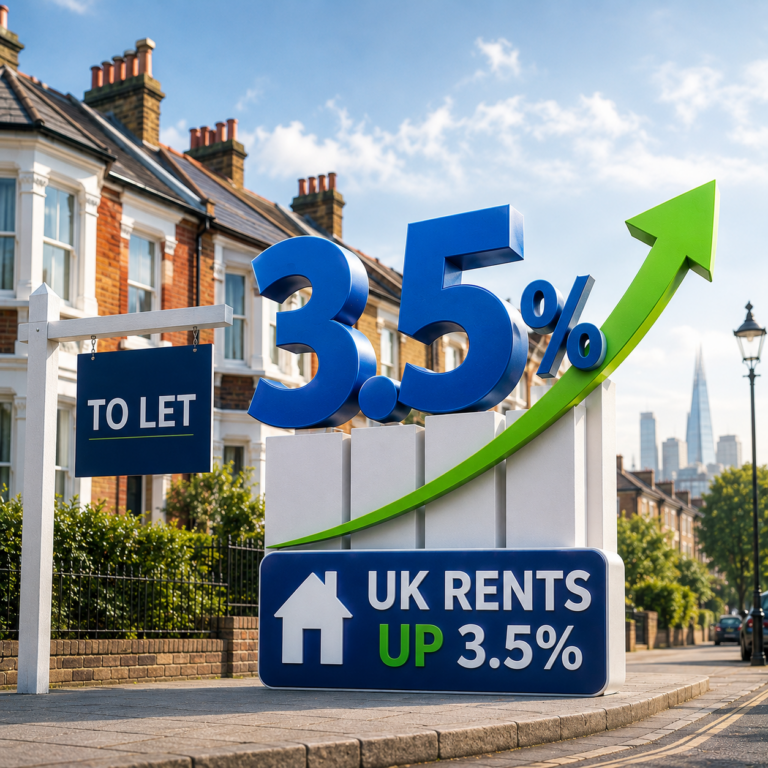
The average UK private rent was £1,381 in April after a 3.5% annual increase, the Office for National Statistics (ONS) reveals.
It says that annual rent growth edged up from 3.4% in March, with rents rising across all four UK nations.
In England, average monthly rent reached £1,438 in April, up 3.5% or £48 from a year earlier.
The North East recorded the highest annual rent inflation at 6.5%, and London had the lowest, at 2%.
Average rent remained highest in Kensington and Chelsea, at £3,597 a month.
Outside London, Oxford had the highest average monthly rent, at £1,956.
The lowest figure was in Dumfries and Galloway, Scotland, at £552.
Wales saw a sharper rent rise, with average rent increasing 4.9% to £834.
That was slightly ahead of the 4.8% annual rise recorded in March, although still well below the recent peak of 8.9% in March 2025.
In Scotland, average rent rose 2.0% to £1,019, up £20 over the year.
The annual rise was down from 2.1% in March and was the lowest for more than four years.
Northern Ireland’s latest figures, for February, showed average rent at £877, up 4% or £34 from a year earlier.
House prices moved in the other direction, with average UK values unchanged at £268,000 in the 12 months to March, the ONS data shows.
That left annual house price growth at 0%, down from 1.7% in February and the lowest annual inflation rate since April 2024.
The slowdown followed a 0.4% fall in average monthly prices between February and March 2026.
A year earlier, prices had risen 1.2% over the same monthly period, ahead of the April 2025 changes to Stamp Duty Land Tax in England and Northern Ireland.
In England, the average house price fell 0.6% to £290,000, down £2,000 from a year earlier.
Wales recorded a 2.9% annual rise, taking the average price to £213,000, down from 3.3% annual growth in February.
Scotland’s average house price rose 1.6% to £187,000, an increase of £3,000 over the year.
Its annual growth rate was also lower than in February, when it stood at 2.5%.
Northern Ireland remained the strongest market in the house price figures, with the average price reaching £198,000, up 7.4% or £14,000 from the same quarter in 2025.
Nathan Emerson, the CEO of Propertymark, said: “Today’s figures underline the continuing imbalance between tenant demand and the supply of homes available to rent.
“While figures released today show an easing of inflation compared to the previous month, rents are still moving upwards because supply remains constrained in many local markets.
“Agents on the ground continue to report strong competition for good-quality rental homes, particularly for family properties and homes close to transport links and employment hubs. Many landlords are still weighing up rising costs, taxation and regulation, which is limiting the number of homes coming onto the market.
“What we are seeing is a supply issue rather than excessive demand.
“Without measures that support investment in the private rented sector, affordability pressures are likely to continue.”
Louisa Sedgwick, the managing director of mortgages at Paragon Bank, said: “Rent inflation has historically tracked wage inflation, and we have seen this relationship harmonise in the past year following the severe upwards pressure on rents in the post-Covid era.
“The conflict in Iran is building some further inflationary pressure into the economy and that will likely to be reflected in the rental market in the coming months.
“Landlords are not immune to cost pressures and 72% of those planning to increase rent in the next year will do so because of the rising costs they face in operating their business, with six in 10 citing a higher tax burden following the 2025 Autumn Budget.”
Jeremy Leaf, a north London estate agent and a former RICS residential chairman, said: “Though the most extensive of the rental surveys, these figures predate the later, more telling, impact of the introduction of the Renters’ Rights Act from the beginning of May.
“However, on the ground it was clear that the significant number of landlords selling due to concerns about the operation of the new measures meant rents hardened and even rose for some smaller properties due to lack of supply.
“Worries about the cost of living continue to keep landlord aspirations of higher returns in check.”
Richard Donnell, executive director of research at Zoopla, said: “The ONS index shows house price inflation has stalled – this is a as result of Budget uncertainty over the taxation of housing in the latter part of 2025 as it’s too early for the higher mortgage rates of recent weeks to hit price changes this quickly.
“Looking ahead we expect house price inflation to continue to increase as buyer activity increases with clear evidence of growing sales and increased first time buyer activity as household press ahead with buying decisions.
“The year ahead is on track for 1.2m housing sales, only slightly lower than last year.”
Be the first to comment
Have you dealt with something similar? Share what you learned, raise a question or offer a perspective your peers may find useful.
Previous Article
Collapsed house moves cost the UK £2bnNext Article
London lettings demand and supply rise
5 months ago | 5 comments


5 months ago
Not a member yet? Join In Seconds
Login with