

Government releases Renters’ Rights Act guide
12 months ago | 24 comments


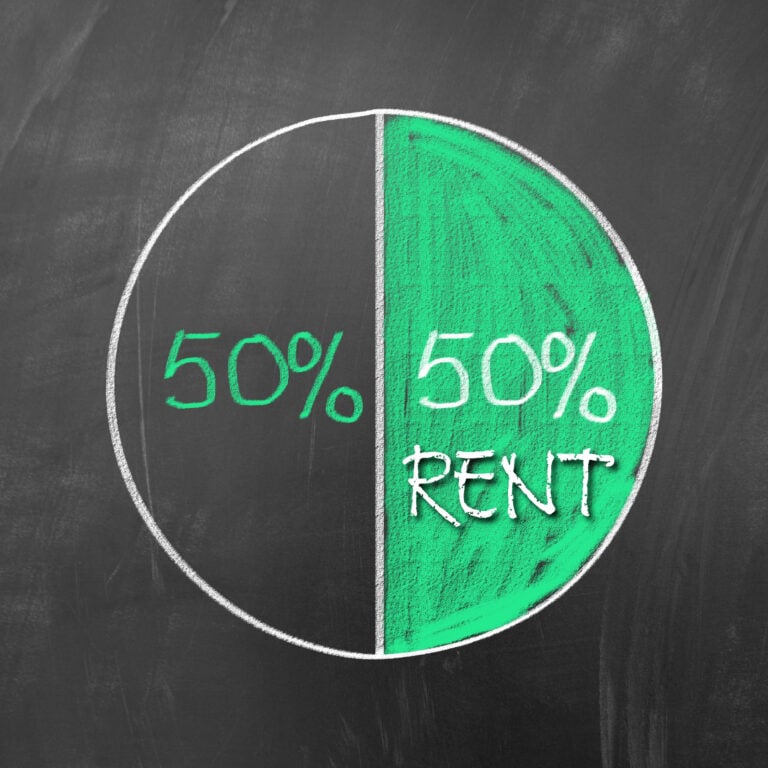
Around a third of tenants are now handing over at least half of their take-home pay to pay rent, research reveals.
According to deposit alternative provider Reposit, 14% of tenants spend between 50% and 60% of their net income on rent, while 11% allocate 60% to 70%.
A further 6% spend more than 70%, while another 22% spend between 40% and 50% of their pay.
The firm’s chief executive, Ben Grech, said: “It’s still a really tough time for renters.
“With so many already spending half of their take-home pay on rent, the traditional upfront deposit only adds to the pressure.
“With average cash deposits now around £1,380, anything that helps ease this burden or give tenants more financial breathing room can make renting more manageable.”
He added: “Landlords shouldn’t assume affordability simply because a tenant can pay a deposit.
“Previous Reposit research shows that one in five renters borrow money as repayable debt, to cover this cost.”
The survey of 1,000 renters found that 31% are devoting half or more of their take-home income to rent.
That’s equivalent to 40% of gross pay, which is far above traditional affordability measures.
For decades, the so-called ‘30% rule’ has been a benchmark for housing affordability, suggesting tenants should not spend more than a third of gross income on rent.
Reposit’s findings suggest many households are far beyond that threshold, leaving little room for essentials such as food, bills and transport.
Reposit’s data puts the average UK rent at £1,196 per month, while the Office for National Statistics says average weekly earnings are £733, or £38,116 a year.
That means the typical tenant is spending 38% of their gross income on rent — well above the recommended limit.
The analysis also found affordability pressure climbs sharply with higher rents.
Among tenants paying up to £1,000 per month, 78% were already spending more than 30% of their take-home pay on rent.
At £1,500 or above, that figure rises to 84%.
5 comments on this article
A different perspective could help you spot an issue, avoid a mistake or find a better way forward. Read the comments and add your own views if you wish.
12 months ago | 24 comments

12 months ago | 29 comments

12 months ago | 8 comments
Member Since April 2018 - Comments: 648
10:30 AM, 13th November 2025, About 11 months ago
Sick of hearing about this.One minute it’s a third, then it’s a half, then it’s 80%. So what, that’s the fact of life that you have to pay to live somewhere, in fact it’s at the top of the list so why shouldn’t it be 80% of take home pay.Everything is ultra expensive these days, so are we supposed to be feeling sorry.If they are only spending 30% of their take home pay on rent, what’s the problem and who creates this benchmark! If anything this government needs to cut council tax and the cost of living to ease the pressure on everyone , not just renters. That would at least give renters more spending money for £1000 mobile phones.As it is landlords make so little profit for work and stress so are they supposed to cut rents and lose money.
Member Since June 2015 - Comments: 366
10:34 AM, 13th November 2025, About 11 months ago
40% of gross pay has been the standard affordability figure used by referencing companies for many years.
It needs to be remembered housing is only part of the living cost equation. Is it overall cheaper and more convenient to pay higher housing costs and live close to work and amenity or pay lower housing costs and have to factor in the cost and time of driving or using public transport?
For people with a hectic social life and full time work maybe a cheap, functional home is OK. Someone who spends a lot of time at home will probably allocate more of their income to a nicer home.
Life is supposed to be about choices.
What’s right for one person will be totally wrong for someone else.
Member Since September 2022 - Comments: 32
10:59 AM, 13th November 2025, About 11 months ago
This is the effect of freezing tax thresholds for so long. 40% minimum gross income has been standard for years, but take home pay may become over 50% thanks to the tax on relative low earners caused by frozen tax thresholds.
Whats not quoted is many tenants choose to pay a larger proportion of income for a better property in a better location for a better quality of life.
Member Since February 2018 - Comments: 628
1:59 PM, 13th November 2025, About 11 months ago
Reply to the comment left by David Nichols at 13/11/2025 – 10:59
I wouldn’t sweat it, this is just a puff piece.
Member Since January 2024 - Comments: 431
6:39 PM, 13th November 2025, About 11 months ago
Mortgages on BTLs where tenants have not paid their rent for months and refurb costs where tenants or their pets have trashed the rental property could easily exceed 100% of a landlord’s monthly or annual income.
There are two sides to every equation.