

Landlords face fines of up to £30,000 under tougher EPC enforcement plans
1 week ago | 51 comments


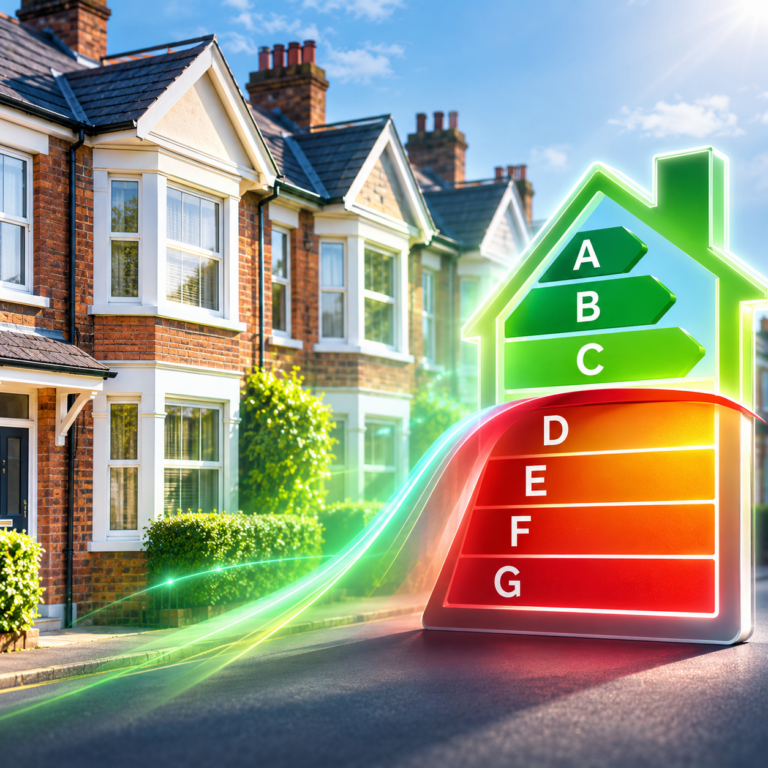
More than 90,000 PRS homes in England and Wales have improved their EPC ratings to C or above, but almost 160,000 remain below the threshold, according to new research.
Data from Upgraded Intelligence reveals that 90,830 of the 250,017 homes that initially had an EPC rating below C were rated C or above on their latest certificate, representing around 36%.
However, this means that 159,187 properties (64%) remained below EPC C, underlining the number of PRS homes that have yet to improve their energy efficiency ratings.
Hakim Parr from Upgraded Intelligence said that while the research does not establish how much landlords have spent on energy-efficiency improvements, it shows that many of the properties that achieved a higher rating were initially only one band below C.
He said: “Nearly three-quarters of the homes that moved up to C or above started at D, just one band away. A more efficient boiler or better insulation can lift a rating, and a fresh assessment can give credit for insulation that was already there if the assessor has better evidence. The certificates alone can’t tell us whether landlords are spending more.
“Around 159,000 of the homes that started below C were still below it on their latest certificate. That’s a lot of homes in this group alone. A property a few points short of C can need very different work from one several bands away.”
Upgraded Intelligence also analysed official Energy Performance of Buildings data, finding that more than 7.6 million homes in England and Wales had at least two usable EPC certificates linked to the same property reference.
Of these, more than 3.1 million homes (41.3%) had a higher energy rating on their latest certificate, while around 3.4 million (44.5%) retained the same rating.
The news comes as the government has proposed all PRS homes must meet EPC C targets by 2030.
The government also plans a property value adjustment exemption for homes worth less than £100,000, reducing the maximum required investment to 10% of the property’s value.
As previously reported by Property118, Propertymark has welcomed the £10,000 cost cap but warned that many older buildings will still struggle to meet the required standard within the limit.
Timothy Douglas, head of policy and campaigns at Propertymark, explains: “We support the proposed extension of exemptions to 10 years within the £10,000 cost cap framework, as it offers landlords greater certainty and more time to plan improvements strategically.
“However, Propertymark has consistently argued that many properties will still struggle to achieve EPC C within the proposed cap, particularly older buildings requiring extensive retrofit works.
“Landlords need clearer guidance, long-term policy stability, and greater financial assistance if the sector is to meet the 2030 deadline without unintended consequences for housing supply.
“Targets should also be linked to the age and archetype of properties to ensure homes become as energy efficient as possible without losing much-needed rental stock from the private rented sector.”
13 comments on this article
A different perspective could help you spot an issue, avoid a mistake or find a better way forward. Read the comments and add your own views if you wish.
1 week ago | 51 comments

1 month ago | 12 comments
Member Since March 2024 - Comments: 368
8:22 PM, 13th November 2026, About 9 hours ago
Reply to the comment left by David at 13/11/2026 – 20:05
As I understand it the cap is £10000 for any property over £100k and 10% for properties under.
I share your concerns, I’d be wary of getting external insulation on a solid wall house even if it were offered FOC, it goes against all the advice that they need to ‘breathe’ to stay in good shape and of course when Victorian houses were built they had plenty of natural ventilation from open fireplaces and sash windows.
Member Since April 2018 - Comments: 724
10:40 PM, 13th November 2026, About 6 hours ago
Reply to the comment left by Keith Wellburn at 13/11/2026 – 20:22
Thanks for the confirmation Keith. There also seems to be new Energy Performance Certificate system scheduled for the second half of 2027 so I think that means if you have short dated EPC’s on even B and C properties and you are holding long term you need an EPC carried out now under the old regime, otherwise you could find those properties will be downgraded when your existing certificate expires.
The metrics on the new Home Energy Model (HEM) are:
* Fabric performance
* Heating system efficiency
* Smart readiness
* Estimated energy cost
What do you think?
Member Since March 2024 - Comments: 368
10:55 PM, 13th November 2026, About 6 hours ago
Reply to the comment left by David at 13/11/2026 – 22:40
Yes definitely worth getting new certificates now to replace short dated ones on properties that will get a C or better rather than chancing the new system when it comes in.