


Manchester leads house price growth over decade
12:01 AM, 18th June 2026, 4 months ago
Categories:
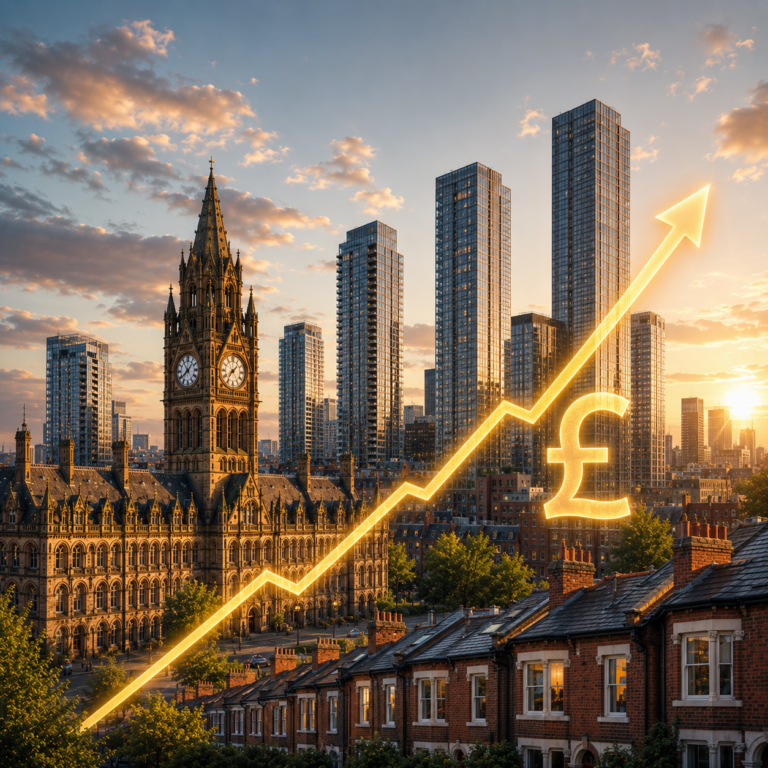
Manchester’s house prices have risen by 63% in a decade, putting the city at the top of Rightmove’s long-term growth table.
London, meanwhile, has limped along with the country’s slowest rate of growth with an increase of just 7%.
The average asking price in Manchester now stands at £261,891, compared with £160,422 10 years ago.
Wolverhampton matched Manchester’s 63% increase, although its current average asking price is lower at £229,094.
Growth determined by affordability
The firm’s property expert, Colleen Babcock, said: “Manchester is a big winner of the past decade, with strong price growth underlining its growing popularity among buyers.
“By contrast, London has seen much slower growth over the same period, reflecting how higher prices in the capital have limited how much further buyers can stretch.”
She added: “Looking at the bigger picture, affordability has been a central theme shaping these trends.
“Areas with lower starting price points have had more room for growth, which has contributed to a widening north-south divide in price growth trends over the last 10 years.”
The reasons for the divide include changing working patterns, more hybrid and remote working which also influence where people choose to live.
Manchester’s house prices
In the Rightmove table, Newport ranked third after prices climbed by 57% to £235,275, followed by Nottingham, where a 53% rise took the average to £210,238.
The platform analysed millions of property listings, buyer demand indicators and price data points to track changes during the past decade.
Its figures show that Manchester’s growth has spread beyond the city centre.
The four local areas recording the largest increases were Levenshulme, Atherton, Droylsden and Failsworth, all in Greater Manchester.
Prices in each of those suburbs rose by about 80% over the 10-year period.
London sees the slowest growth
By contrast, London’s average asking price increased from £639,593 to £687,080 to remain the most expensive city in Great Britain.
However, the capital recorded the slowest percentage growth in Rightmove’s analysis.
None of the 10 cities with the fastest price growth is in southern England, though five of the 10 slowest-growing cities are in the south.
Higher starting prices restricted growth in several expensive markets, Rightmove said.
London, Oxford, St Albans and Winchester were among the areas recording smaller increases.
House price driver
Mary-Lou Press, the NAEA Propertymark President, said: “Affordability has become one of the strongest drivers of house price growth over the past decade.
“Cities such as Manchester, Wolverhampton and Nottingham have benefited from lower starting price points, while higher-value markets like London have faced natural affordability constraints.”
She added: “Manchester’s success reflects more than affordability alone.
“Strong economic growth, regeneration, investment, transport improvements and changing working patterns have all helped boost demand, with growth increasingly spreading into surrounding suburbs.”
Tags:
England property market, Greater Manchester property, house price growth, London house prices, Manchester house prices, Rightmove property prices
Be the first to comment
Your experience could help the next reader
Have you dealt with something similar? Share what you learned, raise a question or offer a perspective your peers may find useful.
Previous Article
UK rent growth slows again as house prices rise - ONSRelated Articles
House prices rise 1.6% as London falls – e.surv
4 months ago
House prices fall again – Halifax
5 months ago
Not a member yet? Join In Seconds
Login with