

Landlords face paying National Insurance on rental income
7 months ago | 116 comments



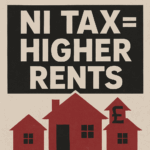
Labour’s plan to impose National Insurance (NI) contributions on rental income could see UK landlords paying £885 per property each year, research from Inventory Base reveals.
The study of the policy under consideration by Chancellor Rachel Reeves for the upcoming Autumn Budget estimates the impact of a proposed 8% NI rate.
The average UK landlord, typically an employed individual, could face an annual NI charge of £722 per property – but this rises to £885 in London.
This figure is derived from an 8% NI contributions applied to the average gross rental income of £10,621, after subtracting typical property maintenance costs of £1,593 per year.
The firm’s operations director, Sián Hemming-Metcalfe, said: “Landlords are already trying to guesstimate and juggle any potential financial fallout of the Renters’ Rights Bill, so slapping an NI charge on rental income feels less like policy and more like punishment.
“The private rented sector thrives on stability – tenants need secure homes, landlords need predictable returns.
“Add another layer of tax and all you create is uncertainty, and uncertainty drives good landlords out of the market.
“That doesn’t protect tenants, it weakens an already fragile system.”
She added: “If the Government is serious about raising standards, it should be focusing on ways of maintaining the protections and standards that tenants are being promised and backing landlords to deliver, not taxing them into retreat.”
However, the impact of the NI levy on rental income varies with London landlords expected to bear the heaviest burden.
In the capital, landlords face an estimated NI bill of £885 per property, based on a post-maintenance rental income of £11,060.
In the East of England, the average bill would be £802 and in the South East it’s £792.
Landlords in the South West face a £750 bill, in the North East it would be £684, in the East Midlands is £680 and in the West Midlands it would be £677.
In the North West the NI contribution would be £646, Wales it is £608, and Yorkshire and the Humber it’s £606.
Every day, landlords who want to influence policy and share real-world experience add their voice here. Your perspective helps keep the debate balanced.
Not a member yet? Join In Seconds
Login with
7 months ago | 116 comments

7 months ago | 11 comments
7 months ago | 20 comments
Sorry. You must be logged in to view this form.
Member Since July 2013 - Comments: 463
10:57 AM, 8th September 2025, About 7 months ago
Reply to the comment left by Reluctant Landlord at 08/09/2025 – 09:24Thank you for these constructive remarks. We are all doomed to die, so it is important to remain cynical at all time about all things.
Member Since May 2018 - Comments: 1996
1:27 PM, 8th September 2025, About 7 months ago
Reply to the comment left by AnthonyJames at 08/09/2025 – 10:53
I’m a small portfolio landlord….but it’s just part of what I do. I also run a small business and like a lot of small businesses my business just got hit hard by Rachel Reeves’ increase to both the amount of employers’ NI and her reduction of the level at which it gets paid.
These changes that Rachel Reeves has just introduced have been made to enable the government to pay for public sector workers such as e.g. train drivers to get a big increase in salary for a 4-day week without having to agree any improvements in productivity. At least one council has been investigating moving workers from a 5-day week to a 4-day week, and as I understand it, not with any decrease in salary that would result in local taxpayers only having to fund the 4-days actually being worked.
Just as with lots of other small business owners I know that “National Insurance” gets paid into the same bank account that HMRC uses to collect all the other personal taxes. National Insurance isn’t insurance – it’s just extra tax. The THEORY of ‘National Insurance’ is that every employee or self-employed person makes a personal contribution of something to the pot and at the end, everyone also gets something out…access to a basic state pension for example to reward all their years of hard work.
But what Rachel Reeves just did is to raid small businesses, the backbone of the economy, using the ‘national-insurance’-back-door-tax-lie.
For this thing called ‘National Insurance’ (even though it isn’t insurance) to deliver what you suggest it would have to be spent well: I can’t see any evidence of this government spending well.
In my opinion doing as you suggest would create two bottomless-pits rather than just the one….and possibly it would even create a multitude of bottomless pits if the power to spend this money ends up being vested in labour councils. Labour councils have a tendency to overspend and when it all goes ‘t***s-up, sit back, fold their arms and go “…well this is a disaster isn’t it? And so somebody else must be to blame for that….”
Sorry….the evidence for government–competence isn’t that convincing at the moment.