

Higher EPC exemption cost cap could push landlords out of the market – warns industry body
1 year ago | 7 comments


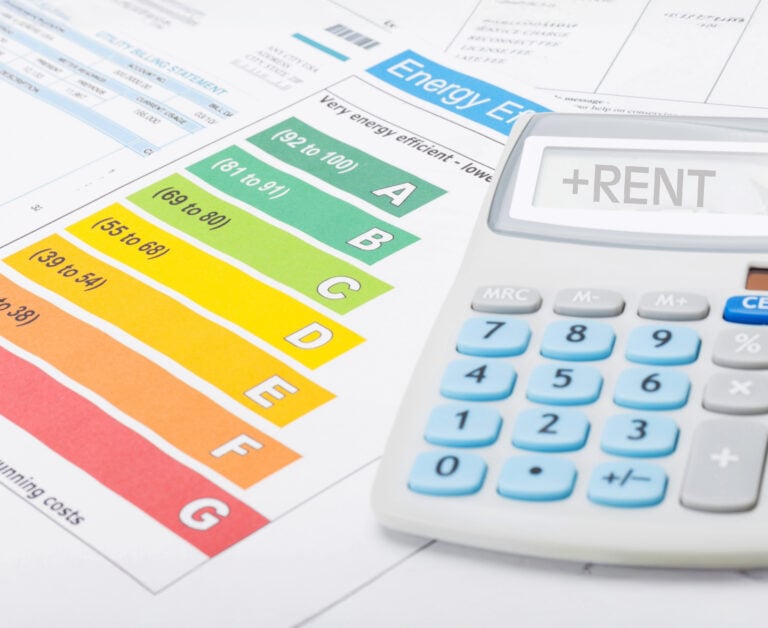
Labour has confirmed that landlords can pass the cost of mandatory EPC upgrades onto tenants – which could see renters paying £4,000 a year more, the Daily Telegraph reports.
Despite the Energy Secretary Ed Miliband’s insistence that landlords will not put up rents to pay for the EPC costs, a minister says landlords have grounds to ask for ‘higher market rents’.
The upgrade rules are part of Labour’s push for net zero, which mandates that all rental properties must achieve a minimum energy performance certificate (EPC) rating of C by 2030.
The government claims renters could save £240 every year on energy bills with better insulation.
However, the Conservatives have raised fears that annual rent rises of up to £4,000 could be imposed as landlords seek to offset the expense of upgrading older properties.
Despite Mr Miliband’s assurances that previous energy standards did not lead to higher rents, Justice Minister Sarah Sackman has confirmed in Parliament that landlords can legally factor in the cost of improving a property’s EPC rating when setting ‘higher market rents’.
She was responding to a question from Kevin Hollinrake, the shadow housing secretary, who wanted to know if rents can be increased legally if the tenant challenged the rise in court.
Ms Sackman stated: “Expenditure on the upgrading of an energy performance certificate to a higher level of energy efficiency is a material consideration, which may result, in certain circumstances, in a higher market rent being determined.”
The Conservatives have seized on the admission, warning that the policy could burden tenants with substantial rent increases.
Mr Hollinrake told The Telegraph: “Red Ed promised to reduce everyone’s bills but his mad dash to net zero is picking people’s pockets.
“Not content with sending bills skyrocketing, hardworking families’ rents are now in his crosshairs.
“Maybe this confession will make him finally realise that Labour’s war on landlords just leaves renters worse off.
“He needs to heed our calls to abandon net zero by 2050 and fast or working families and Middle England will continue to be clobbered by his eco cult.”
Mr Miliband, however, has defended the policy previously and has pointed to government support schemes such as local grants and the boiler upgrade scheme to help landlords.
Speaking to LBC in February, he said: “There is some government help, we’re looking at what more can be provided.
“When this was done before with a less exacting standard, we didn’t see rent increases and half of landlords already do this.”
Ben Beadle, the chief executive of the National Residential Landlords Association, has urged a ‘realistic’ approach, highlighting a shortage of skilled tradespeople and the need for targeted financial support.
Rob Wall, the assistant director at the British Property Federation, described the 2030 deadline as ‘challenging’ and called for a ‘gentler trajectory’ to allow the sector more time to comply.
A Department of Energy Security and Net Zero spokesperson said: “Everyone deserves to live in a warm, comfortable home.
“We have recently consulted on plans to require private landlords to meet higher energy performance standards, which will help deliver cheaper-to-heat homes.”
36 comments on this article
A different perspective could help you spot an issue, avoid a mistake or find a better way forward. Read the comments and add your own views if you wish.
Previous Article
Landlords face £30,000 fines for electrical safety non-complianceNext Article
John Lewis wins appeal for Waitrose BTR development
1 year ago | 7 comments

1 year ago | 7 comments

1 year ago | 4 comments
Member Since August 2016 - Comments: 1198
4:39 PM, 29th May 2025, About 1 year ago
Reply to the comment left by Beaver at 29/05/2025 – 14:57
That’s interesting. So which policies did George Osborne implement that were formulated under the Brown Government ?
Member Since September 2018 - Comments: 3766 - Articles: 5
4:50 PM, 29th May 2025, About 1 year ago
Reply to the comment left by Beaver at 29/05/2025 – 15:13
Red Ed needs to justify his existence (literally). He made ridiculous promises that make zero sense at ALL levels.
Therefore he needs to tick boxes as proof this folly has been achieved. Mandating LL’s to get to C therefore is (apparently) a way of ticking that box. Political survival depends on it.
The reality this is a dead dog and at the end of the day whatever happens – the T can refuse entry to have any works carried out at all. This wont change. Even the T can see that any works to make any ‘improvements’ to a property will trickle into rent increases later on.
Everyone forgets too – the current EPC gives a determined average consumption of energy for the property as it is now. I guarantee that not one of my tenants has even got close to that level of consumption over any year they have been in occupation. As a result, the actual level of CO2 emissions are already far BELOW of what the current EPC states anyway.
So is NZ supposed to be an emission reduction plan or a reduced energy cost to consumer plan? You CANNOT have both.
Member Since May 2024 - Comments: 225
8:02 PM, 29th May 2025, About 1 year ago
EPC C is just another stealth tax on what our government call working people. They are raising taxes and blaming it on greedy landlords.
Raising standards to an E a few years ago and now jumping 2 bands to make only the PRS be above the average D makes no sense, other than to blatantly get rid of the PRS. I wonder if they have any concerns as to where people are going to live. Will Grainger, Blackrock and Lloydes house benefit tenants?
Member Since May 2025 - Comments: 92
8:06 AM, 30th May 2025, About 1 year ago
The EPC C only applies to PRIVATE rented properties whilst council and social landlords can get anyway with doing nothing.
So make the government spend £45BILLION upgrading their council stock to meet the same standards as private landlords.
Sign my petition:
https://petition.parliament.uk/petitions/718910
Member Since October 2023 - Comments: 265
9:26 AM, 30th May 2025, About 1 year ago
Reply to the comment left by Beaver at 29/05/2025 – 13:45
You say that there was no restriction on speech in Property 118 newsletter, but thats because its a bubble, an echo chamber. Nobody outside cares what we say.
ACTUAL social media had massive interference on free speech during covid.
The “free” press is totally onboard with the next message……….climate change.
If you want to question anything on the subject, then you are a “climate change denier” to be ridiculed and mocked.
Even though the most Britain can effect global Co2 is to reduce it by 0.037%
And thats if we go net zero.
It will result in poverty for millions.
Member Since May 2018 - Comments: 2586
9:49 AM, 30th May 2025, About 1 year ago
Reply to the comment left by Dylan Morris at 29/05/2025 – 16:39
Gordon Brown was no fan of buy-to-let or allowing interest to be offset against rents generally. Gordon Brown famously described MIRAS as a middle class perk.
Of course the “perk” to be able to offset your business costs against your revenues isn’t as big a “perk” as being able to get a 30% discount on your council house and that was something that a conservative government introduced and Angela Rayner took advantage of.
All the main parties are creating a situation where the smaller players in the market (the small, non-incorporated landlords) are being targeted and effectively harvested. Buy-to-let is becoming an incorporated business and there are consequences for tenants of that happening (higher rents).
Removing the large number of small landlords who held down rents a bit to reduce the risk of void periods is cutting down choice for tenants in the rental market and OF COURSE landlords will raise rents to cover EPC upgrades. Because EPC upgrades to move from Band D to C will involve a significant capital investment and non-incorporated landlords are unable to service their finance costs rents will go up even higher for tenants than would otherwise be the case.
Member Since August 2016 - Comments: 1198
10:13 AM, 30th May 2025, About 1 year ago
Reply to the comment left by Beaver at 30/05/2025 – 09:49I’m no fan of Labour but I have to call you out here for trying to blame Gordon Brown. He left office in 2010 and I cannot recall anything whatsoever that he put in place to disadvantage landlords. You seem to think he did, so please tell me ?
Section 24 was introduced by George Osborne in 2015 five years after Brown left office. Yet you seem to be trying to pin this on Gordon Brown.
Regarding MIRAS this was removed by the Tory Chancellor Nigel Lawson way back in 1988 and nothing at all to do with Gordon Brown. If Brown commented that it was a middle class perk fair enough I don’t know, but it was removed years before Brown became Chancellor or PM. It’s very disingenuous of you to blame Gordon Brown. As I say please tell me what Brown did to disadvantage landlords ?
Member Since May 2018 - Comments: 2586
11:33 AM, 30th May 2025, About 1 year ago
Reply to the comment left by Dylan Morris at 30/05/2025 – 10:13
I think you’ll struggle to find policy documents from the time but you can see what was already being discussed in public at this link from 2010:
https://www.theguardian.com/money/2010/apr/12/buy-to-let-first-time-buyers
“The Treasury acknowledged privately as early as 2004 that a burgeoning buy-to-let market could be crowding out first-time buyers, according to a government report released by campaigners who lambast the authorities for allowing the landlord boom to continue regardless. The admission from the Treasury under Gordon Brown’s reign as chancellor runs counter to previous government rhetoric on the relationship – or lack thereof – between a rise in buy-to-let activity and a shortage of affordable homes for first-time buyers, according to the PricedOut group.
The campaigners received the Treasury briefing paper following a freedom of information request. The report was drafted in response to a request by former prime minister Tony Blair in 2004 after he had read a newspaper article on the prospects of a housing market collapse.”
And that’s the background to Gordon Brown’s public opinion that MIRAS was a middle-class perk. I think that Gordon Brown’s policies at the time were publicly about trying to avoid boom-and-bust, but it’s difficult not to infer from Gordon Brown’s rhetoric “…middle-class perk” that there wasn’t also an element of the politics of jealousy in there….a traditional labour failing.
But buying your own council home is a some-other-class-perk (introduced by a conservative government and taken advantage of by Angela Rayner and her union-employee former husband).
It’s easy to blame George Osborne and the conservatives but the truth is that there’s not much to choose historically between Conservative and Labour on this issue. From the perspective of being a landlord, or from the perspective of a tenant who understands that he or she needs choice and competition in the Private Rented Sector, the best that you can say of both the main parties is that they aren’t as bad as the SNP.
Somewhere out there there must be a party that understands that the present trend in mainstream party politics drives increasing incorporation of the Private Rental Sector, reduces competition, and that current tax and energy policy drives rents up.
Congratulations to the justice minister that stuck her head above the parapet and called Ed Miliband out.
Member Since March 2024 - Comments: 346
11:36 AM, 30th May 2025, About 1 year ago
Reply to the comment left by Dylan Morris at 30/05/2025 – 10:13MIRAS on private residences was a hangover from the earlier arrangement going back to the 1950s or perhaps before where individuals could offset mortgage interest against tax – BUT this was offset by imputed rent for the property, effectively the value you got from living in your own home.
Arguably the very relaxed borrowing criteria in the B2L market was a contributor to the 2008 meltdown. It was during Brown’s era I went from 8 owned properties to 15 all with mortgages. I don’t recall him saying anything about restricting interest relief which is of course an offset against taxable rental income.
Brown had no problem with excessive borrowing – he did it himself to find his largesse, along with selling off the gold at rock bottom prices and robbing pension funds of billions of dividend credits.
Member Since May 2018 - Comments: 2586
11:48 AM, 30th May 2025, About 1 year ago
Reply to the comment left by Keith Wellburn at 30/05/2025 – 11:36
And historically, in other parts of the world (including the USA) even owner-occupiers have been allowed to offset some or all of their mortgage costs against their PERSONAL income.
The trouble with all the main parties is that they don’t learn the lessons of history and they just pursue their own ideologies, rather than the interests of their citizens. The more autocratic governments, like the SNP for example, actually NEED a dependent, disempowered electorate to stay in power.
Gordon Brown and Tony Blair may have been aware of the risk of ‘boom-and-bust’ and this may have been the publicly stated reason behind their housing policies. But the truth is that if neither labour nor the conservatives (the SNP actually need immigration) are prepared to deal with the pressure on housing from net migration, and if they believe in adopting ‘sustainable’ or ‘renewable’ energy, then they actually NEED A BOOM in energy-efficient housing. And they haven’t got the money to deliver it.
So why penalise small portfolio private sector landlords by stopping them offsetting their finance costs…especially the real finance costs of implementing sustainable energy solutions? Why not involve landlords and owner occupiers in the solution by allowing them to become PART of the solution via the tax system? If they aren’t doing that it is because of their pursuit of out-dated ideologies, not because of anything to do with the science and physics of sustainable energy.