

The tenancy agreement template trap that cost a landlord dearly
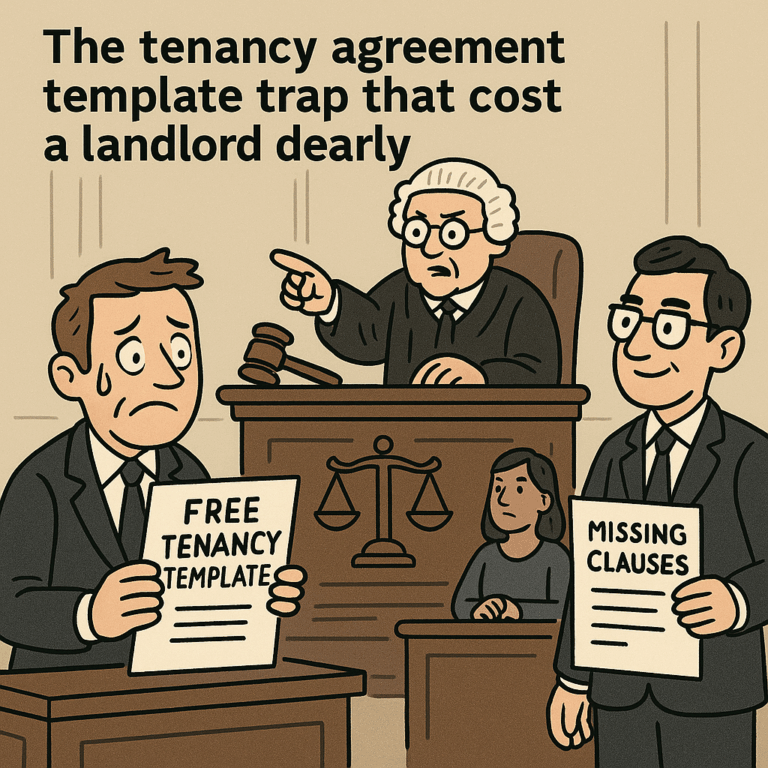

The landlord downloaded a free tenancy agreement template online and used it without legal review. At first, everything seemed fine. But when a dispute arose over rent arrears and damages, the court scrutinised the agreement. Critical clauses were missing, including those covering service of notices and repair obligations. The tenant’s solicitor successfully argued that parts of the agreement were unenforceable. The landlord’s case collapsed, leaving them unable to recover costs they believed were contractually due.
Tenancy agreements are legally binding contracts, but not all templates are created equal. Many free downloads are outdated or fail to reflect current legislation such as deposit protection, retaliatory eviction rules, or fitness for habitation standards. Courts take a strict view, and unenforceable or missing clauses can swing cases in tenants’ favour. In this case, saving on legal fees upfront ultimately cost the landlord far more in court.
The lesson is clear: tenancy agreements are not paperwork to cut corners on. Landlords should use up-to-date, professionally drafted contracts that reflect both statutory obligations and property-specific requirements. A well-prepared agreement is the foundation of every tenancy, and a safeguard when disputes arise.
What do you think?
Do you draft your own tenancy agreements, use agent-provided templates, or invest in bespoke contracts?
Source: Shelter: Assured Shorthold Tenancies – legal guidance
Previous articles in this series
Landlord Lessons: The AST date mistake
Landlord Lessons: The missing inventory
Landlord Lessons: The verbal agreement trap
Landlord Lessons: The gas safety lapse
Landlord Lessons: The unprotected deposit
Landlord Lessons: The unlicensed HMO
Landlord Lessons: The electrical safety lapse
Landlord Lessons: The Right to Rent slip
Landlord Lessons: The ignored repair
Landlord Lessons: The insurance blindspot
Landlord Lessons: The rent-to-rent risk
Landlord Lessons: The Section 21 error
Landlord Lessons: The Section 8 misstep
Landlord Lessons: The selective licensing oversight
Landlord Lessons: The EPC blindspot
Landlord Lessons: The rent increase mistake
Landlord Lessons: The service charge shock
Landlord Lessons: The tax record slip
Landlord Lessons: The guarantor gap
Landlord Lessons: The referencing shortcut
Landlord Lessons: The pet clause oversight
Landlord Lessons: The fire safety lapse
Landlord Lessons: The legionella neglect
Landlord Lessons: The asbestos surprise
Landlord Lessons: The DIY eviction disaster
Landlord Lessons: The rent collection chaos
Landlord Lessons: The repair retention row
Landlord Lessons: The unserved notice oversight
Landlord Lessons: The mortgage consent mistake
Landlord Lessons: The licensing renewal lapse
3 comments on this article
Learn from your peers’ experience
A different perspective could help you spot an issue, avoid a mistake or find a better way forward. Read the comments and add your own views if you wish.
Previous Article
Section 162 incorporation relief in crisis
Member Since June 2013 - Comments: 242 - Articles: 49
9:43 AM, 10th December 2025, About 10 months ago
That is so true. Other problems that can arise without a proper tenancy agreement are:
Tenants being able to pay rent in arrears if the tenancy agreement does not specify that it is to be paid in advance
Landlords being unable to make deductions from deposits if there are no proper deposit clauses
Landlords being unable to use certain eviction grounds if there is no notice of them in the tenancy agreement.
After I May 2026 it will be even more important for professionally drafted tenancy agreeements to be used as landlords will be required to include prescribed clauses and can be fined up to £7,000 if they are missing. Likewise they can be fined up to £7,000 if tenancy agreements purport to give a fixed term.
Always use a proper professionally drafted agreement – for example, you can get them from my Landlord Law service or the NRLA.
Member Since February 2022 - Comments: 212
10:07 AM, 10th December 2025, About 10 months ago
I rely on OpenRent so hopefully they are water tight
Member Since November 2025 - Comments: 8
2:10 AM, 11th December 2025, About 10 months ago
It’s a good reminder that free templates can be risky. A tenancy agreement is only as strong as the clauses inside it, and a lot of the downloads online are old or don’t cover key legal requirements. When something goes wrong, the court will pick apart every missing detail, and that’s usually where landlords get caught out.
I think most people try to save money upfront, but it can backfire badly if the agreement isn’t enforceable. Using a proper up-to-date contract, even if it costs a bit, is probably worth it in the long run.